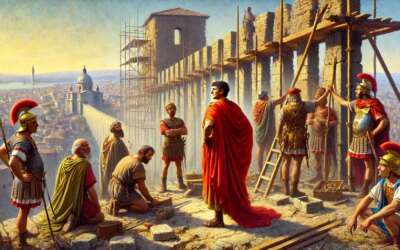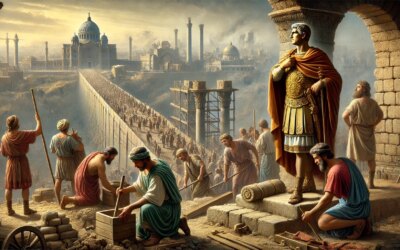
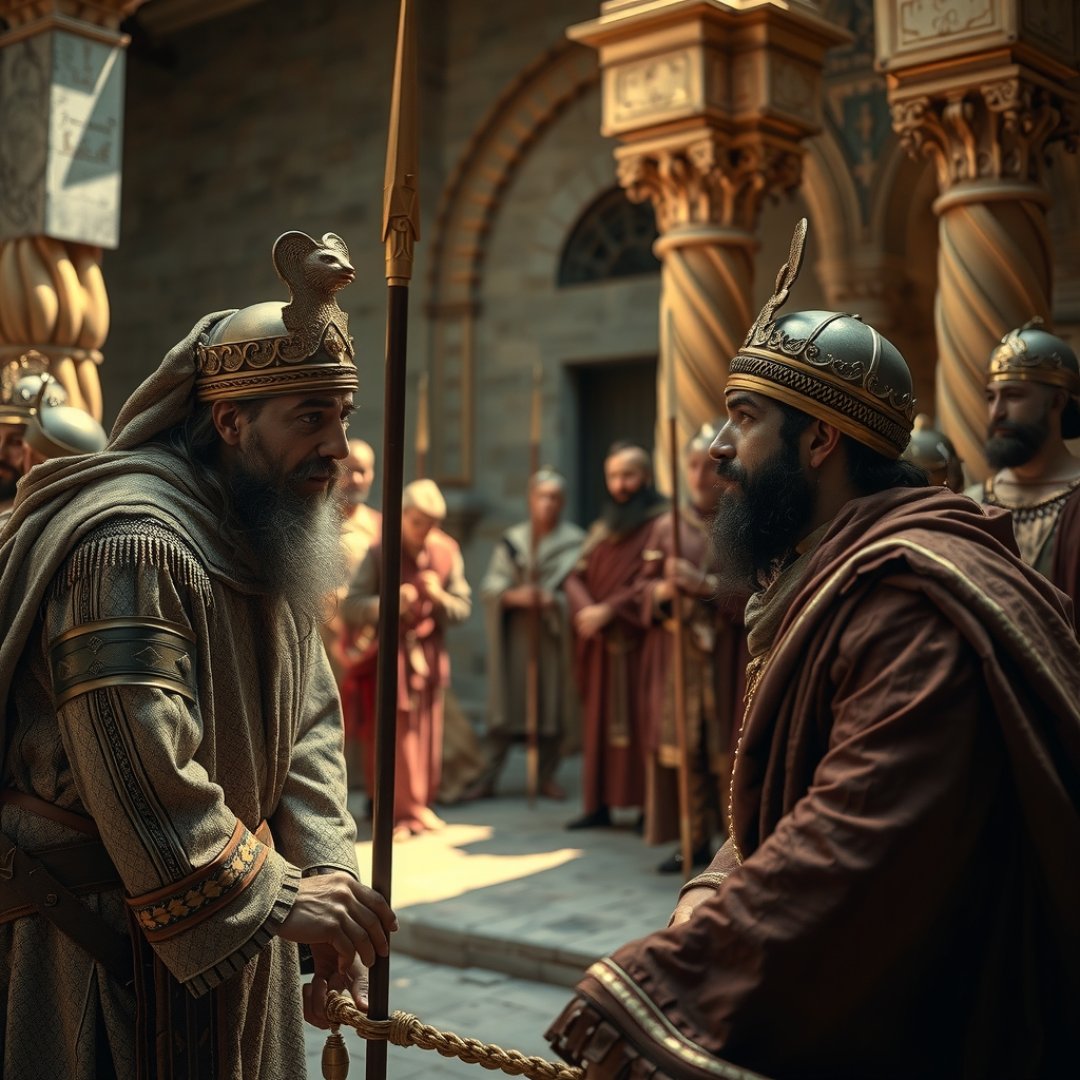
The dawn of the 7th century brought a seismic shift to the Byzantine Empire, as the reign of Emperor Maurice concluded in a violent overthrow. In AD 602, Phocas, a centurion, orchestrated a brutal power grab, seizing the imperial throne through a military coup. This pivotal event, known as the Usurpation of Phocas, did not merely signify a change in leadership; it served as a cataclysmic turning point, unraveling years of relative stability and plunging the Eastern Roman world into an era of unprecedented internal turmoil and devastating external conflict. The murder of Maurice and his family, carried out under Phocas’s ruthless command, sent shockwaves through the empire and, crucially, provided the Sasanian Persian Empire with a pretext to launch a massive invasion, marking the beginning of a protracted and empire-defining war that would reshape the geopolitical landscape of the early Middle Ages. This act of regicide and the subsequent reign of terror initiated a period of profound instability that would ultimately pave the way for future challenges to Byzantium’s very existence.
The Seeds of Discontent: Maurice’s Reign and Military Unrest
Maurice’s reign (582-602 AD) was characterized by prudent fiscal management and significant military campaigns, particularly against the Avars and Slavs in the Balkans and the Sasanian Persians in the East. However, his austerity measures, though necessary for the empire’s solvency, bred deep resentment within the army. The soldiers, often unpaid and ordered to winter beyond the Danube, felt neglected and exploited. The culmination of this discontent was the
Balkan Campaigns’ Strain
where Maurice commanded his troops to remain on campaign during winter, a highly unpopular and dangerous directive. This decision proved to be the final straw, sparking a widespread mutiny among the weary legions. The soldiers, under the leadership of a low-ranking officer named Phocas, turned their backs on Constantinople and marched towards the capital, demanding a change in imperial policy and, ultimately, in leadership. The initial protests escalated rapidly into a full-blown rebellion, demonstrating the fragile balance between imperial authority and military loyalty in the late Roman state.
The Ascent of Phocas: Coup, Crowning, and Carnage
As the mutinous army approached Constantinople, popular unrest against Maurice, fueled by economic hardship and religious tensions, swelled within the city. Maurice, abandoned by his own guards and the populace, attempted to flee with his family but was captured. Phocas, a seemingly obscure centurion, quickly capitalized on the chaos, entering the capital as a liberator.
A Bloody Coronation
marked his rise to power. Maurice and his five sons were publicly executed at Chalcedon, allegedly forced to watch each other die before their own demise. The brutal nature of the executions, particularly the murder of imperial children, sent a chilling message throughout the empire. Phocas was then acclaimed emperor, a choice initially welcomed by the Green faction in the Hippodrome and some elements of the populace who yearned for relief from Maurice’s strict policies. However, his legitimacy was immediately contested, especially by the Sasanian Persian King Khosrow II, who saw Maurice as his patron and used his death as a pretext for war.
Imperial Aftermath and the Byzantine-Sasanian War
The Usurpation of Phocas irrevocably altered the geopolitical landscape of the Eastern Roman Empire. Internally, Phocas’s reign (602-610 AD) was marked by paranoia and tyranny, leading to numerous purges and executions of perceived rivals, including many prominent senators and military figures. His rule was deeply unpopular and unstable. Externally, the murder of Maurice, whom the Sasanian King Khosrow II considered his adoptive father and ally, provided a convenient casus belli for a massive Persian invasion. Khosrow declared war, ostensibly to avenge Maurice, and launched a series of devastating campaigns that quickly overwhelmed Byzantine defenses in Mesopotamia and Syria.
The Empire Under Siege
became a stark reality, as Persian forces advanced deep into Roman territory, capturing key cities like Dara and Edessa, and threatening the very foundations of the empire. This protracted conflict, fueled by the initial instability caused by Phocas’s rise, would rage for over two decades, pushing both empires to their absolute limits and setting the stage for future dramatic changes in the region.
Frequently Asked Questions
Who was Phocas before becoming emperor?
Before seizing the imperial throne, Phocas was a centurion, a relatively low-ranking officer within the Byzantine military. He led the mutiny that ultimately overthrew Emperor Maurice.
What led to the mutiny against Emperor Maurice?
The mutiny against Emperor Maurice was primarily sparked by discontent within the army over his austerity measures, including delayed pay and the unpopular order for troops to winter beyond the Danube during his Balkan campaigns.
How did the Sasanian Persian Empire react to Phocas’s usurpation?
The Sasanian Persian Empire, under King Khosrow II, reacted with hostility. Khosrow viewed Maurice as his patron and used his murder as a pretext to declare war, launching a devastating invasion of Byzantine territories.
What was the duration of Phocas’s reign?
Phocas reigned as Byzantine emperor for approximately eight years, from AD 602 until his overthrow and execution in AD 610 by Heraclius.
What were the long-term consequences of the Usurpation of Phocas?
The Usurpation of Phocas led to a period of internal tyranny and instability within the Byzantine Empire and ignited the catastrophic Byzantine-Sasanian War, which severely weakened both empires and left them vulnerable to the subsequent Arab expansion.