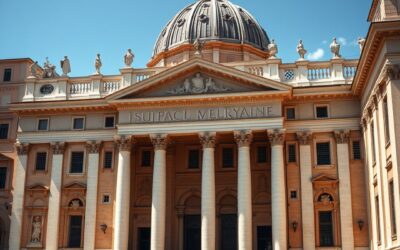
In the late 16th century, Rome was a city of stark contrasts: a center of spiritual power yet geographically chaotic, still bearing the scars of medieval layouts and centuries of neglect. It was into this environment that Felice Peretti, who would become Pope Sixtus V, stepped with an audacious vision. His pontificate, though brief (1585-1590), launched a revolutionary Sixtus V Rome urban plan that dramatically transformed the Eternal City. This plan went beyond mere beautification; it was a strategic overhaul designed to facilitate pilgrimage, enhance civic order, and unequivocally assert the renewed grandeur of the Catholic Church after the Council of Trent. Sixtus V, a former Franciscan friar of humble origins, approached urban development with a pragmatism and ambition that reshaped Rome’s physical and symbolic landscape, laying foundations that still define parts of the modern city today.
The Visionary Pope and His Blueprint
When Sixtus V ascended to the papacy, Rome was a sprawling city with narrow, winding streets that made navigation difficult, especially for the throngs of pilgrims visiting its sacred sites. Its infrastructure was crumbling, and its once-grand imperial monuments lay in disrepair. Sixtus V, a man of immense willpower and practical acumen, envisioned a modern capital that was both functional and aesthetically magnificent, reflecting the Church’s reasserted authority. His blueprint aimed to rationalize the urban fabric, linking the widely dispersed major basilicas through a network of straight, wide avenues. This was not just about convenience; it was a powerful statement of papal control, guiding pilgrims and asserting a new, organized hierarchy upon the city’s ancient and medieval sprawl. He famously declared, “I want Rome to be the most beautiful city in the world.”
Funding the Grand Transformation
Such an ambitious project required substantial resources. Sixtus V was known for his fiscal strictness and innovative, albeit sometimes unpopular, methods of fundraising. He implemented new taxes, sold offices, and carefully managed the Papal States’ economy to accumulate the funds necessary for his extensive building programs. This financial discipline allowed him to proceed with his plans at an unprecedented pace, transforming the city within just five years, a feat that astonished his contemporaries and left a profound legacy.
Connecting the Seven Basilicas: A Strategic Network
The core of the Sixtus V Rome urban plan was the creation of a rational street network that connected the seven major pilgrimage basilicas: St. Peter’s, St. John Lateran, Santa Maria Maggiore, Santa Croce in Gerusalemme, San Lorenzo fuori le Mura, San Sebastiano fuori le Mura, and San Paolo fuori le Mura. Prior to Sixtus V, pilgrims often faced a labyrinth of ancient paths. His new roads, such as the Strada Felice (named after him), were not only direct but often incorporated grand vistas, terminating in monumental focal points. These streets were designed to make Rome more accessible and legible, reducing travel time between sacred sites and ensuring a more orderly flow of visitors, bolstering Rome’s identity as the spiritual capital of the Catholic world.
- Strada Felice: A key artery connecting Santa Maria Maggiore, Trinità dei Monti, and Santa Croce in Gerusalemme.
- Via Sistina: Extended to connect Piazza Barberini to Santa Maria Maggiore.
- Strategic Avenues: Many roads followed ancient Roman routes, cleared and widened, often leading to the gates of the city, facilitating both internal movement and access from outside.
Monumental Markers: Obelisks, Fountains, and Squares
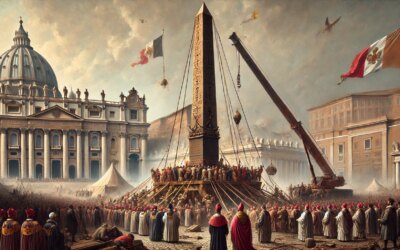
Integral to Sixtus V’s urban vision was the strategic placement of ancient Egyptian obelisks, fountains, and new squares. These elements served as visual anchors for his new avenues and powerful symbols of renewed papal authority. The most famous example is the raising of the Vatican Obelisk in St. Peter’s Square in 1586, a monumental engineering feat. This act, alongside the erection of other obelisks at major intersections and basilicas, effectively Christianized these pagan relics, transforming them into markers of Christian pilgrimage and papal triumph. Grand fountains, such as the Fontana dell’Acqua Felice, provided clean water to previously underserved areas of the city and acted as impressive public art pieces, celebrating the Pope’s provision and the glory of Rome.
The Fontana dell’Acqua Felice
The Fontana dell’Acqua Felice, completed in 1587, was a celebration of the restoration of an ancient Roman aqueduct, the Aqua Alexandrina, which Sixtus V rechristened Acqua Felice. This new water supply was crucial for the higher elevations of Rome, enabling further development and improving sanitation. The fountain itself, a grand triumphal arch, featured a colossal statue of Moses, symbolizing divine provision and the Pope’s role as a benefactor of the city.
Enduring Legacy and Impact on Modern Rome
Though his pontificate was short, the Sixtus V Rome urban plan left an indelible mark on the city that endures to this day. His straight, wide avenues cut through the medieval clutter, creating vistas and connections that subsequent generations of urban planners would emulate. The systematic approach to urban design, the integration of public works with monumental art, and the assertion of a cohesive civic identity all trace their roots to Sixtus V’s initiatives. Many of Rome’s iconic Baroque squares and fountains, developed by artists like Gian Lorenzo Bernini and Francesco Borromini in the following century, were built upon the foundational axes and open spaces created under Sixtus V. His vision transformed Rome from a fragmented city into a unified capital, a model for future European urban planning and a lasting testament to papal ambition.
Frequently Asked Questions
What was the primary goal of Sixtus V’s urban plan for Rome?
The primary goal was to modernize Rome, making it more accessible and orderly, especially for Christian pilgrims. By creating straight avenues connecting major basilicas, he aimed to facilitate navigation and visually assert the Catholic Church’s renewed power and grandeur.
How did Sixtus V fund his ambitious urban projects?
Sixtus V financed his plans through strict fiscal policies, including the implementation of new taxes and the sale of public offices. His disciplined financial management allowed him to accumulate the necessary wealth to undertake extensive and rapid urban transformations.
Which key landmarks were integrated into the Sixtus V Rome urban plan?
His plan integrated the seven major pilgrimage basilicas, connecting them with new roads. He also strategically placed ancient Egyptian obelisks in major squares and built grand fountains, such as the Fontana dell’Acqua Felice, as focal points and symbols of his renewed city.
What challenges did Sixtus V face in implementing his plan?
Sixtus V faced the challenge of Rome’s pre-existing chaotic medieval street patterns, property acquisition for new roads, and the enormous financial cost. Despite opposition and the scale of the undertaking, his strong will and effective funding allowed him to overcome these hurdles.
How does Sixtus V’s urban planning legacy persist in Rome today?
Many of Rome’s major arteries and squares, as well as the strategic placement of its obelisks and fountains, are a direct result of Sixtus V’s vision. His principles of connecting key sites with straight roads influenced subsequent Baroque urban development and continue to define much of Rome’s cityscape.