
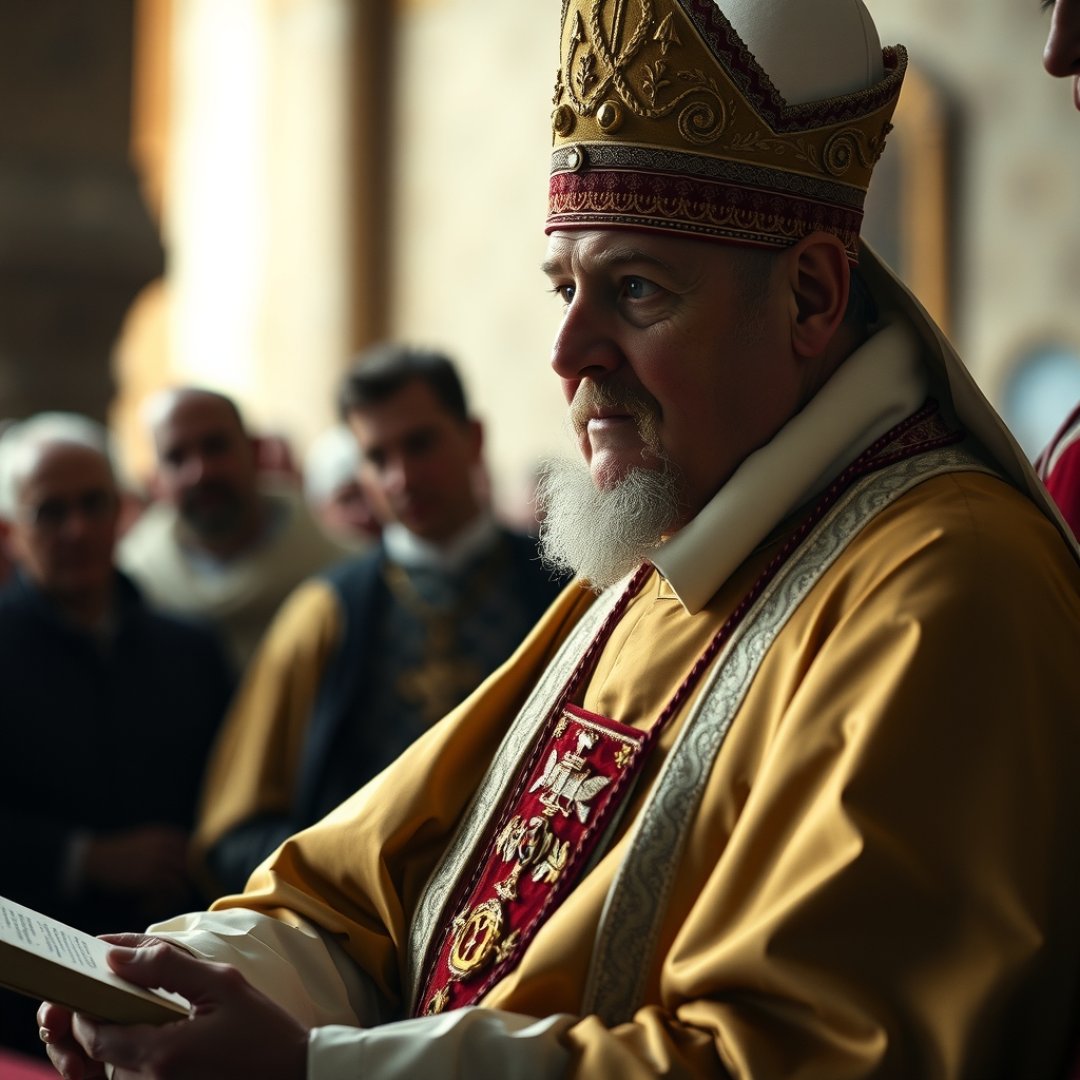
The turbulent political landscape of 10th-century Rome was a crucible for the papacy, often caught between powerful local nobility and the burgeoning authority of the Holy Roman Emperors. The Pope John XIII Papacy, spanning from 965 to 972 AD, exemplifies this struggle, marking a critical period when imperial power overtly asserted itself in the selection and governance of the Bishop of Rome. Elevated to the pontificate under the direct influence of Emperor Otto I, John XIII faced immediate and profound resistance from Roman factions accustomed to asserting their own will over the apostolic see. His reign, though often overshadowed by the imperial shadow, saw efforts to stabilize the church, expand its influence, and consolidate papal authority amidst a volatile political climate, ultimately reflecting the intricate dance between spiritual leadership and secular dominion in the heart of the Eternal City.
The Imperial Appointment and Roman Resistance
John XIII, born John Crescenzi, was not a unanimous choice for the papacy. His ascension in 965 AD was a direct consequence of Emperor Otto I’s determination to reform and control the Roman See, following the deposition of the scandalous Pope John XII and the subsequent election of Benedict V against imperial wishes. After Benedict V was exiled, Otto I, keen to install a loyal cleric, ensured John XIII’s election. This blatant imperial interference, however, did not sit well with the Roman nobility, who resented the German emperor’s heavy hand in their affairs. Only months into his pontificate, a faction of Roman nobles, including members of the powerful Crescentii family, rose up, expelling Pope John XIII from the city and imprisoning him. He managed to escape, fleeing to the protection of Otto I’s representative in Tuscany, highlighting the deep-seated tensions between imperial and local Roman powers.
Otto I’s Intervention and John XIII’s Restoration
Emperor Otto I responded with swift and brutal force to John XIII’s expulsion. Leading his army back into Italy and besieging Rome, Otto put down the rebellion with severe punishments, executing or mutilating many of the conspirators. John XIII was then restored to his papal throne in 966 AD. This imperial intervention firmly established the precedent that the Pope served at the Emperor’s pleasure, at least for the time being. With Otto’s support, John XIII was able to preside over a synod in 967 AD that further cemented imperial control over papal elections and confirmed the privileges of the Holy Roman Empire. This period saw the papacy operating under a renewed sense of imperial protection, enabling John XIII to focus on ecclesiastical matters with a degree of security previously unattainable.
Ecclesiastical Policy and Imperial Expansion
During his restored papacy, John XIII worked closely with Otto I to strengthen the church’s position within the expanding Holy Roman Empire. His pontificate saw the establishment of new bishoprics and archbishoprics, particularly in German lands and on the empire’s eastern frontiers, aiding in the Christianization and consolidation of these territories. He actively promoted monastic reform, supporting prominent abbeys and their efforts to revitalize spiritual life. Notable among his actions was the elevation of Magdeburg to an archbishopric in 968 AD, a key step in facilitating missionary work among the Slavic peoples. John XIII also maintained diplomatic ties with Byzantium, famously crowning Otto II as co-emperor in 967 AD and arranging his marriage to the Byzantine princess Theophanu, aiming to bridge the political and cultural divide between East and West, albeit with mixed success.
Challenges, Decline, and Lasting Legacy
Despite imperial backing, the Pope John XIII Papacy continued to face internal challenges. The Roman nobility, though suppressed, remained a potent force, and the Crescentii family, in particular, would reassert its influence in the decades following Otto I’s death. John XIII’s reliance on imperial power, while securing his position, also set a precedent for future interventions by German emperors into papal affairs, leading to ongoing conflicts between the spiritual and temporal powers. By the time of his death in 972 AD, John XIII had presided over a papacy that, for a brief period, enjoyed strong imperial protection, enabling a degree of stability and expansion. His reign solidified the Carolingian-Ottonian vision of a reformed, imperially-aligned papacy, laying groundwork for later medieval developments, even as the seeds of future papal-imperial strife were being sown.
Frequently Asked Questions
Who was Pope John XIII?
Pope John XIII, born John Crescenzi, served as Pope from 965 to 972 AD. His papacy was marked by significant imperial influence, as he was elevated to the position by Emperor Otto I amidst considerable political turmoil in Rome.
How was John XIII elected Pope?
John XIII’s election was heavily influenced by Emperor Otto I. Following the deposition of Pope John XII and the exile of the anti-imperial Pope Benedict V, Otto I ensured John’s selection to secure a loyal pontiff who would support the Holy Roman Empire’s interests.
What challenges did Pope John XIII face during his papacy?
John XIII faced immediate and strong resistance from the Roman nobility, who resented imperial interference in papal affairs. Shortly after his election, he was expelled from Rome by a local faction and had to flee, only to be restored by Emperor Otto I’s military intervention.
What was the relationship between Pope John XIII and Emperor Otto I?
Their relationship was one of strong mutual dependence. Otto I was John XIII’s patron and protector, restoring him to power and providing security. In return, John XIII supported Otto’s imperial policies, including the expansion of the church in newly Christianized territories and the consolidation of imperial authority over the papacy.
What was the significance of John XIII’s papacy for Rome?
The Pope John XIII Papacy underscored the growing dominance of the Holy Roman Emperors over the papacy in the 10th century. It demonstrated that papal elections and the security of the pontiff could be dictated by imperial power, setting a precedent for future interactions between the papacy and the Holy Roman Empire, while also allowing for ecclesiastical expansion under imperial protection.
Related posts:
 Henry II’s Roman Coronation of 1014: The Resurgence of Imperial Power in Medieval Rome
 The Investiture Controversy: Pope Gregory VII vs. Emperor Henry IV
The Coronation of Charlemagne: The Birth of the Holy Roman Empire
The Investiture Controversy: Pope Gregory VII vs. Emperor Henry IV
The Coronation of Charlemagne: The Birth of the Holy Roman Empire
 The Coronation of Otto III and Election of Pope Gregory V (996 AD): Reshaping Roman and Imperial Power