
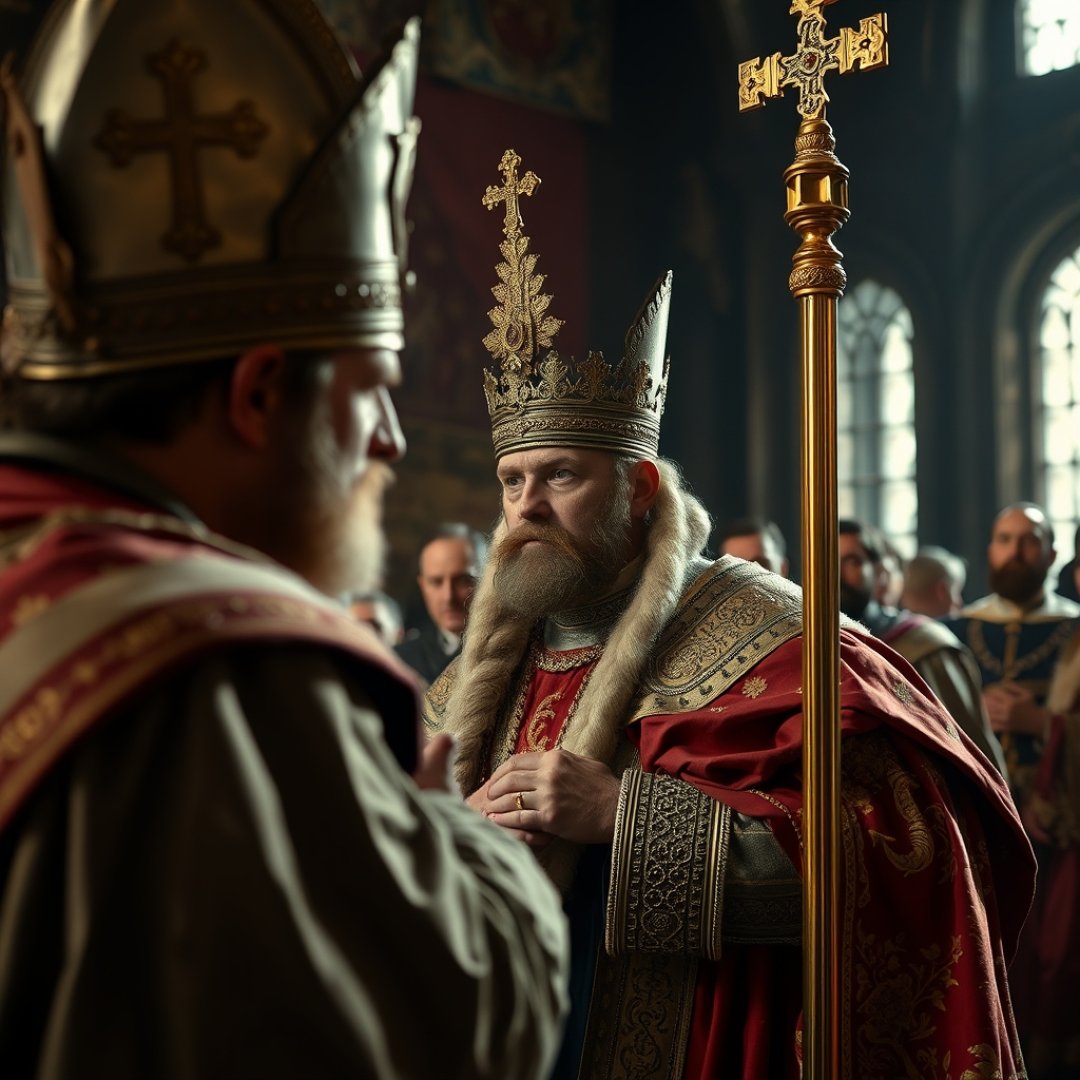
In the turbulent political landscape of late 10th-century Rome, the year 996 AD marked a critical turning point with the ascension of a new emperor and a new pope. This period was characterized by intense power struggles between local Roman nobility, particularly the formidable Crescentii family, and the burgeoning influence of the Holy Roman Emperors. It was into this contested arena that the young German king, Otto III, arrived to assert his imperial authority. His journey to Rome culminated in the significant Otto III Coronation 996, an event that not only solidified his claim to the imperial throne but also saw the controversial election of his cousin, Bruno of Carinthia, as Pope Gregory V. This dual assertion of power by the German monarch had profound and lasting implications for the political and religious future of both Rome and the wider European continent, setting a precedent for imperial involvement in papal affairs.
The Young Emperor and Roman Ambition
Otto III, a mere sixteen years old in 996 AD, inherited a complex legacy as a descendant of both the Ottonian and Byzantine imperial lines. His ambition was to restore the grandeur of the Roman Empire, envisioning a renewed empire with Rome at its heart. However, upon his arrival in Italy, he found Rome itself in the grip of the powerful Crescentii family, who had effectively controlled the city’s secular and religious life for decades.
The Crescentii’s Dominance
The Crescentii, a wealthy and influential Roman noble house, had established a virtual dynasty over the papacy, often installing their own candidates or controlling elections. Their leader, Crescentius the Younger, exercised significant sway over the city, challenging the authority of any outside power. Otto’s march on Rome was a direct confrontation with this entrenched local power, necessary to secure his imperial aspirations.
A German Pope for the Eternal City
One of Otto III’s most immediate and impactful actions upon reaching Rome was to address the vacancy in the papal chair. Pope John XV had died shortly before Otto’s arrival, creating a crucial opportunity. Instead of allowing a Roman noble to ascend, Otto III leveraged his imperial authority to secure the election of his own cousin, Bruno of Carinthia, a learned and devout cleric.
The Election of Gregory V
Bruno was elected in May 996 AD and took the name Pope Gregory V. This election was highly significant as it marked the first time a German had become pope, directly challenging the Roman monopoly on the papacy. It underscored Otto III’s desire to exert control over the spiritual leadership of Christendom, tying the papacy more closely to the Holy Roman Empire. The move was a clear statement of imperial dominance over the traditional Roman electoral process.
Imperial Ceremony and Roman Resistance
Following Gregory V’s election, Otto III proceeded with his imperial coronation, a grand ceremony held at Old St. Peter’s Basilica. This ritual formally consecrated him as Holy Roman Emperor, legitimizing his claim to universal temporal authority in the eyes of many. Yet, the consolidation of power was not without friction.
Challenges to Imperial Authority
The Roman populace and the Crescentii family did not quietly accept this new order. Although Otto III’s presence initially quelled overt resistance, his departure from Rome would soon ignite fresh rebellions. The appointment of a foreign pope and emperor was a bitter pill for many Romans who cherished their city’s autonomy. This underlying tension would plague Otto’s reign, leading to future conflicts and demonstrating the persistent struggle for control over the Eternal City.
The Legacy of a Dual Power Asserted
The events of 996 AD, particularly the Otto III Coronation 996 and the election of Gregory V, set a precedent for direct imperial intervention in papal affairs that would reverberate for centuries. While Otto III’s grand vision of a renewed Roman Empire eventually faltered due to his early death and continuous Roman opposition, his actions profoundly influenced the relationship between the Empire and the Papacy.
Seeds of Future Conflict
The imperial assertion of the right to influence or even appoint popes laid the groundwork for the Investiture Controversy of the 11th and 12th centuries, a major conflict between church and state. It also highlighted Rome’s unique position as both the spiritual heart of Western Christendom and a political prize for secular rulers, an ongoing struggle that shaped the medieval period.
Frequently Asked Questions
Who was Otto III?
Otto III was a Holy Roman Emperor of the Ottonian dynasty, crowned in 996 AD. He was known for his ambitious vision of a ‘Renovatio imperii Romanorum’ (renewal of the Roman Empire) and for his close relationship with the papacy.
What was the significance of Pope Gregory V’s election?
Pope Gregory V, born Bruno of Carinthia, was the first German pope. His election in 996 AD, largely influenced by his cousin Emperor Otto III, symbolized the growing power of the Holy Roman Empire over the papacy and challenged the traditional dominance of Roman nobility in papal selections.
Who were the Crescentii family and what was their role?
The Crescentii were a powerful and influential noble family in Rome during the 10th and early 11th centuries. They frequently controlled the papacy and Roman politics, often in opposition to the Holy Roman Emperors, including Otto III, who had to contend with their entrenched power.
Where did the coronation of Otto III take place?
The coronation of Otto III as Holy Roman Emperor in 996 AD took place in Old St. Peter’s Basilica in Rome, a traditional site for such imperial ceremonies.
Related posts:
 The Henry V Papal Conflict of 1111: A Crown, a Capture, and a Compromise
 The Coronation of Charlemagne: Rome Reborn in 800 AD
 Charles of Anjou’s Senatorial Rule in Rome (1267): Consolidating Power in Medieval Italy
 Henry VII’s Roman Coronation (1312): A Holy Roman Emperor’s Tumultuous Claim to Legacy