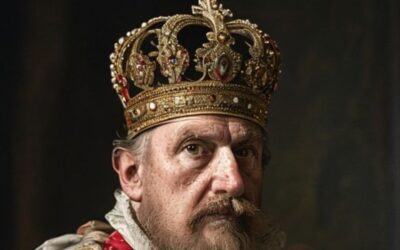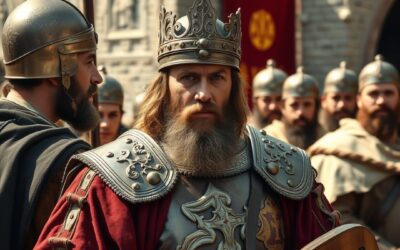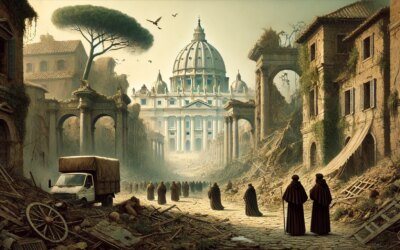
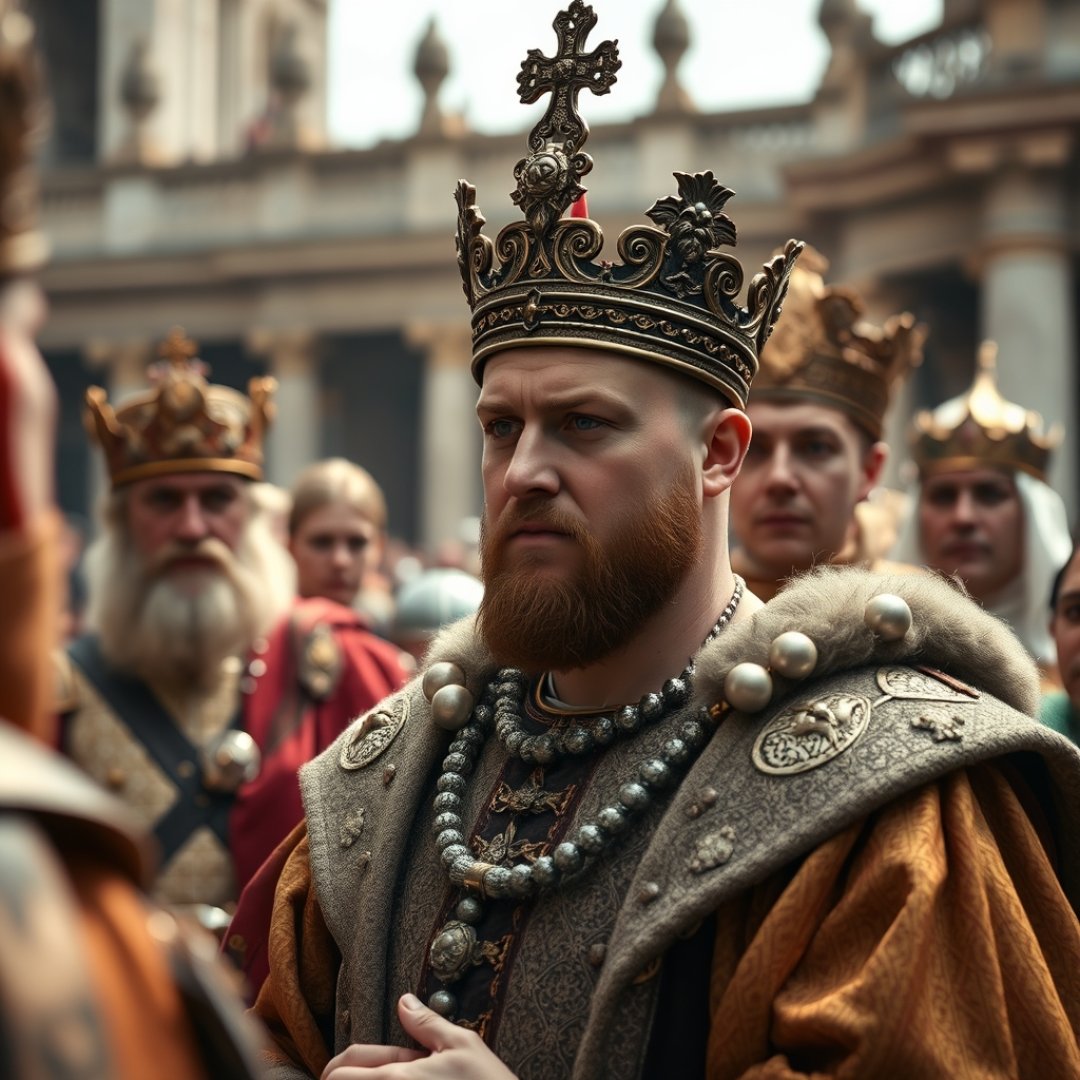
The year 1312 marked a pivotal and chaotic moment in the ongoing narrative of imperial claims over Rome and Italy. Emperor Henry VII, seeking to reassert the venerable authority of the Holy Roman Empire, embarked on an ambitious Italian campaign that culminated in his tumultuous Henry VII’s Roman Coronation on June 29th. Far from the grand, unifying spectacle he envisioned, the ceremony unfolded amidst bitter factionalism, armed conflict, and the unsettling backdrop of the Papacy’s absence in Avignon. His journey south was a desperate attempt to bridge the deepening chasm between imperial ambition and the fiercely independent communes of Italy, a struggle that would define his brief, yet intensely significant, reign and leave an indelible mark on the political landscape of the Italian peninsula. This event showcased the complex interplay of power, tradition, and emerging national identities that characterized the late medieval period, highlighting the symbolic power Rome still held, even as its practical control remained hotly contested.
The Imperial Vision and Fractured Italian Reality
When Henry VII descended into Italy in 1310, he carried with him the lofty ideal of restoring the universal authority of the Holy Roman Empire, a vision that resonated with many Ghibellines who longed for imperial stability to counter papal influence and local factionalism. His arrival was initially welcomed by some, who saw him as a potential arbiter of peace. However, the reality of the Italian peninsula was far from receptive to such ambitions. A complex tapestry of fiercely independent city-states, powerful noble families like the Orsini and Colonna, and the dominant influence of the Angevin Kingdom of Naples under Robert of Anjou, presented a formidable challenge. The Papacy, moreover, had relocated to Avignon, leaving a power vacuum in Rome itself, which only intensified the local struggles for control and complicated any imperial assertion of authority.
The Perilous March to the Eternal City
Henry’s initial successes in northern Italy, including his coronation with the Iron Crown in Milan, quickly gave way to staunch resistance. Cities that had initially pledged loyalty soon rebelled, forcing him into costly sieges, notably against Brescia. As he progressed south towards Tuscany, he encountered even greater opposition, particularly from the powerful Guelph league led by Florence. His advance became a military campaign rather than a triumphal procession. By the time he reached the gates of Rome in May 1312, the Eternal City itself was a battleground. Key areas, including St. Peter’s Basilica and the Castel Sant’Angelo, were under the control of Robert of Anjou’s forces and the pro-Angevin Orsini family, effectively blocking the traditional site for imperial coronations.
A Coronation Amidst Tumult and Armed Conflict
Faced with entrenched opposition, Henry VII was forced to improvise. The traditional site of St. Peter’s Basilica being unattainable due to its occupation by Robert of Anjou’s forces, the coronation ceremony was hastily relocated to the Basilica of St. John Lateran, a significant but less customary venue for imperial rites. On June 29, 1312, cardinals representing the Pope, who remained in Avignon, crowned Henry VII amidst unprecedented chaos. Streets surrounding the Lateran were scenes of fierce skirmishes between imperial troops and the forces loyal to Robert of Anjou and the Orsini. The sounds of battle often drowned out the solemn chants of the ceremony, transforming what should have been a majestic assertion of power into a desperate, embattled affair. The very act of his Henry VII’s Roman Coronation underscored the fragmented state of Italy and the tenuous grasp of imperial authority.
The Legacy of a Fleeting Dream
Henry VII’s reign after his Roman coronation was tragically short-lived. He died in Buonconvento, Siena, in August 1313, succumbing to illness, having failed to truly consolidate his power in Italy or to bring about the universal empire he envisioned. His Italian campaign, however, had a profound cultural and political impact. Dante Alighieri, who passionately supported Henry’s cause, immortalized his imperial dream in his political treatise Monarchia, seeing Henry as a divinely appointed deliverer for Italy. While Henry’s efforts ultimately failed to restore enduring imperial control, his actions intensified the Guelph-Ghibelline conflict and solidified the independent spirit of Italian city-states. The tumultuous events of his coronation served as a stark reminder of Rome’s symbolic power, even as its practical governance was increasingly fragmented among local factions and external claimants, setting a precedent for future struggles over its destiny.
Frequently Asked Questions
Why was Henry VII’s coronation in Rome so unusual?
Henry VII’s coronation was unusual because it took place amidst armed conflict in the streets of Rome, and not in the traditional St. Peter’s Basilica, which was occupied by opposing forces. It occurred at the Lateran Basilica, with papal representatives, but without the Pope himself, who was residing in Avignon.
Who were the main opponents of Henry VII in Rome?
Henry VII’s primary opponent in Rome was Robert of Anjou, the King of Naples, who controlled significant parts of the city with his forces. The powerful Orsini family also sided with Robert of Anjou, further complicating Henry’s efforts to secure the city.
What role did the Avignon Papacy play in this event?
The Avignon Papacy, having moved from Rome in 1309, created a power vacuum in the city and deprived Henry VII of a full papal endorsement. While some cardinals were dispatched to perform the coronation, the Pope’s absence significantly weakened the perceived legitimacy and authority of the imperial ceremony.
Did Henry VII achieve his goals for Italy and the Empire?
Ultimately, Henry VII did not achieve his grand vision of restoring universal imperial authority and unifying Italy. His campaign was met with fierce resistance, and he died shortly after his coronation in 1313, leaving Italy still fragmented and the imperial claim largely symbolic.
Where exactly did Henry VII’s Roman Coronation take place?
Due to the occupation of St. Peter’s Basilica by opposing forces, Henry VII’s Roman Coronation took place in the Basilica of St. John Lateran, one of Rome’s other major basilicas.