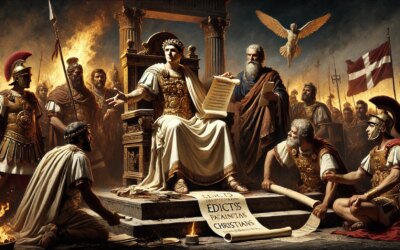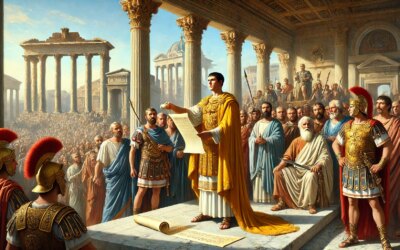
In the tumultuous year of 308 AD, the Roman Empire found itself grappling with a severe crisis of leadership, a direct consequence of the complex and often contentious system of the Tetrarchy established by Diocletian. This period, characterized by multiple co-emperors and vying ambitions, threatened to plunge the vast empire back into the chaos of the third century. It was against this backdrop of instability that the momentous Conference of Carnuntum 308 was convened. Far from a mere diplomatic gathering, this assembly of powerful figures aimed to untangle the convoluted imperial structure, restore a semblance of order, and chart a clearer path for the future of Roman rule. The decisions made at Carnuntum would have profound and lasting implications, not least in paving the way for new contenders and ultimately, the eventual rise of Constantine the Great, making it a critical juncture in the annals of Late Roman history.
The Crisis of the Tetrarchy Before Carnuntum
By the time 308 AD arrived, Diocletian’s grand experiment of the Tetrarchy – a system designed to ensure stable rule by dividing the empire among two senior Augusti and two junior Caesars – had devolved into a messy power struggle. After Diocletian and Maximian abdicated in 305 AD, Constantius I and Galerius became Augusti, with Severus II and Maximinus Daia as Caesars. However, Constantius’s death in 306 AD quickly shattered this fragile balance. His troops in Britain acclaimed his son, Constantine, as Augustus, directly defying the established order. Simultaneously, in Italy, Maxentius, son of the retired Maximian, also seized power, leading to the re-emergence of his father as co-Augustus. With six men now claiming imperial authority, the Roman world was on the brink of another civil war, jeopardizing the very stability the Tetrarchy was meant to guarantee.
Convening at Carnuntum: The Imperial Summit
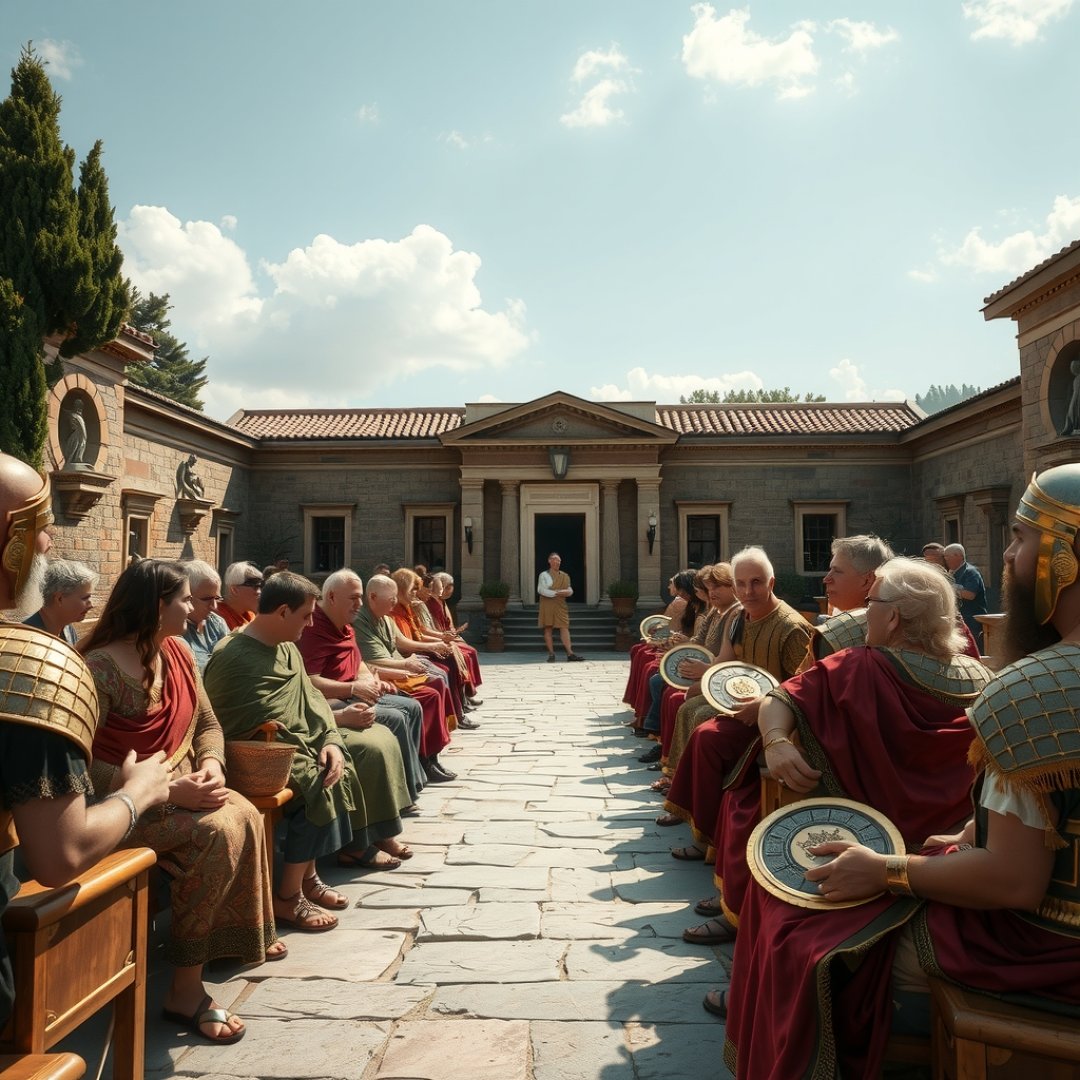
Recognizing the dire need to restore legitimate rule and avert widespread conflict, Galerius, the senior Augustus in the East, orchestrated a crucial summit at Carnuntum, a Roman legionary fortress and civilian settlement on the Danube frontier in modern-day Austria. This was not a meeting of equals, but rather a decisive attempt by Galerius to reassert control. The most significant attendee was the revered elder statesman, Diocletian, who was convinced to emerge from his retirement to lend his immense authority to the proceedings. Also present was Galerius himself, along with the ambitious Maximian, who hoped to secure his son Maxentius’s position. Notably absent was Constantine, whose legitimacy was hotly debated, and Maxentius, who was deemed a usurper. The objective was clear: to clarify the imperial hierarchy, designate legitimate rulers, and condemn the renegades.
Key Decisions and Imperial Realignments
The Conference of Carnuntum 308 produced several pivotal decisions, orchestrated largely by Galerius and supported by Diocletian’s unshakeable authority:
-
Maximian’s Final Abdication:
The elder Maximian, whose return to power had complicated matters, was once again compelled to abdicate and retire from public life, his claims to the purple definitively rejected.
-
Appointment of Licinius as Augustus:
Perhaps the most surprising outcome was the elevation of Licinius, a trusted military commander and personal friend of Galerius, to the rank of Augustus of the West. This was a direct snub to Constantine, who had been acclaimed Augustus by his troops, and to Maxentius, who was declared a public enemy.
-
Constantine’s Relegation to Caesar:
Constantine was recognized, but only as a Caesar under Licinius, a demotion that he vehemently resented and largely ignored in practice.
-
Diocletian’s Endorsement:
Diocletian publicly endorsed these new arrangements, lending a crucial stamp of legitimacy to the new order, though he refused to return to power himself. He famously stated that he preferred growing cabbages to the perils of imperial rule.
The Lingering Instability and Legacy
Despite the high hopes and the authoritative presence of Diocletian, the decisions made at the Conference of Carnuntum ultimately failed to achieve lasting stability. The elevation of Licinius, an outsider to the imperial families, alienated Constantine and Maximinus Daia, who felt unjustly overlooked. Constantine, in particular, continued to act as an Augustus in his own territory, laying the groundwork for further conflict. Maxentius, entrenched in Rome, remained a formidable opponent. The immediate aftermath of Carnuntum saw continued maneuvering and warfare, including the eventual confrontation between Constantine and Maxentius at the Battle of the Milvian Bridge in 312 AD, and the subsequent consolidation of power by Constantine and Licinius. Thus, while the Conference of Carnuntum 308 represented a valiant effort to restore the Tetrarchic ideal, it inadvertently set the stage for the final dissolution of the system and the emergence of a new sole emperor, fundamentally altering the course of Roman history.
Frequently Asked Questions
What was the primary purpose of the Conference of Carnuntum?
The main goal of the Conference of Carnuntum was to resolve the severe crisis of imperial leadership within the Tetrarchy, re-establish a legitimate hierarchy, and address the various usurpations that had plunged the Roman Empire into instability.
Who were the key figures involved in the Carnuntum summit?
The most important figures present were the retired Emperor Diocletian, the Augustus Galerius (who convened the meeting), and the once-retired Maximian. Constantine and Maxentius were notably absent, with Constantine acknowledged only as Caesar and Maxentius declared a public enemy.
What significant changes to imperial power resulted from the conference?
At Carnuntum, Maximian was forced to abdicate for a second and final time, and Licinius, a trusted general, was unexpectedly appointed Augustus of the West. Constantine, despite his acclamation by his troops, was officially demoted to Caesar, while Maxentius was condemned as a usurper.
Did the Conference of Carnuntum achieve its goal of stability?
No, the conference ultimately failed to bring lasting peace. Its decisions alienated several powerful contenders, particularly Constantine, and the underlying tensions of the Tetrarchy soon led to further civil wars, culminating in the rise of Constantine as sole emperor.
Where exactly was Carnuntum located?
Carnuntum was a significant Roman legionary fortress and civilian settlement located on the banks of the Danube river, in what is now modern-day Austria, east of Vienna. It was a crucial strategic point on the Roman frontier.