The year 489 AD marked a dramatic turning point for the Italian peninsula, still reeling from the collapse of the Western Roman Empire just thirteen years prior. While Odoacer, the Germanic chieftain who had deposed the last Western Emperor, Romulus Augustulus, consolidated his authority, a new formidable power emerged from the East: Theodoric the Great, king of the Ostrogoths. Sent by the Byzantine Emperor Zeno, Theodoric arrived with his entire people, poised to challenge Odoacer’s nascent kingdom. Their inevitable clash would begin on the banks of the Isonzo River, a critical confrontation that would define the struggle for Italy’s future. This initial engagement would become known as Theodoric’s first victory, setting the stage for his eventual dominion and the establishment of the Ostrogothic Kingdom, a complex and fascinating period of late antique history. The battle not only demonstrated Theodoric’s military prowess but also signaled the beginning of the end for Odoacer’s independent reign, fundamentally reshaping the political landscape of Italy.
Italy on the Brink: Odoacer’s Reign (476-488 AD)
The Aftermath of 476 AD
After deposing Romulus Augustulus in 476 AD, Odoacer, a Scirian chieftain who had risen through the ranks of the Roman military, chose not to assume the imperial purple himself. Instead, he dispatched the imperial regalia to Constantinople, acknowledging the Eastern Roman Emperor Zeno as the sole legitimate Roman authority. This act ostensibly marked the ‘fall’ of the Western Roman Empire, yet Odoacer established a kingdom in Italy that largely maintained Roman administrative structures and coexisted with the existing Roman aristocracy. His rule was initially accepted by many, offering a degree of stability after decades of chaos.
However, Odoacer’s independence quickly became a concern for Emperor Zeno. While Odoacer nominally recognized Zeno’s supremacy, his effective control over Italy meant Constantinople held little real power in the peninsula. Zeno sought a way to reassert influence without direct military intervention, especially after Odoacer supported a rival emperor, Julius Nepos, and later campaigned against the Rugians in Noricum, expanding his sphere of influence. A new force was needed to destabilize Odoacer’s position and bring Italy back under a more pliable hand.
The Ostrogothic Exodus and Imperial Mandate
The Rise of Theodoric the Great
The solution to Zeno’s ‘Odoacer problem’ came in the form of Theodoric, the king of the Ostrogoths. Theodoric had spent years in Constantinople as a hostage and a favored federate, gaining a deep understanding of Roman politics and military tactics. His Goths were a powerful force, but also a restless one, often causing trouble on the Balkan frontier of the Eastern Empire. Zeno cleverly leveraged this situation, granting Theodoric a mandate to invade Italy and depose Odoacer, thereby killing two birds with one stone: removing a troublesome federate from the East and placing Italy under a new, supposedly more loyal, Gothic ruler.
In 488 AD, Theodoric and his entire people, numbering perhaps a quarter of a million, began their arduous migration towards Italy. It was a monumental undertaking, fraught with challenges and skirmishes along the way. This wasn’t merely a military expedition; it was a mass movement of a nation seeking a new homeland. Their arrival on the Italian border in 489 AD signaled an imminent, violent confrontation that would decide the fate of Italy for generations.
The Bloody Banks of the Isonzo
First Clash: Aquileia and the Isonzo River
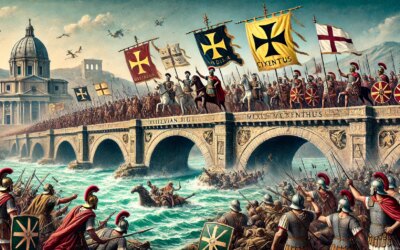
The first major engagement between the forces of Theodoric and Odoacer occurred on August 28, 489 AD, near the Frigidus River, known today as the Isonzo. This river, flowing from the Julian Alps into the Adriatic Sea, was a traditional strategic gateway into Italy from the east. Odoacer, recognizing the vital importance of halting the Ostrogothic advance, positioned his army to defend this natural barrier, likely near the Roman city of Aquileia.
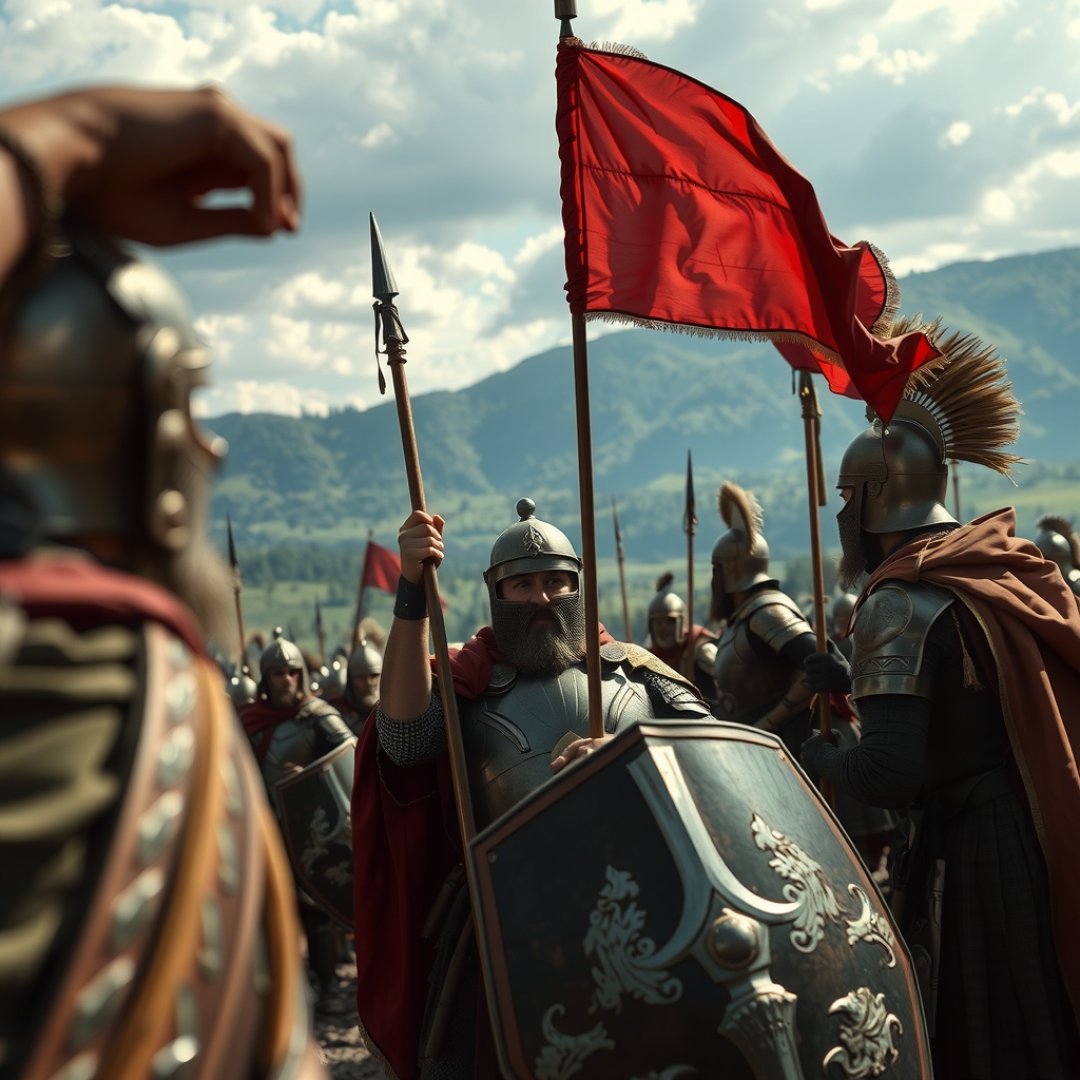
- The Armies: Theodoric led his seasoned Ostrogothic warriors, known for their disciplined infantry and formidable cavalry. Odoacer’s army comprised a diverse collection of Germanic federates—Heruls, Rugians, and Scirians—who had served under him for years, alongside remnants of the old Roman army.
- The Battle: The precise details of the engagement are scarce, but contemporary accounts suggest a fierce struggle. Theodoric’s Goths, driven by the promise of a new homeland and their king’s leadership, proved superior. Odoacer’s forces were decisively defeated, suffering heavy casualties.
- Aftermath: Odoacer managed to escape the battlefield, retreating westward with the remnants of his army towards Verona. This victory, while not the end of the war, was Theodoric’s first victory on Italian soil, establishing his military supremacy and forcing Odoacer to concede valuable territory. The path into Italy was now open for the Ostrogoths, though the struggle for dominion would continue for several more years.
Reshaping the Italian Landscape
The Road to Ravenna
The Battle of the Isonzo was more than just a military success; it was a psychological blow to Odoacer’s regime and a massive morale boost for the invading Ostrogoths. It demonstrated Theodoric’s strategic acumen and the fighting spirit of his people, signaling that Odoacer’s hold on Italy was far from secure. While Odoacer would mount further resistance, including another major stand at Verona a month later and a prolonged siege at Ravenna, the Isonzo victory marked the crucial initial breach.
This battle set the precedent for the protracted conflict that would unfold over the next four years. It cemented Theodoric’s position as a legitimate contender for the throne of Italy, and ultimately, paved the way for the establishment of the Ostrogothic Kingdom, a state that would attempt to blend Roman institutions with Gothic military power. The defeat at the Isonzo was the first tremor of the earthquake that would completely redefine Italy’s post-imperial identity.
Frequently Asked Questions
Who was Odoacer before Theodoric’s invasion?
Odoacer was a Germanic chieftain, likely of Scirian or Rugian descent, who rose to prominence as a commander of federate troops in Italy. In 476 AD, he deposed the last Western Roman Emperor, Romulus Augustulus, and established himself as king of Italy, ruling for over a decade before Theodoric’s arrival.
Why did the Byzantine Emperor Zeno support Theodoric’s invasion of Italy?
Emperor Zeno viewed Odoacer’s independent rule in Italy as a challenge to his imperial authority. He shrewdly directed Theodoric and his Ostrogoths, who were a powerful but troublesome presence in the Balkans, towards Italy. This move served to remove a Gothic threat from the Eastern Empire’s borders while simultaneously attempting to install a more compliant ruler in Italy.
What was the immediate outcome of Theodoric’s first victory at the Battle of the Isonzo?
The Battle of the Isonzo resulted in a decisive victory for Theodoric and his Ostrogoths. Odoacer’s forces were defeated, suffering heavy losses, and Odoacer himself was forced to retreat westward, allowing Theodoric to consolidate his initial gains and push further into the Italian peninsula.
Where exactly is the Isonzo River located?
The Isonzo River (known as Soča in Slovenian) flows through present-day Slovenia and northeastern Italy. In ancient times, it was often identified with the Frigidus River, a significant natural barrier and strategic entry point into Italy from the east, particularly for armies coming from the Balkan region.
What ultimately happened to Odoacer after the Battle of the Isonzo?
After losing the Battle of the Isonzo and subsequent engagements, Odoacer was eventually besieged by Theodoric in Ravenna for several years. He surrendered in 493 AD under terms of co-rule, but Theodoric personally assassinated him shortly thereafter, cementing his sole control over Italy and the new Ostrogothic Kingdom.