In the frigid January of 1077, a scene unfolded at the remote castle of Canossa in the Apennine Mountains that would forever etch itself into the annals of European history. Holy Roman Emperor Henry IV, barefoot and clad in a penitent’s coarse wool, stood for three days outside the gates, begging for an audience with Pope Gregory VII. This unprecedented act of submission, famously known as Henry IV at Canossa, marked a monumental clash between imperial and papal authority, a stark display of the spiritual power of the Roman Pontiff over the temporal might of an emperor. The dramatic confrontation at Canossa was a defining moment in the Investiture Controversy, a struggle that fundamentally questioned the balance of power between secular rulers and the Church, echoing the long-standing legacy of Roman imperial and religious influence well into the medieval era.
The Brewing Storm: The Investiture Controversy
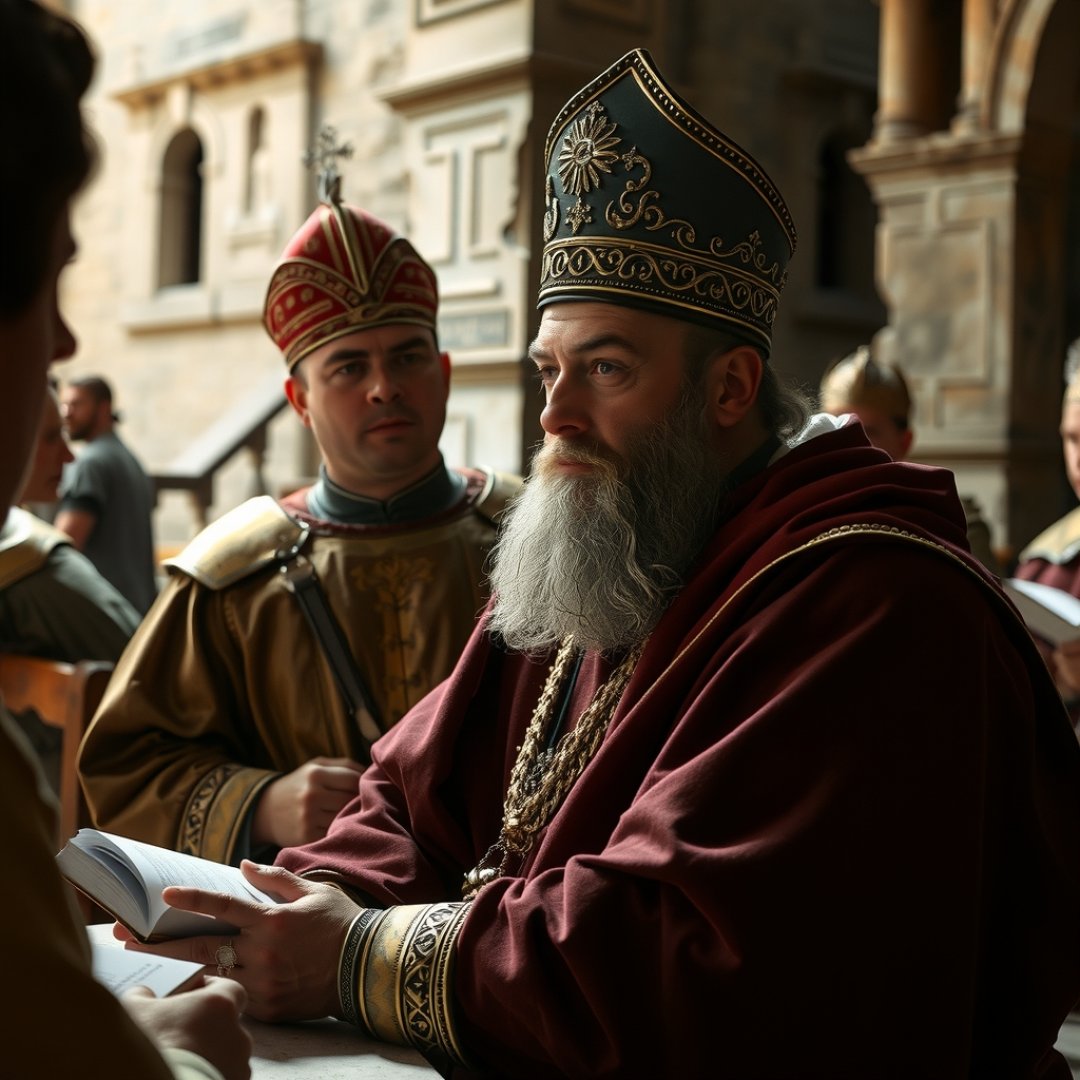
The stage for the dramatic events at Canossa was set by the Investiture Controversy, a protracted struggle for power between the Holy Roman Empire and the Papacy that had been simmering for decades. At its heart was the practice of lay investiture, where secular rulers appointed bishops and abbots and conferred upon them the symbols of their spiritual office – the ring and the crozier. Pope Gregory VII, a fervent reformer, viewed this as a profound encroachment on the Church’s independence and spiritual authority. He believed that only the Pope and his clergy had the right to appoint church officials, ensuring their loyalty to God rather than to temporal lords.
Gregory’s reforms, encapsulated in his Dictatus Papae of 1075, boldly asserted the Pope’s supremacy over all secular rulers, including the emperor. This declaration directly challenged Henry IV’s traditional imperial prerogatives, leading to a rapid escalation of tensions. Henry, who saw bishops as crucial allies in his administration and military, vehemently rejected Gregory’s demands. The conflict became deeply personal, with both leaders believing they held divine authority to rule their respective spheres.
Imperial Defiance and Papal Excommunication
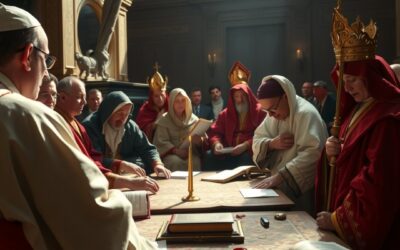
The clash reached its first peak in 1076. Henry IV, asserting his imperial authority, convened a synod of German bishops at Worms, where he declared Gregory VII an illegitimate pope and called for his deposition. He dispatched a letter to Gregory, famously addressing him as “Hildebrand, at present not pope but false monk,” and demanded he step down. Gregory’s response was swift and unprecedented: he excommunicated Henry IV at the Lenten Synod of 1076, releasing Henry’s subjects from their oaths of fealty. This act had profound political implications, as it empowered Henry’s many German rivals and rebellious nobles.
The Erosion of Imperial Authority
The excommunication was a powerful blow to Henry’s authority. Many of his vassals, eager to undermine his rule, seized upon the papal decree as justification for rebellion. Faced with a disintegrating empire and the threat of a papal-backed election of a new emperor by the German princes at Augsburg, Henry knew he had to act decisively. His spiritual salvation was inextricably linked to his political survival. The only path forward, it seemed, was to seek reconciliation with the Pope, who was then traveling north towards Germany.
The Emperor’s Humble Journey to Canossa
In a desperate gamble, Henry IV decided to intercept Pope Gregory VII on his journey through the Alps. He traveled across the treacherous winter landscape, accompanied by his wife and infant son, risking a perilous crossing in a desperate bid to meet the Pope before the German princes could solidify their opposition. Gregory, wary of Henry’s intentions, had taken refuge in the fortified castle of Canossa, belonging to Matilda of Tuscany, a staunch papal supporter. It was here, in the cold of January 1077, that Henry IV at Canossa presented himself as a humble penitent.
A Three-Day Vigil in the Snow
For three consecutive days, from January 25th to 27th, 1077, Henry stood outside the castle walls, dressed in a hair shirt, barefoot in the snow, fasting and performing public penance. His humility was a calculated move, designed to appeal to Gregory’s priestly duty to offer forgiveness to a repentant sinner. The stark imagery of an emperor humbled before the spiritual power of the Pope resonated deeply across Christendom. Despite the pleas of influential intermediaries, including Matilda of Tuscany and Hugh of Cluny, Gregory initially refused to grant an audience, demonstrating the immense moral leverage he held.
Absolution and Lingering Conflict
Finally, on January 28, 1077, Pope Gregory VII, persuaded by the relentless intercession and perhaps mindful of the potential backlash if he refused absolution to a seemingly repentant sinner, granted Henry an audience. The Pope lifted the excommunication, but not without imposing strict conditions. Henry had to pledge to obey Gregory’s future decisions regarding the Investiture Controversy and to allow for a free election of a new emperor if his disputes with the German princes could not be resolved. While Henry had secured his immediate political survival, the penance at Canossa was a profound symbolic victory for the Papacy, demonstrating its immense spiritual and, by extension, political power.
The Legacy of Canossa
Despite the absolution, the Investiture Controversy was far from over. Henry IV quickly resumed his struggle against Gregory VII, eventually deposing him and installing an anti-pope. However, Canossa fundamentally altered the balance of power between Church and State. It solidified the Pope’s claim to moral and spiritual supremacy, challenging the long-held notion of imperial dominance inherited from Roman traditions. The image of the emperor kneeling in the snow became a powerful symbol of papal authority, influencing the relationship between secular rulers and the Church for centuries to come, and marking a critical point in the development of medieval European political thought and the enduring legacy of Rome’s dual temporal and spiritual authority.
Frequently Asked Questions
What was the Investiture Controversy?
The Investiture Controversy was a major conflict between the Church and secular rulers in the 11th and 12th centuries, primarily over the right to appoint (invest) bishops and other church officials. Popes, especially Gregory VII, argued that only the Church could make such appointments to maintain spiritual independence, while emperors viewed these appointments as crucial for their temporal power.
Why did Henry IV go to Canossa?
Emperor Henry IV went to Canossa in 1077 to seek absolution from Pope Gregory VII. Gregory had excommunicated Henry, which severely weakened the emperor’s political standing and emboldened rebellious German nobles. Henry’s penance was a desperate and strategic move to regain papal favor and restore his authority.
What was the significance of the event at Canossa?
The event at Canossa was a symbolic victory for papal authority over imperial power. It dramatically demonstrated the Pope’s spiritual leverage, forcing a powerful emperor to humble himself publicly. While not a permanent resolution to the Investiture Controversy, it set a precedent for the Papacy’s claim to supremacy in moral and, by extension, political matters.
Who was Pope Gregory VII?
Pope Gregory VII, originally Hildebrand, reigned from 1073 to 1085. He was a key figure in the Gregorian Reform movement, advocating for the spiritual independence and moral purity of the Church. His strong stance against lay investiture and his assertion of papal supremacy led directly to the confrontation with Henry IV at Canossa.
Did the penance at Canossa resolve the conflict permanently?
No, the penance at Canossa did not permanently resolve the Investiture Controversy. While Henry IV received absolution, the underlying issues remained. The conflict continued for decades, culminating in the Concordat of Worms in 1122, which provided a compromise by separating the spiritual and secular aspects of episcopal appointments.