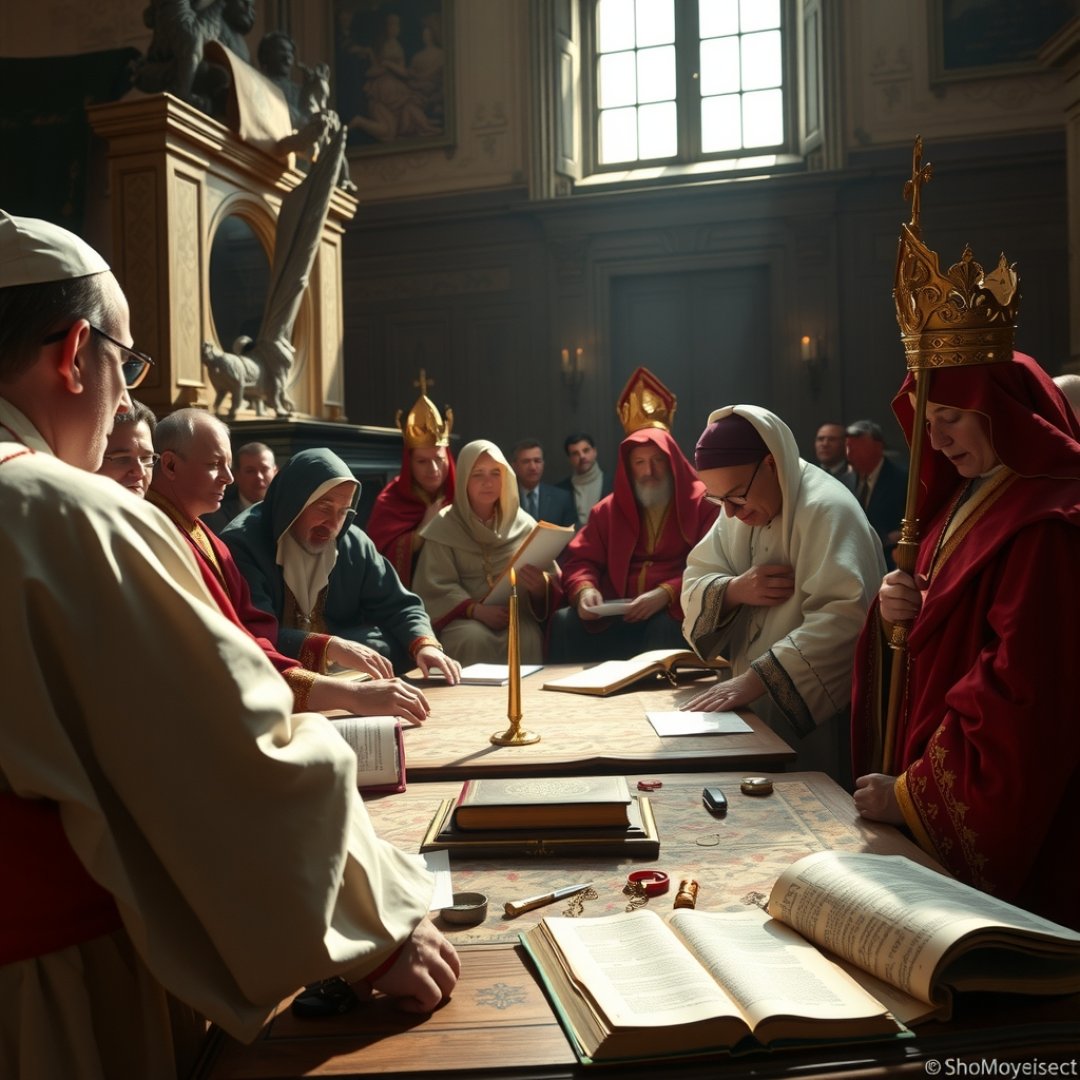
The year 1122 AD marked a pivotal moment in the complex relationship between secular rulers and the Church with the signing of the Concordat of Worms. This landmark agreement brought a formal end to the protracted and often violent Investiture Controversy, a struggle that had deeply destabilized the Holy Roman Empire and profoundly challenged papal authority across Europe for over half a century. More than just a diplomatic resolution, the Concordat of Worms established critical precedents for distinguishing between spiritual and temporal powers, influencing the future development of both civil governance and ecclesiastical jurisdiction. Its impact reverberated through the political and religious landscape, setting the stage for subsequent medieval conflicts and collaborations between emperors and popes.
Origins of a Century-Long Conflict
The Investiture Controversy, which dominated much of the late 11th and early 12th centuries, stemmed from a fundamental disagreement over who held the authority to appoint bishops and other church officials. Traditionally, monarchs, particularly the Holy Roman Emperors, had exercised significant control over ecclesiastical appointments within their territories. They often “invested” bishops with symbols of office, such as a ring and crozier, which were both spiritual and secular in nature, effectively making these churchmen vassals of the crown.
Imperial Control and Papal Reform
This practice provided emperors with a powerful means to ensure loyalty and control vast feudal holdings. However, a wave of reform movements within the Church, most notably under Pope Gregory VII, challenged this secular interference. Reformers argued that only the Pope and other ecclesiastical authorities possessed the spiritual prerogative to invest clergy, seeing lay investiture as a form of simony and a corruption of the Church’s independence. This clash of authority reached its zenith with events like the Walk to Canossa in 1077, where Emperor Henry IV famously humbled himself before Pope Gregory VII.
- Lay Investiture: The practice of secular rulers appointing and investing clergy with symbols of their office.
- Simony: The buying or selling of ecclesiastical privileges, for example, pardons or benefices.
- Papal Primacy: The doctrine concerning the respect and authority due to the Pope as head of the Catholic Church.
Crafting a Compromise at Worms
After decades of excommunications, anti-popes, and military campaigns, a concerted effort was made to find a lasting solution to the Investiture Controversy. Emperor Henry V, son of Henry IV, continued the struggle, but mounting pressure from German princes and the desire for peace ultimately pushed both sides towards negotiation. Pope Callixtus II, a strong advocate for papal independence, was instrumental in pursuing a diplomatic resolution.
The Crucial Distinctions
The negotiations culminated in the signing of the Concordat of Worms on September 23, 1122, between Emperor Henry V and representatives of Pope Callixtus II. This agreement laid out a compromise that differentiated between the spiritual and temporal aspects of episcopal appointments. The core tenets included:
- Imperial Concession: The Emperor renounced the right to invest bishops and abbots with the ring and crozier (symbols of spiritual authority). Instead, he recognized their free election by the Church.
- Papal Concession: The Emperor was granted the right to be present at episcopal elections in Germany (though without simony or coercion) and to invest the newly elected bishop with the scepter, symbolizing the temporal lands and secular duties associated with the office.
- Oaths of Fealty: In Burgundy and Italy, the imperial investiture with the scepter would occur within six months of election; in Germany, it would precede consecration.
This careful distinction allowed the Church to maintain its spiritual independence while acknowledging the Emperor’s legitimate interest in controlling vast territories held by bishops and abbots as feudal lords.
Reshaping Church-State Relations in Medieval Europe
The Concordat of Worms did not instantly end all conflicts between popes and emperors, but it provided a crucial framework for future interactions. It significantly strengthened the Papacy’s position as a truly independent spiritual power, freeing it from direct imperial control over its most important appointments. This newfound autonomy allowed the Church to develop its own legal system (canon law) and administrative structures more fully.
Foundation for Future Governance
For the Holy Roman Empire, the Concordat reduced direct imperial control over church lands and personnel, forcing emperors to rely more on other secular magnates. While it might have weakened the Emperor’s immediate power, it also helped to clarify the respective spheres of influence, laying a foundational principle for the separation of church and state that would evolve over centuries. The agreement was a testament to the growing power of the Papacy and the changing political landscape of medieval Europe, where distinct legal and political entities began to emerge from the tangled web of feudal loyalties.
Ultimately, the Concordat solidified the idea that spiritual and temporal realms, while intertwined, possessed distinct authorities, a concept that profoundly shaped Western political thought and institutional development.
Frequently Asked Questions
What was the primary issue addressed by the Concordat of Worms?
The Concordat of Worms primarily addressed the Investiture Controversy, which was the long-standing conflict over who had the authority to appoint and invest bishops and other high-ranking clergy with their symbols of office – the Holy Roman Emperor or the Pope.
Who were the main parties involved in signing the Concordat?
The main parties involved in the Concordat of Worms were Emperor Henry V of the Holy Roman Empire and Pope Callixtus II, represented by his legates, who signed the agreement on September 23, 1122.
How did the Concordat of Worms differentiate between spiritual and temporal authority?
The Concordat of Worms distinguished between spiritual and temporal authority by allowing the Church to freely elect and spiritually invest bishops with the ring and crozier, while granting the Emperor the right to invest them with the scepter, symbolizing their temporal lands and feudal obligations.
What were the key compromises made in the Concordat of Worms?
Key compromises included the Emperor renouncing spiritual investiture (ring and crozier) and the Pope allowing the Emperor to be present at elections and to perform temporal investiture (with the scepter) for the secular properties and duties attached to the episcopal office.
What was the lasting legacy of the Concordat of Worms?
The lasting legacy of the Concordat of Worms was its role in establishing a precedent for the separation of church and state, strengthening papal authority and independence, and influencing the development of distinct legal and administrative systems for both ecclesiastical and secular governance in medieval Europe.
Related posts:
 The Investiture Controversy: Pope Gregory VII vs. Emperor Henry IV
 The Henry V Papal Conflict of 1111: A Crown, a Capture, and a Compromise
 Henry II’s Roman Coronation of 1014: The Resurgence of Imperial Power in Medieval Rome
 Pope John XIII’s Papacy (965-972 AD): Navigating Imperial Influence in Rome