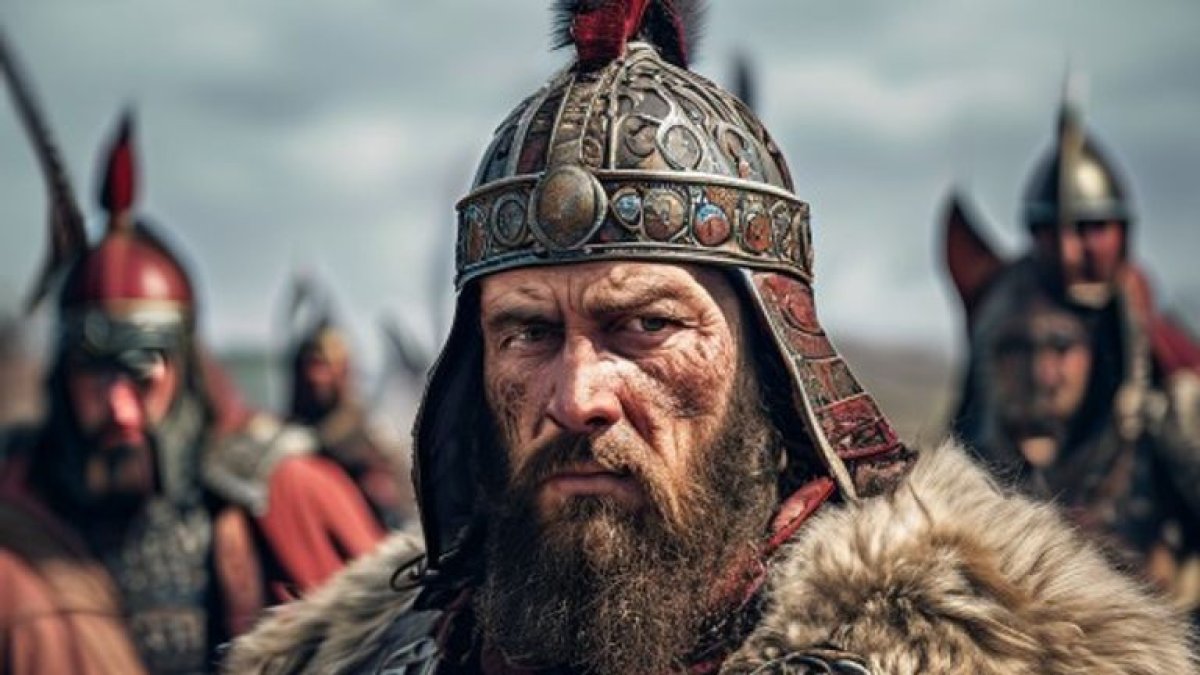
In the mid-5th century AD, a formidable threat emerged from the Eurasian steppes, forever altering the geopolitical landscape of the Roman world: Attila the Hun. As the Western Roman Empire struggled with internal strife and barbarian incursions, its Eastern counterpart, often perceived as more resilient, faced an existential challenge from the Huns. This period saw a series of brutal and devastating attacks, collectively known as Attila’s Balkan Campaigns, which stretched from approximately 441 to 447 AD. These campaigns were not mere raids but systematic efforts to extract tribute and assert Hunnic dominance, laying waste to vast swathes of the rich Balkan provinces and pushing the Eastern Roman Empire, under Emperor Theodosius II, to the very brink. Understanding these campaigns is crucial to grasping the precarious state of the Roman Empire in Late Antiquity and the immense pressure exerted by the Huns before their dramatic westward turn.
The Rise of Attila and the Pre-Campaign Hunnic Threat
By the early 5th century, the Huns had established a vast, if loosely structured, empire north of the Danube. Their power grew steadily, fueled by a relentless warrior culture and the incorporation of various Germanic tribes. Attila, who became their sole ruler around 440 AD, inherited and consolidated this formidable force. Unlike his predecessors, Attila harbored grander ambitions than mere mercenary service or border skirmishes. He envisioned a tributary empire, with Rome, both East and West, paying homage. The Eastern Roman Empire had long maintained an uneasy peace with the Huns through annual subsidies, but Attila viewed these as tokens of submission rather than deterrents. He used perceived breaches of treaties and the alleged harboring of Hunnic refugees as pretexts for his aggressive moves, setting the stage for his devastating Balkan incursions.
The First Wave: Devastation of the Danubian Provinces (c. 441-443 AD)
The initial phase of Attila’s Balkan Campaigns began in 441 AD. With the Eastern Roman forces distracted by a war against the Vandals in North Africa and a conflict with the Sassanid Persians, Attila seized the opportune moment. His armies swept across the Danube, targeting key Roman strongholds along the frontier. Cities like Viminacium, Singidunum (modern Belgrade), and Naissus (Niš) fell in rapid succession. The Huns employed brutal siege tactics, often featuring massive siege engines, and left a trail of destruction, depopulation, and slaughter. The Roman garrisons, often undermanned, proved largely ineffective against the overwhelming Hunnic onslaught. Faced with this catastrophe, Emperor Theodosius II was forced to recall his troops from other fronts and dispatch them to the Balkans. By 443 AD, the emperor’s envoys, including the future general Aspar, negotiated the humiliating Treaty of Margus, which drastically increased the annual tribute paid to the Huns and demanded the return of all Hunnic defectors, regardless of their status.
The Great Hunnic Invasion: Renewed Terror Across the Balkans (c. 447 AD)
The peace established by the Treaty of Margus was short-lived. In 447 AD, Attila, citing further breaches and claiming divine mandate, launched an even larger and more destructive invasion. This second wave of Attila’s Balkan Campaigns was unparalleled in its ferocity and scale. The Hunnic armies, augmented by their Germanic allies, overran Moesia, Scythia Minor, and Thrace.:
- Many cities that had rebuilt after the first invasion, such as Marcianopolis, were once again sacked or destroyed.
- The Huns advanced as far as Thermopylae and Constantinople itself.
- The Battle of the Utus, fought near the Utus River, was a significant, though indecisive, engagement against the Roman forces led by Arnegisclus.
The devastation was so profound that contemporary sources describe the region as a vast wasteland. The Huns did not manage to breach the formidable Theodosian Walls of Constantinople, which had been extensively repaired and reinforced, but they camped outside the city, effectively besieging the capital and further draining the empire’s resources. The pressure forced Theodosius II to negotiate yet another, even more crippling, peace treaty.
The Eastern Empire’s Response and Lasting Impact
The consistent threat of Attila’s Balkan Campaigns profoundly impacted the Eastern Roman Empire’s policies and defenses. Emperor Theodosius II, though often criticized for his diplomatic rather than military approach, ensured the survival of his capital. His primary response involved:
- Diplomacy and Tribute: Paying enormous sums of gold to appease Attila and divert his attention, an unsustainable long-term strategy.
- Fortification: Investing heavily in the repair and strengthening of the
Theodosian Walls of Constantinople, which proved their worth during the 447 AD invasion.
- Military Reorganization: Shifting resources and manpower to rebuild the Danubian defenses, though often too late to prevent initial devastation.
The campaigns left the Balkans depopulated and impoverished, permanently altering its demographic and economic landscape. This period cemented the Huns as a major power and showcased the vulnerability of even the powerful Eastern Roman Empire to concerted barbarian attacks. The experience undoubtedly influenced subsequent Byzantine emperors in their military and diplomatic strategies, underscoring the necessity of strong frontier defenses and a readiness to negotiate, even under duress.
Frequently Asked Questions
Who was Attila and why did he attack the Balkans?
Attila was the formidable leader of the Hunnic Empire from around 440 AD. He attacked the Balkans primarily to assert Hunnic dominance over the Eastern Roman Empire, extract vast amounts of gold as tribute, and use alleged Roman treaty breaches as pretexts for his aggressive campaigns.
Which regions of the Roman Empire were most affected by Attila’s Balkan Campaigns?
The most affected regions were the Danubian provinces of the Eastern Roman Empire, including Moesia, Thrace, Scythia Minor, and Pannonia Secunda. Major cities like Viminacium, Singidunum, Naissus, and Marcianopolis were sacked or destroyed.
How did the Eastern Roman Empire respond to Attila’s invasions?
The Eastern Roman Empire, under Emperor Theodosius II, responded by recalling troops from other fronts, engaging in diplomatic negotiations, and agreeing to increasingly humiliating peace treaties that included massive tribute payments. They also heavily reinforced the Theodosian Walls of Constantinople, which prevented the city’s fall.
What was the significance of the ‘Treaty of Margus’?
The Treaty of Margus, signed in 443 AD, was a temporary and humiliating peace agreement following Attila’s first major Balkan campaign. It significantly increased the annual tribute paid by the Eastern Roman Empire to the Huns and forced the Romans to return all Hunnic defectors, demonstrating Attila’s growing power and Rome’s weakness.
Did Attila ever sack Constantinople during his Balkan campaigns?
No, Attila did not manage to sack Constantinople during his Balkan campaigns. While his armies reached the city’s outskirts and effectively besieged it in 447 AD, the formidable Theodosian Walls, which had been recently reinforced, proved impenetrable.