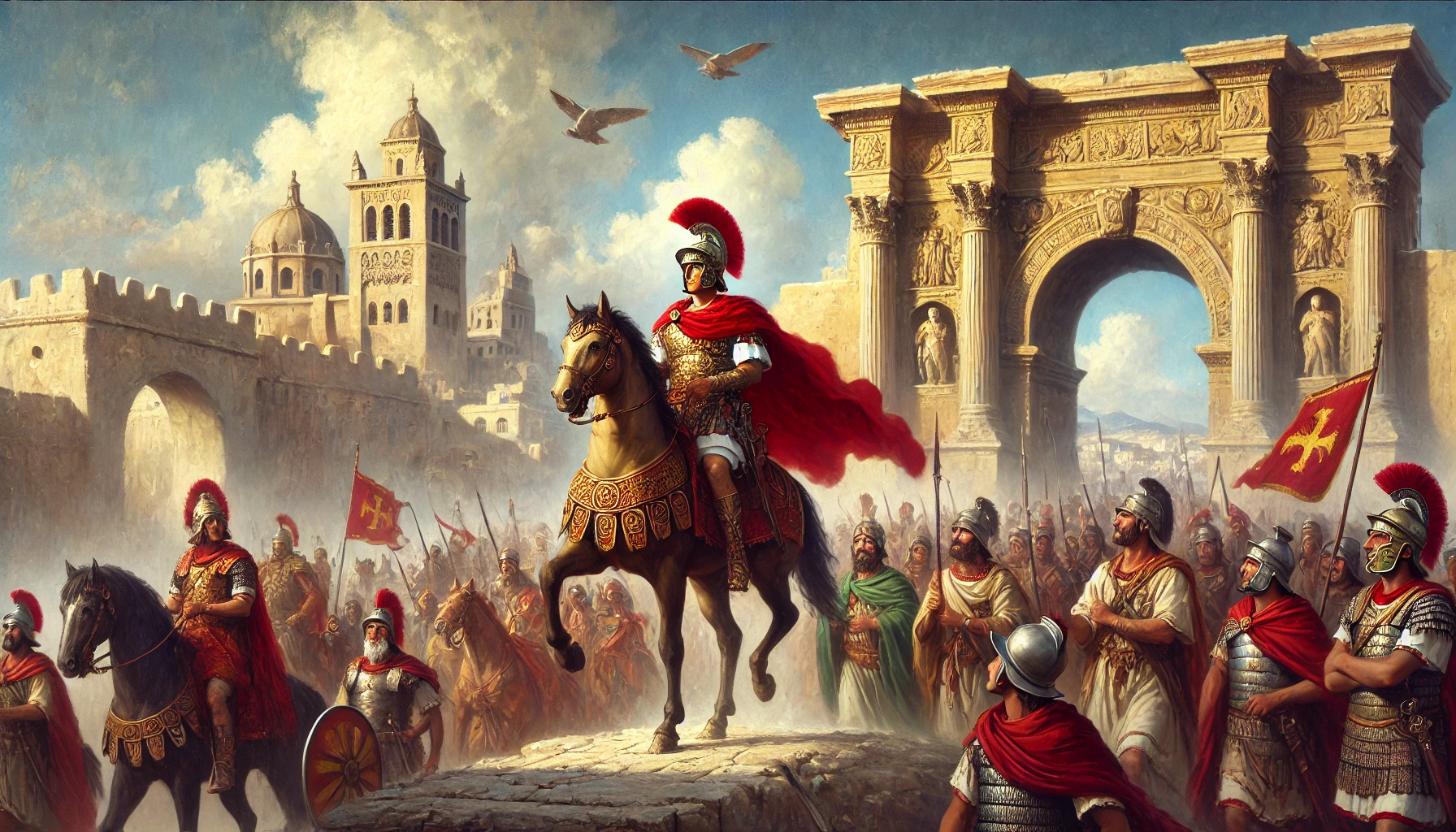
Introduction: The Empire Strikes West
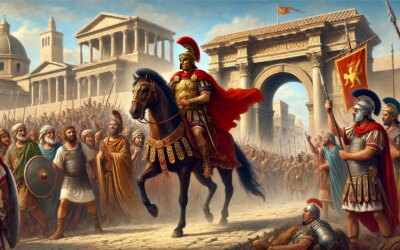
In 533 AD, the Eastern Roman Empire—often labeled the Byzantine Empire—launched a bold campaign to reclaim its lost western territories. At the heart of this effort was General Flavius Belisarius, a brilliant commander under Emperor Justinian I. His entry into Carthage, capital of the Vandal Kingdom in North Africa, marked a stunning military achievement and the rebirth of Roman authority in the West.
The Vandal Kingdom and Roman Memory
Since 439 AD, Carthage had been under the control of the Vandals, a Germanic tribe that had carved out a powerful kingdom in North Africa. Their capture of the city shocked the Roman world; Carthage had been a vital hub of commerce and culture. Its loss symbolized the Empire’s declining grip on the western Mediterranean. Justinian, eager to restore Roman glory, chose Carthage as the first target in his ambitious program of renovatio imperii—the restoration of the empire.
Belisarius: The Emperor’s Sword
Belisarius, born around 500 AD in Thrace, rose quickly through the ranks thanks to his tactical genius and loyalty. Having already proven his worth against the Persians and during the Nika riots in Constantinople, he was entrusted with leading the African expedition. With a fleet of 500 ships and 15,000 men, he sailed from Constantinople to Sicily, then onto North Africa, landing near modern-day Sfax.
The Campaign Begins
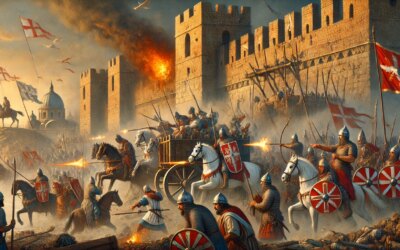
The Vandals, led by King Gelimer, were caught off guard. Their fleet was elsewhere, and internal dissent plagued their court. Belisarius advanced swiftly toward Carthage, engaging and defeating the Vandals at the Battle of Ad Decimum on September 13, 533 AD. Despite being outnumbered, his disciplined troops routed the enemy. Days later, Belisarius entered Carthage unopposed, restoring Roman banners to the city after nearly a century.
Reclaiming North Africa
The fall of Carthage was only the beginning. Gelimer regrouped but was decisively defeated again at the Battle of Tricamarum. Belisarius pursued him into the mountains and eventually secured his surrender. In a matter of months, the Vandal Kingdom—once considered a permanent fixture in the post-Roman West—was erased. Africa was returned to Roman control, and Justinian’s dream moved one step closer to realization.
The Role of Roman Identity
Belisarius’ entry into Carthage was celebrated not only as a military success but as a symbolic victory. It reaffirmed the idea that the Roman Empire, though divided and transformed, still claimed continuity with its ancient past. Justinian’s propaganda emphasized Rome’s unbroken legacy, and coins, laws, and architecture in North Africa once again bore the imperial eagle.
Aftermath and Legacy
Belisarius returned to Constantinople in triumph, bringing Gelimer as a captive and parading spoils through the streets. The reconquest of Africa allowed for further campaigns, including in Italy, where Belisarius would battle the Ostrogoths. Yet maintaining control of these territories proved difficult. Revolts, economic strain, and overextension would challenge Justinian’s gains. Still, the Vandalic War remained a defining moment of late antiquity.
Conclusion: Rome’s Second Sunrise
When Belisarius rode into Carthage in 533 AD, he did more than reclaim a city—he reignited the Roman dream. For a fleeting moment, the empire of Augustus and Constantine shimmered again in the West. The conquest stood as a testament to strategic brilliance and imperial will, offering a glimpse of what Rome once was—and what it still aspired to be. In the sunlit streets of Carthage, Rome had returned, if only for a while.