In the mid-18th century, a profound shift began to reshape European aesthetic sensibilities, largely spearheaded by the influential German art historian Johann Joachim Winckelmann. His seminal writings and meticulous studies of ancient sculpture provided the intellectual bedrock for the movement known as Neoclassicism. While ancient Roman artifacts had always been admired, Winckelmann introduced a rigorous scholarly approach that sought to understand their underlying principles, focusing on concepts of “noble simplicity and quiet grandeur.” His critical analyses, especially in works like “Geschichte der Kunst des Altertums” (History of Ancient Art) published in 1764, were not merely descriptive; they were prescriptive, advocating for a return to the idealized forms and moral virtues he perceived in Greek and, by extension, Roman art. This intellectual earthquake initiated the widespread Winckelmann Neoclassical Revival that swept across Europe around 1769 and for decades thereafter, influencing everything from painting and sculpture to architecture and interior design. His vision moved beyond mere imitation, urging artists to internalize the spirit of antiquity, thereby making the classical legacy a vibrant, living source of inspiration rather than a mere historical curiosity. His untimely death in 1768 only cemented his mythic status, propelling his ideas further into the mainstream and ensuring his enduring impact on the modern appreciation of Roman artistic achievements.
Winckelmann’s Revolutionary Approach to Classical Art
Before Winckelmann, the study of ancient art was often characterized by connoisseurship and fragmented collections, lacking a cohesive historical or theoretical framework. Winckelmann, however, sought to establish a systematic art history, categorizing and analyzing ancient Greek and Roman works with unprecedented rigor. He famously posited that true beauty resided in the idealized forms of Greek sculpture, which he saw as embodying a “noble simplicity and quiet grandeur.” Although he himself had never visited Greece, his profound knowledge of Roman copies and extant Greek works in Italy allowed him to reconstruct a chronological and stylistic development of ancient art.
Distinguishing Greek from Roman
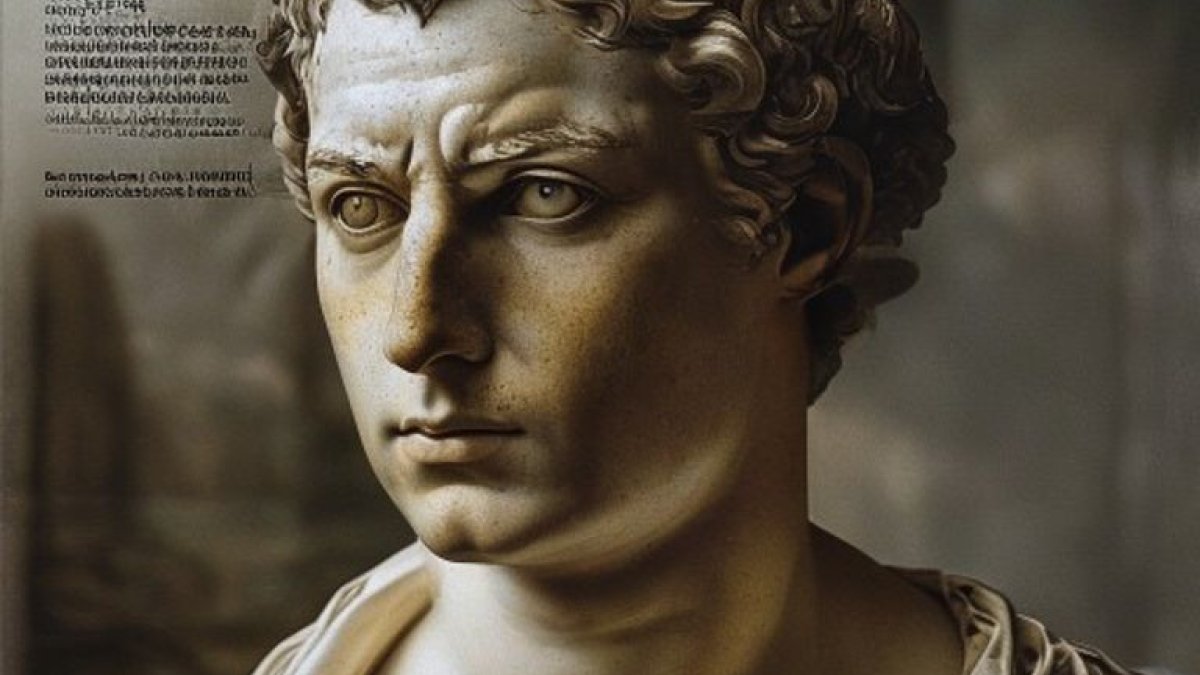
One of Winckelmann’s most significant contributions was his effort to distinguish between original Greek masterpieces and the Roman copies that often comprised the bulk of accessible ancient art. He argued that Roman art, while impressive, often lacked the “sublime” quality of its Greek progenitors. This distinction, though sometimes debated by later scholars, was crucial in elevating Greek art to its supreme status and influencing the aesthetic preferences of the Neoclassical movement. He taught generations of artists and collectors how to look beyond surface ornamentation to grasp the inherent dignity and perfection of classical forms.
- Systematization: Established a chronological and stylistic framework for ancient art.
- Idealization: Emphasized “noble simplicity and quiet grandeur” as core aesthetic values.
- Discrimination: Advocated for distinguishing Greek originals from Roman copies, shaping critical appreciation.
Rome as the Epicenter of the Neoclassical Movement
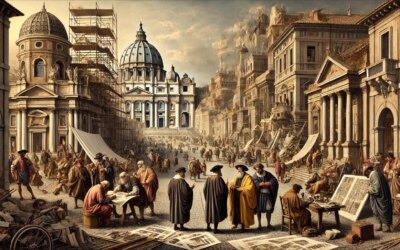
Rome, with its vast repositories of ancient sculptures, ruins, and archaeological sites, served as the undeniable heart of the burgeoning Neoclassical movement. It was here that Winckelmann spent much of his career, first as a librarian to Cardinal Alessandro Albani, gaining unparalleled access to private collections and newly discovered artifacts. The city was a mandatory destination for Grand Tourists, who absorbed Winckelmann’s ideas and carried them back across Europe.
Impact on Artists and Architects
Artists like Anton Raphael Mengs, Angelica Kauffman, and Jacques-Louis David were profoundly influenced by Winckelmann’s theories. David’s iconic paintings, such as “The Oath of the Horatii,” directly reflect Winckelmannian ideals of moral virtue, heroic sacrifice, and a clear, sculptural aesthetic. Similarly, architects like Robert Adam in Britain and numerous others across Europe embraced Roman architectural forms—columns, pediments, and geometric simplicity—eschewing the elaborate flourishes of the Baroque and Rococo. The principles articulated by Winckelmann found expression in grand public buildings, stately homes, and even everyday decorative arts, signifying a widespread cultural shift.
The Winckelmann Neoclassical Revival wasn’t just about recreating ancient forms; it was about re-engaging with the intellectual and moral foundations attributed to classical antiquity. It represented a longing for perceived order, rationality, and civic virtue in an era of Enlightenment thought, drawing heavily on the perceived purity and power of ancient Rome.
Enduring Legacy and Critiques
Winckelmann’s work laid the foundation for modern art history and archaeology, establishing methodologies that would be refined and debated for centuries. His influence extended far beyond the visual arts, shaping literary criticism, philosophy, and even political thought, as classical ideals were invoked to support revolutionary republicanism.
Beyond the Pedestal: Later Interpretations
Despite his monumental impact, Winckelmann’s theories were not without their critics and later reinterpretations. His emphasis on Greek superiority over Roman art, while influential, has been nuanced by subsequent scholarship that recognizes the distinct innovations and artistic merits of Roman culture. Furthermore, the highly idealized and sometimes sanitized view of antiquity he presented has been challenged by more recent archaeological findings and a deeper understanding of the complex social and political realities of the ancient world. Nevertheless, his insistence on direct engagement with ancient objects and his passionate articulation of their aesthetic and moral significance remain cornerstones of classical studies. The Winckelmann Neoclassical Revival truly marked a turning point in Europe’s intellectual and artistic relationship with its classical past.
His tragic death in Trieste in 1768, murdered by a companion, further added to his mystique, ensuring that his legacy would continue to inspire artists, scholars, and thinkers long after his passing, cementing his place as a pivotal figure in the understanding and appreciation of Roman and Greek antiquity.
Frequently Asked Questions
Who was Johann Joachim Winckelmann?
Johann Joachim Winckelmann was a pioneering German art historian and archaeologist whose writings profoundly influenced the Neoclassical movement in the 18th century, advocating for a return to the idealized forms and moral virtues of classical art.
What was Winckelmann’s most significant contribution to art history?
His most significant contribution was establishing a systematic framework for the study of ancient art, particularly his work “Geschichte der Kunst des Altertums” (History of Ancient Art) published in 1764, which distinguished between Greek and Roman styles and championed the aesthetic of “noble simplicity and quiet grandeur.”
How did Winckelmann’s ideas relate to Roman art specifically?
While he primarily idealized Greek art, Winckelmann extensively studied Roman copies and originals, using them to understand ancient artistic principles. His work led to a revival of interest in classical forms, which included a strong focus on Roman architecture, sculpture, and decorative arts as exemplars of classical aesthetic ideals, sparking the Winckelmann Neoclassical Revival.
Which major artistic movement was influenced by Winckelmann?
Winckelmann was the intellectual father of Neoclassicism, an artistic and architectural movement that emphasized classical forms, moral themes, and rationality, contrasting sharply with the preceding Baroque and Rococo styles.
Did Winckelmann ever visit Greece?
No, despite his profound admiration and study of Greek art, Winckelmann never had the opportunity to visit Greece. His understanding of Greek art was primarily derived from the Roman copies he studied extensively in Italy.