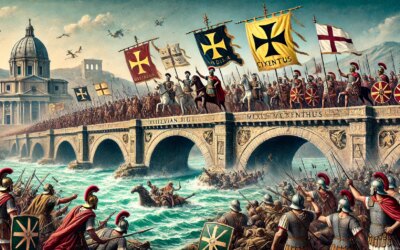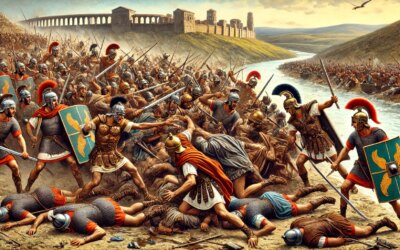
In the turbulent mid-fourth century AD, the Western Roman Empire grappled with incessant barbarian incursions, particularly from the aggressive Alamanni tribes along the Rhine frontier. Amidst this chaos, a young Caesar, Julian, later known as Julian the Apostate, rose to prominence, tasked with securing Gaul. His decisive military genius was spectacularly demonstrated in 357 AD at the Battle of Argentoratum, near modern-day Strasbourg. This pivotal engagement saw a vastly outnumbered Roman force achieve a stunning victory, a moment that would etch Julian’s name into the annals of military history and temporarily stabilize a crucial imperial province. Julian’s Victory at Argentoratum was not merely a tactical triumph; it was a testament to Roman discipline and leadership in a period often characterized by decline, providing a much-needed morale boost and a strategic reprieve for the beleaguered Western Empire against a formidable Germanic foe.
The Context of Conflict: Gaul in the Mid-4th Century
By the mid-fourth century AD, the Roman province of Gaul was a frontier under relentless pressure. Years of civil war, usurpations, and diminished resources had left much of its infrastructure in ruins and its defenses weakened. The Alamanni, a confederation of Germanic tribes, capitalized on this instability, frequently crossing the Rhine to raid Roman territory, sack cities, and establish temporary settlements. These incursions were not mere border skirmishes; they represented a significant threat to Roman authority and the lives of its provincial inhabitants. Emperor Constantius II, preoccupied with matters in the East and his own imperial struggles, had appointed his young cousin, Julian, as Caesar of Gaul in 355 AD. Julian, more a scholar than a soldier initially, was given the formidable task of restoring order and repelling the barbarian threat, a challenge many believed insurmountable given the depleted state of the Roman armies in the region.
The Strategic Importance of Gaul
Gaul was not just a province; it was a vital economic and military stronghold for the Western Roman Empire. Its fertile lands provided essential grain, and its strategic position allowed for deployment of forces to other threatened frontiers. The Rhine, while a natural barrier, was also a gateway for invasions. Maintaining control over Gaul was paramount for the survival of the Western Empire, making Julian’s mission particularly critical. The Alamannic presence jeopardized trade routes, agricultural output, and the very fabric of Roman governance.
Julian’s Preparations and the March to Argentoratum
Despite his relative inexperience, Julian quickly demonstrated a remarkable aptitude for military command. He spent the years 355-356 AD rebuilding the legions, restoring discipline, and launching several smaller, successful campaigns to push back barbarian elements. In 357 AD, news arrived that a massive Alamannic force, led by their paramount king Chnodomar and several other chieftains, had gathered near Argentoratum (Strasbourg), intending a deeper and more devastating invasion. This coalition represented an unprecedented threat, boasting numbers estimated to be significantly larger than any force Julian could muster.
Assembling the Roman Forces
Julian, in conjunction with the Magister Equitum Barbatio, gathered his available legions. Barbatio commanded approximately 13,000 men, while Julian led a slightly smaller force of around 10,000 men. The challenge was not just the numerical superiority of the enemy, but also the need for these two Roman commands to coordinate effectively. Julian’s approach to Argentoratum was characterized by caution and strategic positioning, aiming to intercept the Alamanni before they could fully consolidate their positions and inflict further damage on Roman settlements. The Alamanni, confident in their overwhelming numbers, were eager for a decisive confrontation, believing they could crush the Roman legions and secure Gaul for themselves.
The Battle Unfolds: Roman Discipline Against Barbarian Ferocity
The Battle of Argentoratum, fought in the summer of 357 AD, was a clash of vastly different military doctrines. The Alamanni deployed their forces in a dense, intimidating formation, relying on their sheer numbers, ferocity, and individual prowess. King Chnodomar, a veteran warrior, led them directly, intending to overwhelm the Romans with a furious charge. Julian, however, had positioned his troops strategically, utilizing the terrain to his advantage and relying on the superior training and discipline of his Roman legions.
Key Moments of the Engagement
- Initial Engagement: The Alamanni launched a powerful assault, particularly targeting the Roman cavalry. The Roman cavalry wing, initially composed of Gallic auxiliaries, struggled and briefly faltered under the barbarian onslaught, creating a moment of severe peril.
- Julian’s Intervention: Julian, demonstrating remarkable personal courage and leadership, rallied his wavering troops, preventing a complete collapse. He repositioned his infantry, tightening their formation, and ensured a steady front against the barbarian tide.
- Infantry Resilience: The Roman heavy infantry, forming a solid defensive line, absorbed the shock of the Alamannic charge. Their disciplined shield walls and coordinated thrusts proved devastatingly effective against the less organized barbarian warriors.
- Flanking Maneuvers: As the Alamanni pressed their attack, Roman units executed precise flanking maneuvers, exploiting gaps that opened in the barbarian lines. The superior Roman tactics and training began to tell on the battlefield.
By late afternoon, the Alamanni were broken. Their losses were catastrophic, with thousands killed and many more driven into the Rhine, where they drowned. King Chnodomar himself was captured, a symbolic and strategic victory for the Romans. Julian’s leadership and the unwavering discipline of his legions had turned the tide against overwhelming odds, securing one of Rome’s most significant victories in Late Antiquity.
The Aftermath and Julian’s Legacy
The impact of Julian’s Victory at Argentoratum was immediate and profound. It not only crushed the immediate Alamannic threat but also sent a clear message to other barbarian tribes along the Rhine: Roman power, even in decline, was still formidable when led effectively. Julian followed up this victory with further campaigns, systematically clearing Gaul of barbarian presence and strengthening the frontier defenses. The battle cemented Julian’s reputation as a brilliant military commander, a stark contrast to his earlier image as a bookish philosopher.
Julian’s Rise to Prominence
This triumph was a significant step in Julian’s journey to becoming emperor. His popularity among the legions in Gaul soared, eventually leading to his proclamation as Augustus by his troops in 360 AD, setting the stage for a brief but intense civil conflict with Constantius II. The Battle of Argentoratum underscored the strategic importance of effective field command and the enduring strength of Roman military organization. It provided a crucial period of stability for Gaul, allowing for reconstruction and a temporary respite from the constant barbarian pressure, proving that even in the twilight of the Western Roman Empire, decisive victories were still possible against overwhelming odds.
Frequently Asked Questions
Who was Julian and what was his role before the Battle of Argentoratum?
Julian, later known as Julian the Apostate, was the cousin of Emperor Constantius II. Appointed Caesar of Gaul in 355 AD, his primary role was to restore order and repel barbarian incursions along the Rhine frontier.
What was the significance of the Battle of Argentoratum in 357 AD?
Julian’s Victory at Argentoratum was crucial as it decisively defeated a massive Alamannic invasion, securing Roman Gaul and boosting Roman morale. It showcased Julian’s military genius and temporarily stabilized the Western Empire’s Rhine border.
How did the Roman forces achieve victory despite being outnumbered?
The Roman forces, led by Julian, triumphed due to superior discipline, tactical positioning, and the use of terrain. Their heavy infantry held firm against the Alamannic charge, while coordinated maneuvers broke the enemy’s less organized formations.
Who was Chnodomar, and what happened to him after the battle?
Chnodomar was the paramount king of the Alamanni confederation and a leading figure in the invasion of Gaul. After the devastating defeat at Argentoratum, he was captured by the Romans, a major blow to the Alamannic leadership.
What was the long-term impact of Julian’s victory?
The long-term impact included a period of stability for Gaul, Julian’s increased popularity among his troops, which contributed to his later proclamation as Augustus, and a renewed, albeit temporary, demonstration of Roman military might against barbarian threats.