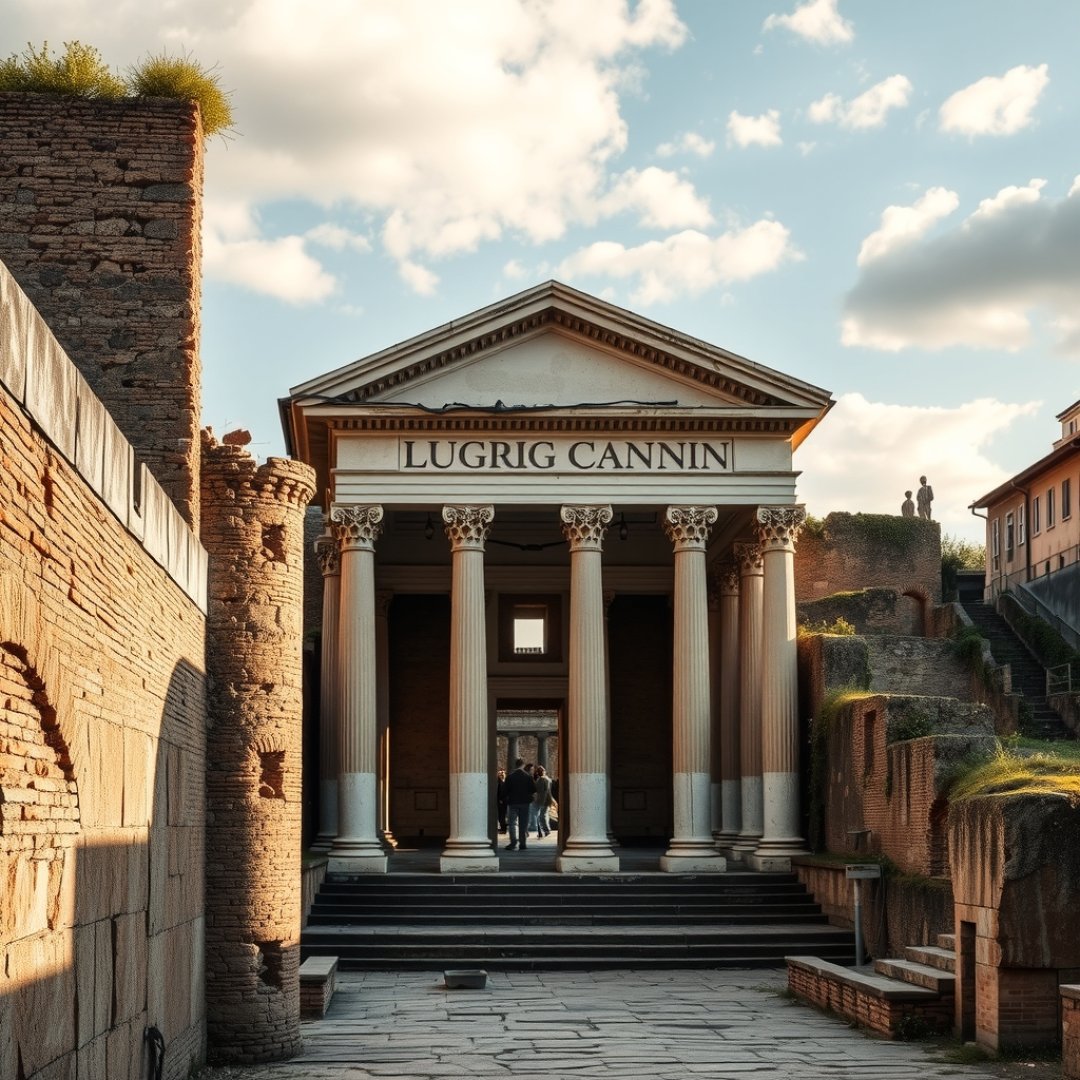
In the heart of Rome, where centuries of history lay buried beneath successive layers of debris and later structures, the mid-19th century marked a pivotal era for understanding the Eternal City’s ancient past. While the Roman Forum had always been a site of immense historical significance, much of its grandeur remained obscured, swallowed by time, earth, and later medieval and Renaissance constructions. It was within this context that the distinguished archaeologist and architect Luigi Canina embarked on a series of systematic excavations, profoundly transforming the landscape and our perception of this iconic imperial core. His meticulous work in the Luigi Canina Roman Forum from roughly 1842 to 1848 represents a crucial chapter in modern archaeology, moving beyond mere treasure hunting to a more scientific approach to site interpretation and preservation, revealing the true scale and complexity of what was once the vibrant epicenter of Roman public life. This period saw the uncovering of vital elements, laying the groundwork for future generations of scholars and tourists to truly grasp the monumental scope of ancient Rome’s achievements and its foundational role in Western civilization.
The Roman Forum: A Landscape Transformed by Time
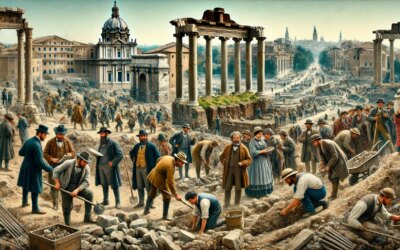
Prior to the systematic efforts of archaeologists like Luigi Canina, the Roman Forum presented a vastly different picture than the well-ordered archaeological park we know today. For centuries, following the decline of the Western Roman Empire, the Forum had largely been abandoned, gradually becoming known as the Campo Vaccino, or ‘Cow Pasture.’ Significant monuments were buried under meters of earth and rubble, used as quarries for building materials, or incorporated into later medieval churches and fortifications. Though some piecemeal excavations had occurred, particularly during the Renaissance and early modern periods, these often lacked a cohesive plan, focusing on individual statues or architectural fragments rather than a comprehensive understanding of the site’s layout. By the early 19th century, monumental remains such as the Arch of Septimius Severus, the Temple of Saturn, and portions of the Basilica of Maxentius stood as isolated ruins, providing only tantalizing glimpses of the once-bustling civic center.
Luigi Canina’s Vision and Methodologies
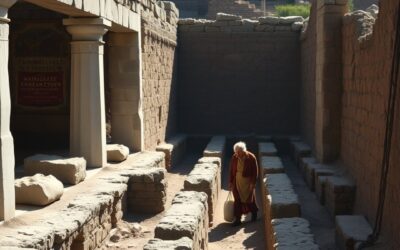
Luigi Canina (1795–1856), an accomplished architect and archaeologist, brought a new level of systematic rigor to the excavation of the Roman Forum under the patronage of Pope Gregory XVI and later Pius IX. His approach, beginning in earnest around 1842, moved beyond mere recovery of artifacts to a more ambitious reconstruction of the Forum’s ancient appearance. Canina’s architectural background informed his understanding of structural engineering, allowing him to interpret foundations and architectural fragments with greater precision. He meticulously cleared vast areas, removing centuries of accumulated earth and medieval structures that had obscured the ancient ground level. His method involved detailed surveys and the creation of comprehensive plans, aiming to restore the visual relationships between monuments. Key areas of his work included the full exposure of the Basilica Julia, the Vestal Cloister, and significant portions around the Temple of Castor and Pollux, often employing anastylosis – the reconstruction of a monument using original architectural elements – where possible.
Key Principles of Canina’s Work:
- Systematic Clearing: Removing accumulated earth and debris to reveal original ground levels.
- Architectural Interpretation: Using his expertise to understand the original form and function of structures.
- Visual Cohesion: Aiming to present the Forum as a unified archaeological landscape.
- Anastyolsis: Re-erecting fallen columns and architectural elements using original fragments.
Reshaping Rome’s Ancient Core and Enduring Legacy
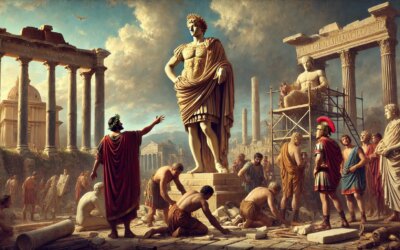
Canina’s ambitious excavations and restorations profoundly reshaped the Roman Forum, transforming it from a collection of isolated ruins into a recognizable ancient urban space. His work revealed the true scale of imperial monumental architecture and provided a clearer understanding of the Forum’s complex evolution over centuries. By exposing and partially reconstructing key basilicas, temples, and triumphal arches, Canina allowed visitors and scholars to begin to grasp the spatial relationships that defined the heart of ancient Rome. While later archaeological methods would evolve, sometimes critiquing the extent of his reconstructions, Canina’s pioneering efforts laid essential groundwork. His detailed plans and meticulous documentation served as invaluable resources for subsequent generations of archaeologists and historians. The visual presentation of the Forum today, with its cleared central area and exposed ancient pavements, owes a significant debt to Luigi Canina Roman Forum and his foundational work during the mid-19th century, making it accessible and intelligible to the public.
Frequently Asked Questions
Who was Luigi Canina?
Luigi Canina (1795–1856) was an influential Italian architect and archaeologist primarily active in the Papal States during the 19th century. He is renowned for his systematic approach to excavating and interpreting ancient Roman sites, particularly his extensive work in the Roman Forum.
What was the Roman Forum like before Canina’s excavations?
Before Canina’s work, much of the Roman Forum was buried under meters of earth, debris, and later structures. It was often used as a pasture and quarry, with only the tops of some major monuments visible or partially excavated in an unsystematic manner.
What was unique about Canina’s approach to archaeology?
Canina’s approach was distinct for its systematic methodology, focusing on clearing large areas to reveal entire structures and their relationships, rather than just isolated finds. His architectural background also allowed him to interpret and reconstruct ancient buildings with greater accuracy and a vision for the overall landscape.
Which significant structures did Canina uncover or restore?
Canina’s excavations revealed and restored significant portions of the Basilica Julia, the Vestal Cloister, the Temple of Castor and Pollux, and various other components around the central Forum area, significantly altering its visible layout.
How did Canina’s work impact the modern understanding of the Roman Forum?
Canina’s efforts transformed the Roman Forum from a chaotic field of ruins into a coherent archaeological site. His systematic clearing and architectural interpretations laid the foundation for modern archaeological study of the Forum and greatly influenced how the site is understood and presented to visitors today.