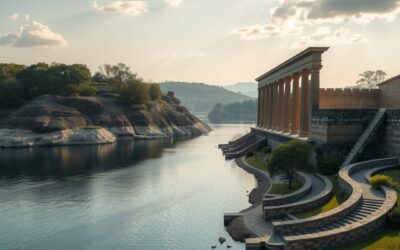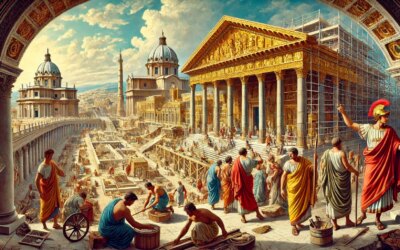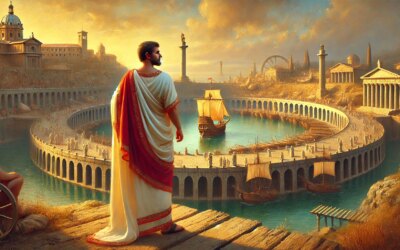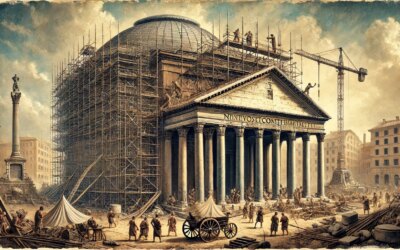
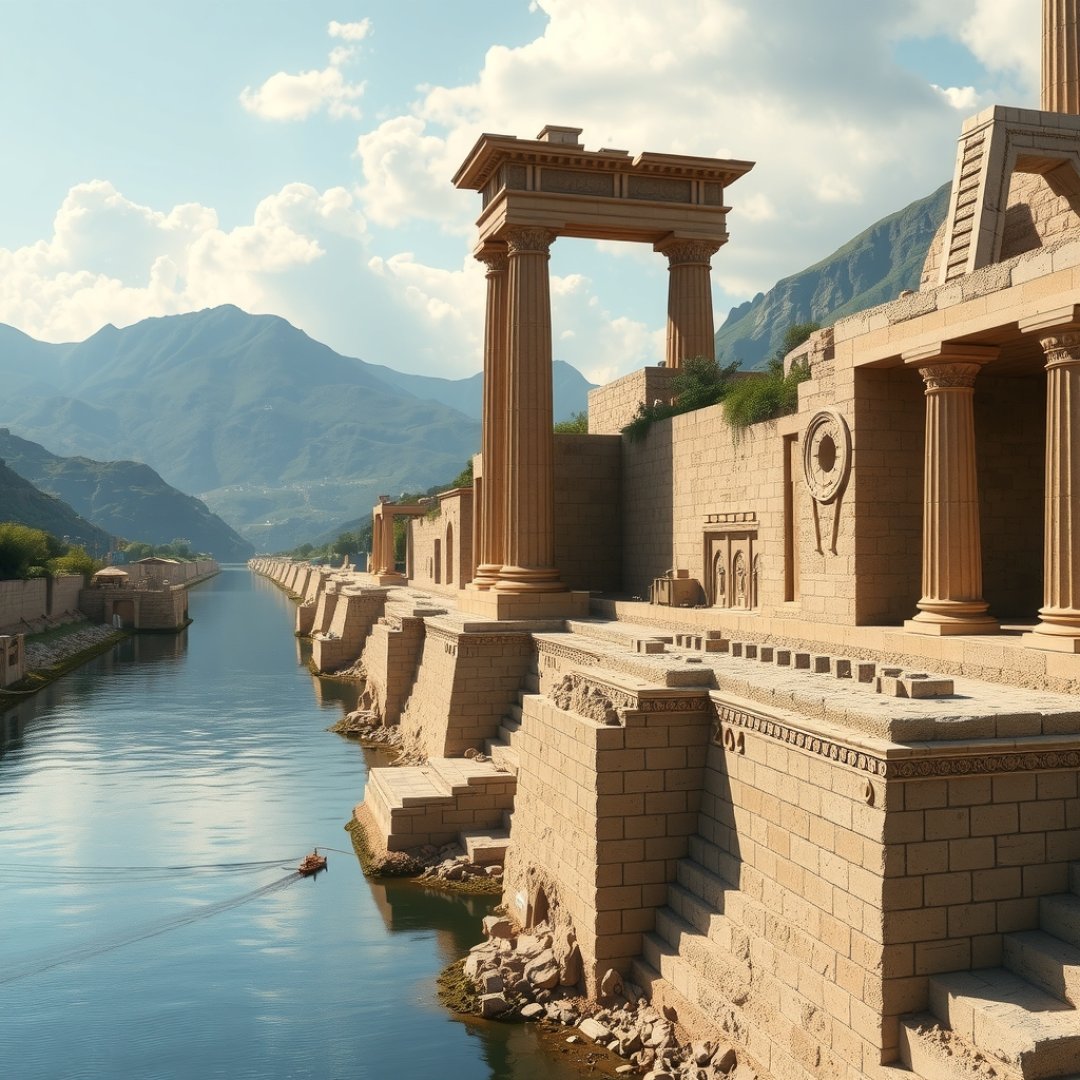
In the autumn of AD 67, a grandiose vision took shape on the Isthmus of Corinth, marking a pivotal moment in Roman imperial ambition: Nero’s Corinth Canal Project. During his extended tour of Greece, an event marked by unprecedented artistic and athletic indulgence, Emperor Nero turned his attention to a challenge that had tantalized rulers for centuries: severing the narrow land bridge connecting mainland Greece with the Peloponnese. This monumental undertaking, aiming to create a navigable waterway between the Gulf of Corinth and the Saronic Gulf, promised to revolutionize maritime trade, eliminate the perilous circumnavigation of the Peloponnese, and cement Nero’s legacy as an engineering genius on par with, or even surpassing, his predecessors. While the project was short-lived, its initiation by Nero with his own hands, literally breaking ground with a golden pickaxe, symbolizes the boundless, often extravagant, aspirations of an emperor increasingly detached from Roman senatorial tradition, yet deeply invested in leaving an indelible mark upon the world. The audacity of this scheme, conceived amidst a backdrop of political intrigue and personal excess, offers a fascinating glimpse into the mechanics of Roman engineering capabilities, the scope of imperial power, and the transient nature of even the most ambitious dreams when confronted by political upheaval.
The Genesis of a Vision
A Long-Held Dream
The concept of a canal across the Isthmus of Corinth was not original to Nero; it was a dream that had captivated several Hellenistic rulers and even earlier Roman leaders. Demetrius Poliorcetes, Julius Caesar, and Caligula had all reportedly considered the immense challenge of carving a waterway through the rocky terrain. The primary motivation was clear: to bypass the treacherous sea voyage around the Peloponnese, particularly the stormy Cape Malea, which was notorious for shipwrecks and delays. Such a canal would dramatically shorten shipping routes between the Adriatic and Aegean Seas, boosting trade, speeding up military movements, and enhancing Roman control over the lucrative maritime networks of the East.
Nero’s Grand Tour and Greek Affinity
Nero, an emperor with a profound, almost obsessive, love for Greek culture, art, and athletic pursuits, found himself in a unique position to revive this ancient ambition. His tour of Greece, lasting from AD 66 to 68, was an elaborate display of his philhellenic tendencies, during which he participated in and often “won” various athletic and artistic competitions. It was amidst this atmosphere of self-indulgence and cultural immersion that Nero decided to undertake the canal project. He saw it not merely as a practical engineering feat but as a symbolic gesture, linking him to the great Hellenistic monarchs and solidifying his personal connection to Greece, thereby imprinting his name on a venture that previous, perhaps more pragmatic, rulers had deemed too formidable.
Cutting Through the Isthmus
The Inauguration and Initial Labor
The ceremonial groundbreaking for the canal in AD 67 was an event steeped in imperial pomp. According to ancient sources like Suetonius, Nero himself initiated the work by digging the first soil with a golden pickaxe, carrying it away in a basket. This act underscored the personal commitment of the emperor to the project. The chosen route for the canal was approximately 6.3 kilometers (about 3.9 miles) long, traversing the narrowest part of the Isthmus. The engineering challenge was immense, involving cutting through rock and varying elevations. The proposed width was around 50 meters (164 feet).
Manpower and Methods
The workforce deployed for Nero’s Corinth Canal Project was vast and diverse. Thousands of laborers were reportedly employed, including skilled engineers and surveyors from Egypt, prisoners of war, convicted criminals, and perhaps most notably, six thousand Jewish captives brought from Judea following the suppression of the Jewish Revolt. These laborers worked in shifts, using rudimentary tools like pickaxes and shovels. The method likely involved digging trenches from both ends, gradually converging towards the center, with earth and rock being excavated and transported away. While sophisticated by ancient standards, the technology available was still limited, making the sheer scale of the manual labor truly staggering.
The Abandonment and Legacy
The Sudden Halt
Despite the grand inauguration and the deployment of massive resources, Nero’s ambitious canal project was destined for an abrupt and premature end. Work continued for approximately three months, during which a significant trench, around 3.3 kilometers (2 miles) long and 40 meters (130 feet) wide in places, was excavated, primarily from the western side near Lechaion. However, the project came to an unceremonious halt in AD 68 when Nero was forced to return to Rome. Faced with widespread rebellions, particularly the revolt of Vindex in Gaul and later Galba in Hispania, Nero’s grip on power was rapidly deteriorating. He simply could not afford to remain in Greece pursuing engineering fantasies while his empire unraveled. His subsequent suicide in June AD 68 effectively sealed the fate of the Corinth Canal, as his successors showed no interest in continuing such a costly and politically charged venture.
A Dream Revived: The Modern Canal
Though Nero’s effort failed, the vision of a Corinthian canal never entirely faded. The existing traces of Nero’s trench served as a testament to the persistent dream. Centuries later, in the late 19th century, the project was finally realized. The modern Corinth Canal, largely following Nero’s original planned route, was constructed between 1881 and 1893 by a French company, later completed by Greek engineers. This successful completion, leveraging steam power and explosives unavailable to Nero, finally brought to fruition the maritime shortcut that had eluded emperors and engineers for millennia. Today, the modern canal serves as a busy waterway, and its existence is a powerful echo of Nero’s Corinth Canal Project, reminding us of the enduring human ambition to conquer nature and reshape geography.
Frequently Asked Questions
What was the purpose of Nero’s Corinth Canal Project?
The primary purpose was to create a navigable shortcut between the Gulf of Corinth (Ionian Sea) and the Saronic Gulf (Aegean Sea), allowing ships to bypass the dangerous and time-consuming circumnavigation of the Peloponnese peninsula, particularly the treacherous Cape Malea.
How was the canal construction undertaken during Nero’s time?
Emperor Nero himself ceremonially broke ground with a golden pickaxe in AD 67. The project employed thousands of laborers, including skilled engineers, prisoners of war, convicted criminals, and Jewish captives, who used manual tools like pickaxes and shovels to dig a trench through the Isthmus.
Why was Nero’s Corinth Canal Project ultimately abandoned?
The project was abandoned in AD 68 when Nero had to return to Rome due to widespread revolts against his rule. His subsequent suicide effectively ended the ambitious, costly endeavor, as his successors prioritized political stability over such grand engineering feats.
Did anyone attempt to complete the canal after Nero?
While several ancient rulers had contemplated the project, no significant attempts were made to complete the canal after Nero’s short-lived effort until modern times. The existing Corinth Canal was finally constructed much later, between 1881 and 1893, using modern engineering techniques.
What is the historical significance of Nero’s Corinth Canal Project?
Nero’s Corinth Canal Project is significant as a testament to the grand ambitions of Roman emperors and their willingness to undertake massive engineering challenges. Although unfinished, it highlights Roman engineering capabilities and prefigures the eventual successful completion of the canal in the modern era, leaving a lasting mark on the landscape and maritime history.