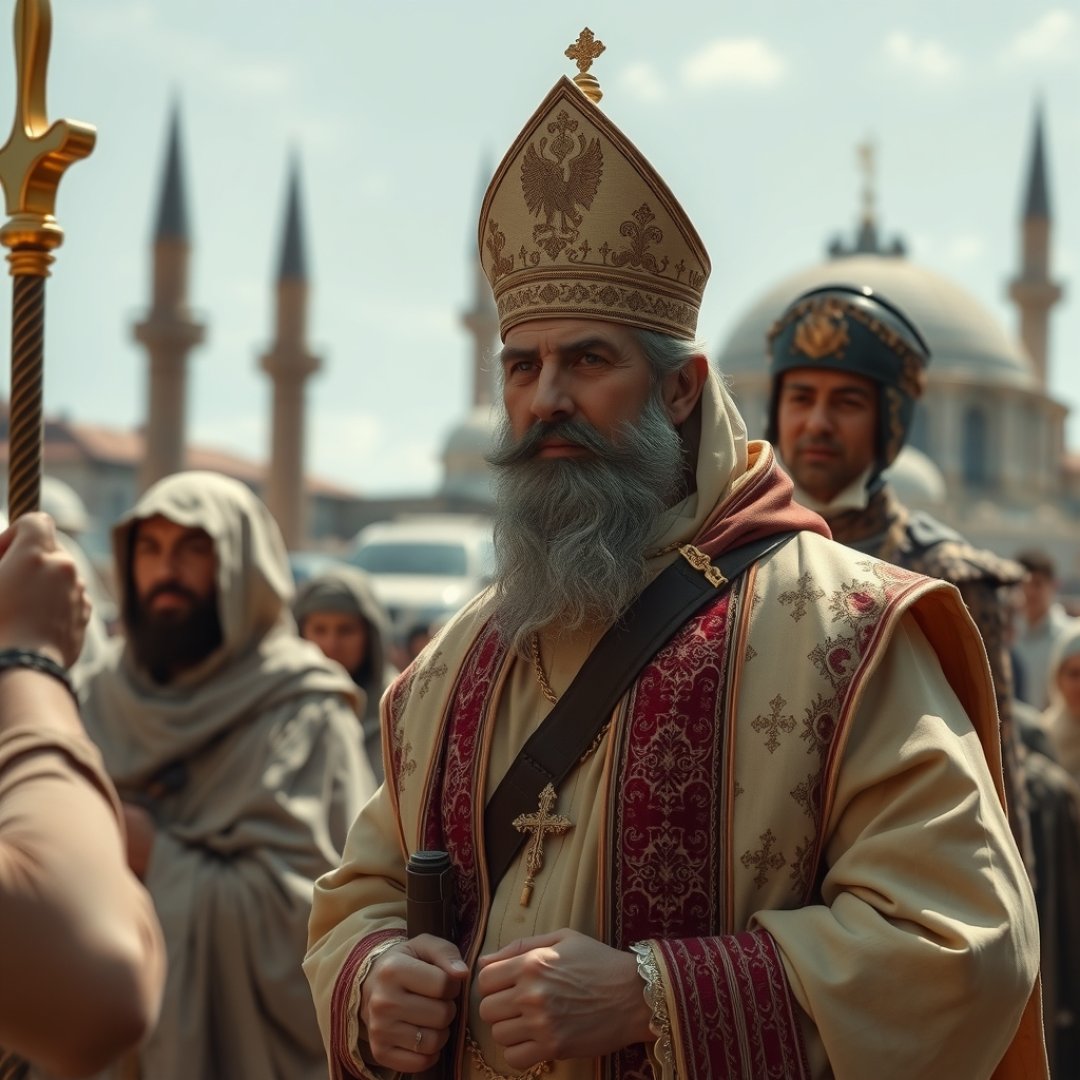
In the early 8th century, as the Western Roman Empire had long faded and the Eastern Roman, or Byzantine, Empire grappled with its own internal and external pressures, an extraordinary event unfolded that would shape the delicate balance between East and West for centuries to come. Between 710 and 711 AD, Pope Constantine, a Syrian by birth, embarked on an arduous and politically charged voyage from Rome to Constantinople, the majestic capital of Byzantium. This historic undertaking, known as Pope Constantine’s Journey, was far more than a mere courtesy call; it represented a critical diplomatic mission aimed at resolving profound theological disputes that threatened to further fracture the Christian world. Specifically, the unresolved canons of the Quinisext Council, held in 692 AD, had created a deep chasm between the Roman See and the Byzantine Emperor Justinian II, who insisted on their universal acceptance. Pope Constantine’s willingness to travel to the very heart of Byzantine power underscored the immense importance placed on maintaining a semblance of ecclesiastical and imperial unity, even as the two halves of the former Roman world continued to drift apart culturally and politically. His journey stands as a testament to the persistent, if often tenuous, efforts to bridge the growing divides within the Christian oikoumene.
The Quinisext Council’s Legacy: A Crisis of Canons
The roots of Pope Constantine’s diplomatic mission lay nearly two decades earlier, in the year 692 AD, when Emperor Justinian II convened the Quinisext Council in Constantinople, also known as the Council in Trullo. This council aimed to supplement the Fifth and Sixth Ecumenical Councils with disciplinary canons, establishing a uniform code for the entire Christian Church. However, many of its decrees were deeply problematic for the Western Church. Canons such as the endorsement of married clergy below the rank of bishop, the prohibition of fasting on Saturdays during Lent, and the elevation of the Patriarch of Constantinople to equal standing with the Bishop of Rome (a point of perpetual contention) were seen as direct affronts to Roman tradition and papal primacy. Pope Sergius I had unequivocally rejected many of these canons, leading to a severe rupture in relations with Justinian II, who initially sought to arrest the Pope. While this attempt failed, the theological and canonical chasm remained, threatening to solidify a nascent East-West schism.
The Perilous Papal Voyage to Byzantium
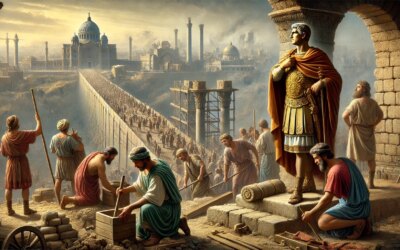
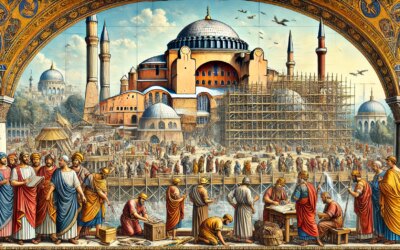
In 710 AD, responding to a renewed imperial summons, the then elderly Pope Constantine agreed to undertake what was arguably the most significant and perilous journey of his pontificate. The decision to travel to Constantinople was a monumental one, fraught with danger given the political instability of the era and the inherent risks of sea travel. Accompanied by a large retinue, including two bishops, numerous priests, deacons, and a representative of the exarch of Ravenna, the Pope’s delegation was both spiritual and political. The Byzantine Empire pulled out all the stops for his reception: imperial officials greeted him at every stop, churches were placed at his disposal, and even a special imperial road was constructed for his passage. This grand reception underscored the emperor’s earnest desire for a resolution, as well as the immense symbolic weight attached to the Pope Constantine’s Journey, a unique occurrence that would not be replicated by a reigning pontiff for over a thousand years.
Reconciliation at the Golden Gate: Pope Constantine and Justinian II
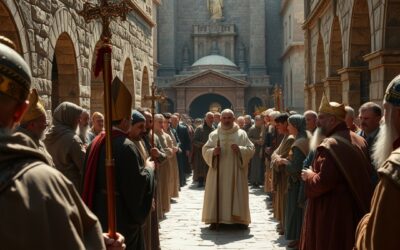
Upon his arrival at the Golden Gate of Constantinople in October 710 AD, Pope Constantine was met by Emperor Justinian II himself, who, along with his son and co-emperor Tiberius, prostrated himself before the pontiff. This act of proskynesis was a profound symbolic gesture, acknowledging the spiritual authority of the Roman See and setting a tone of reverence and respect for the ensuing negotiations. Over several months, Pope Constantine and Justinian II engaged in discussions, likely facilitated by the Pope’s Syrian heritage which allowed him to bridge cultural and linguistic gaps. The outcome was a carefully crafted compromise: Pope Constantine affirmed the Quinisext Council’s canons, but crucially, he did so with an understanding that the contentious canons would not be imposed on the Western Church where they contradicted established Roman practice. Justinian II, in turn, accepted this nuanced affirmation, thereby validating the council’s authority in the East while respecting Western traditions. This agreement, solidified by a subsequent imperial decree, represented a significant, albeit fragile, achievement in maintaining ecclesiastical unity.
A Fleeting Unity: The Aftermath and Lasting Impact
The immediate consequence of Pope Constantine’s Journey was a temporary but vital reconciliation between the Roman Papacy and the Byzantine Emperor, averting a full-blown schism at a critical juncture. The Pope’s diplomatic success allowed for a period of improved relations, restoring some semblance of the universal church’s unity. However, the stability achieved was tragically short-lived. Shortly after Pope Constantine’s return to Rome in October 711 AD, Emperor Justinian II was overthrown and brutally murdered by Philippicus Bardanes. This abrupt change in imperial leadership immediately undermined the hard-won agreement, as Philippicus was a staunch Monothelite, a theological stance previously condemned by Rome. While Pope Constantine’s mission stands as a testament to the persistent efforts to bridge the growing divide, the political instability of the Byzantine Empire and the enduring theological differences meant that this fleeting unity would ultimately give way to further estrangement, laying groundwork for later, more permanent schisms between East and West.
Frequently Asked Questions
What was the main reason for Pope Constantine’s Journey to Constantinople?
The primary reason was to resolve the theological and disciplinary disputes arising from the Quinisext Council (692 AD), whose canons were largely unacceptable to the Western Church, threatening a significant schism.
Who was Emperor Justinian II, and what was his role?
Justinian II was the Byzantine Emperor who convened the Quinisext Council and was insistent on its universal acceptance. His powerful personality and desire for religious uniformity made the papal visit crucial for reconciling East and West.
Why is Pope Constantine’s Journey considered so significant in history?
It was the last time a Pope visited Constantinople until the 20th century, marking a critical, albeit temporary, moment of reconciliation between the Roman Papacy and the Byzantine Imperial Church, thereby delaying a major schism.
What was the outcome of the meeting between Pope Constantine and Justinian II?
Pope Constantine agreed to accept most of the Quinisext Council’s canons, though with certain reservations concerning their applicability in the West. In return, Justinian II acknowledged Rome’s authority and did not force full compliance, achieving a fragile ecclesiastical peace.
Did this agreement permanently resolve the East-West schism?
No, while it achieved a temporary reconciliation, the underlying theological and political differences continued to grow. Justinian II was overthrown shortly after, and subsequent events further strained East-West relations, leading eventually to the Great Schism of 1054.