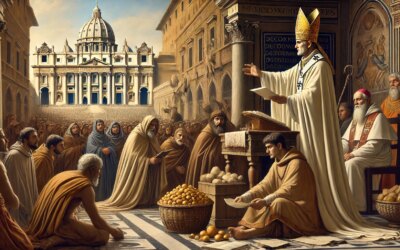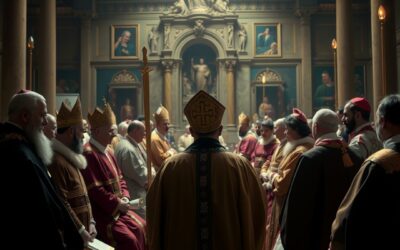
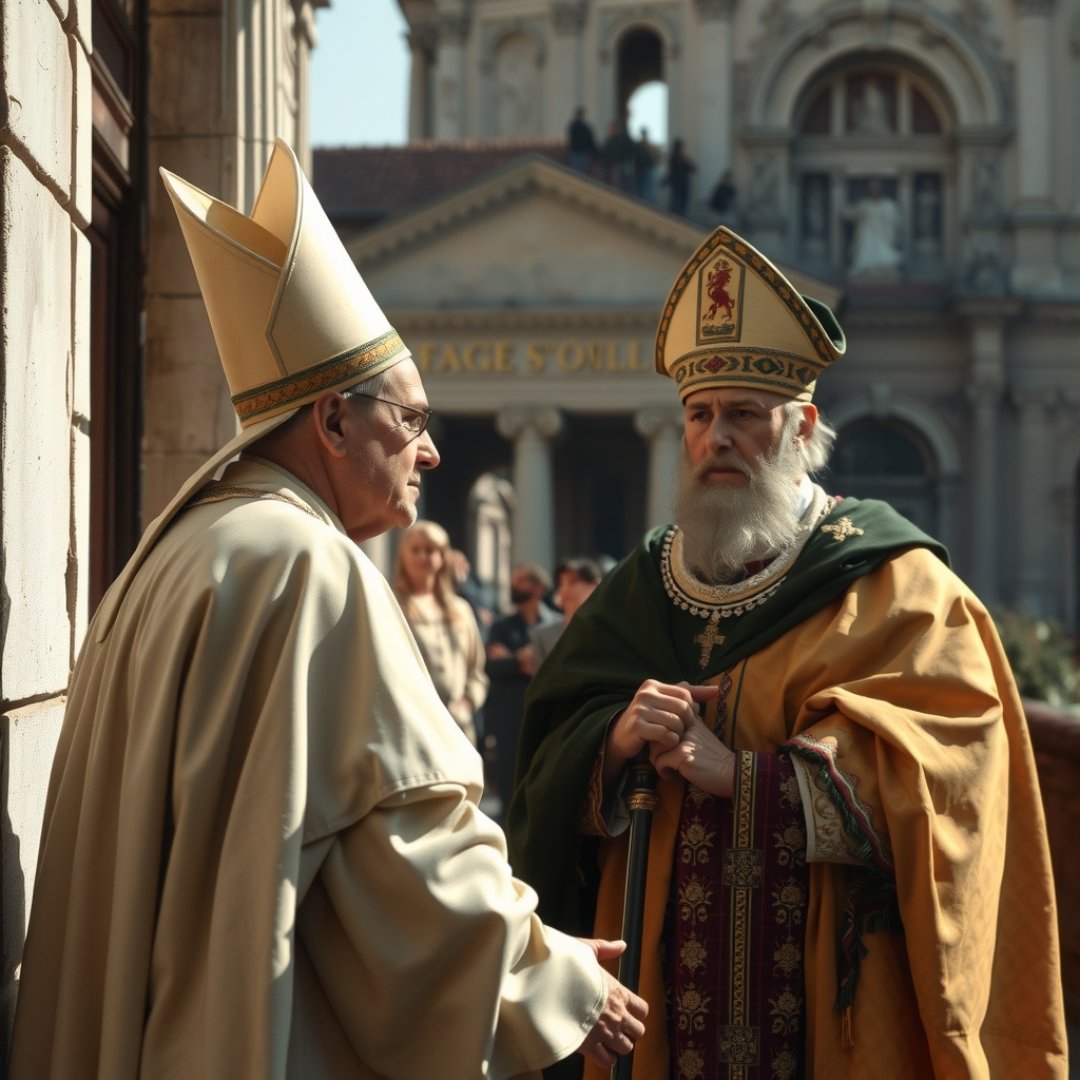
The annals of early 10th-century Rome are often described as the ‘Saeculum Obscurum’, a dark age marked by unprecedented political instability and aristocratic control over the papacy. At the heart of this tumultuous period stood Marozia, a powerful noblewoman whose personal ambitions and family connections fundamentally shaped the course of Roman politics and the selection of its spiritual leaders. Among the most controversial episodes of this era is the alleged paternity of Pope John XI, an event that casts a revealing light on Marozia’s influence in Rome, demonstrating how a singular figure could wield immense secular and ecclesiastical power. This intricate web of intrigue, family dominance, and ecclesiastical succession offers a compelling glimpse into a period where the Eternal City navigated profound shifts in authority, away from direct imperial oversight and into the hands of its most formidable aristocratic dynasties.
The Rise of the Theophylacti Dynasty in Rome
By the early 10th century, the traditional structures of authority in Rome had weakened considerably. The papacy, once an independent spiritual and political force, found itself increasingly vulnerable to the machinations of powerful local Roman families. Foremost among these was the house of Theophylact, a dynamic and ruthless dynasty that effectively seized control of the city’s secular and religious institutions. The patriarch, Theophylact I, held titles such as Magister Militum and Vestarius, giving him command over the Roman militia and finances. However, it was his wife, Theodora the Elder, and their daughters, particularly Marozia, who would truly define this era, establishing a lineage that would see several of their descendants ascend to the papal throne. The Theophylacti were not merely influencers; they were the de facto rulers of Rome, dictating papal appointments and consolidating an almost monarchical grip on the city.
Theodora the Elder: Matriarch of the Age
Theodora, Marozia’s mother, is often portrayed as the true architect of the family’s power. Chroniclers, though often biased, depict her as a shrewd and politically astute woman who used her charm and connections to solidify the family’s standing. Her influence extended directly to the papal court, where she was instrumental in the election of several popes. It was under her initial guidance and the family’s overarching power that the stage was set for Marozia to emerge as a central figure, inheriting and expanding upon her mother’s formidable political legacy.
Pope Sergius III and Marozia’s Early Influence
The pontificate of Pope Sergius III (904-911 AD) is intrinsically linked with the ascendancy of the Theophylacti and, specifically, with Marozia. Sergius had previously been denied the papacy and endured exile. Upon his return, largely orchestrated by Theophylact and Theodora, he became a compliant instrument of the family’s will. During this period, sources allege a scandalous relationship between Pope Sergius III and Marozia, who was still a young woman. This alleged liaison was not merely a personal matter but a potent symbol of the Theophylacti’s profound influence over the spiritual head of Christendom. The direct implication of this relationship became apparent with the birth of a son, John, whose paternity was attributed by contemporary accounts to Pope Sergius III himself. This profoundly scandalous claim underscored the degree to which traditional religious and moral boundaries had eroded under the pressure of aristocratic power.
- Papal Compliance: Sergius III’s pontificate demonstrated the complete subordination of the papacy to the Roman aristocracy.
- Allegations of Scandal: The purported affair between Sergius III and Marozia became a defining feature of the Saeculum Obscurum.
- Birth of John: The controversial birth of John, later Pope John XI, directly linked the Theophylacti family to the highest office in the Church.
The Alleged Paternity and its Ramifications
The assertion that Pope John XI was the son of Marozia and Pope Sergius III was a charge leveled by influential contemporary and near-contemporary chroniclers, most notably Liutprand of Cremona. While modern historians debate the absolute certainty of this claim, there is strong circumstantial evidence and a general consensus that the Theophylacti family’s influence was such that they could indeed install their own kin, even if controversially begotten, onto the papal throne. John was eventually elected Pope in 931, solidifying Marozia’s unprecedented power. His papacy was marked by his mother’s almost total control, with Marozia effectively ruling Rome and the papacy from her stronghold at Castel Sant’Angelo. This period illustrates a complete inversion of spiritual and temporal authority, where a secular noblewoman dictated the affairs of the Church, a stark testament to the depth of Marozia’s influence in Rome.
Marozia’s Enduring Legacy of Power
Marozia’s story is one of a woman who skillfully navigated and dominated a brutal political landscape. Through strategic marriages, alliances, and the alleged manipulation of papal succession, she ensured her family’s continued dominance. Her legacy, though often tainted by allegations of immorality and ambition, highlights a unique chapter in Roman history where female aristocratic power reached its zenith, fundamentally shaping the trajectory of the papacy and the city of Rome during a time of profound transition. Her eventual downfall came at the hands of her own son, Alberic II of Spoleto, who rebelled against her final marriage, imprisoning her and establishing his own rule over Rome.
Frequently Asked Questions
Who was Marozia?
Marozia was a powerful and influential Roman noblewoman of the Theophylacti family during the early 10th century (the Saeculum Obscurum). She wielded immense political and ecclesiastical power, effectively controlling the papacy and the city of Rome for a significant period.
What is the ‘Saeculum Obscurum’?
The ‘Saeculum Obscurum’ (Latin for ‘Dark Age’) refers to a period in papal history, roughly from 904 to 964 AD, characterized by the severe moral and political decline of the papacy, often due to the dominance of powerful Roman aristocratic families like the Theophylacti.
What was the controversy surrounding Pope John XI’s paternity?
Contemporary chroniclers, notably Liutprand of Cremona, alleged that Pope John XI was the illegitimate son of Marozia and Pope Sergius III. While debated by historians, this claim reflects the deep involvement and influence of the Theophylacti family in papal succession during that era.
How did Marozia exert her influence in Rome?
Marozia exerted her influence through her family’s control of key secular and ecclesiastical offices, strategic marriages, and her direct involvement in the election and alleged manipulation of popes, including her purported son, Pope John XI. She effectively became the de facto ruler of Rome.
What happened to Marozia?
Marozia’s reign of power ended when her son, Alberic II of Spoleto, rebelled against her, particularly after her marriage to Hugh of Italy. Alberic imprisoned Marozia, likely in Castel Sant’Angelo, where she is believed to have died, though the exact date and circumstances are unknown.