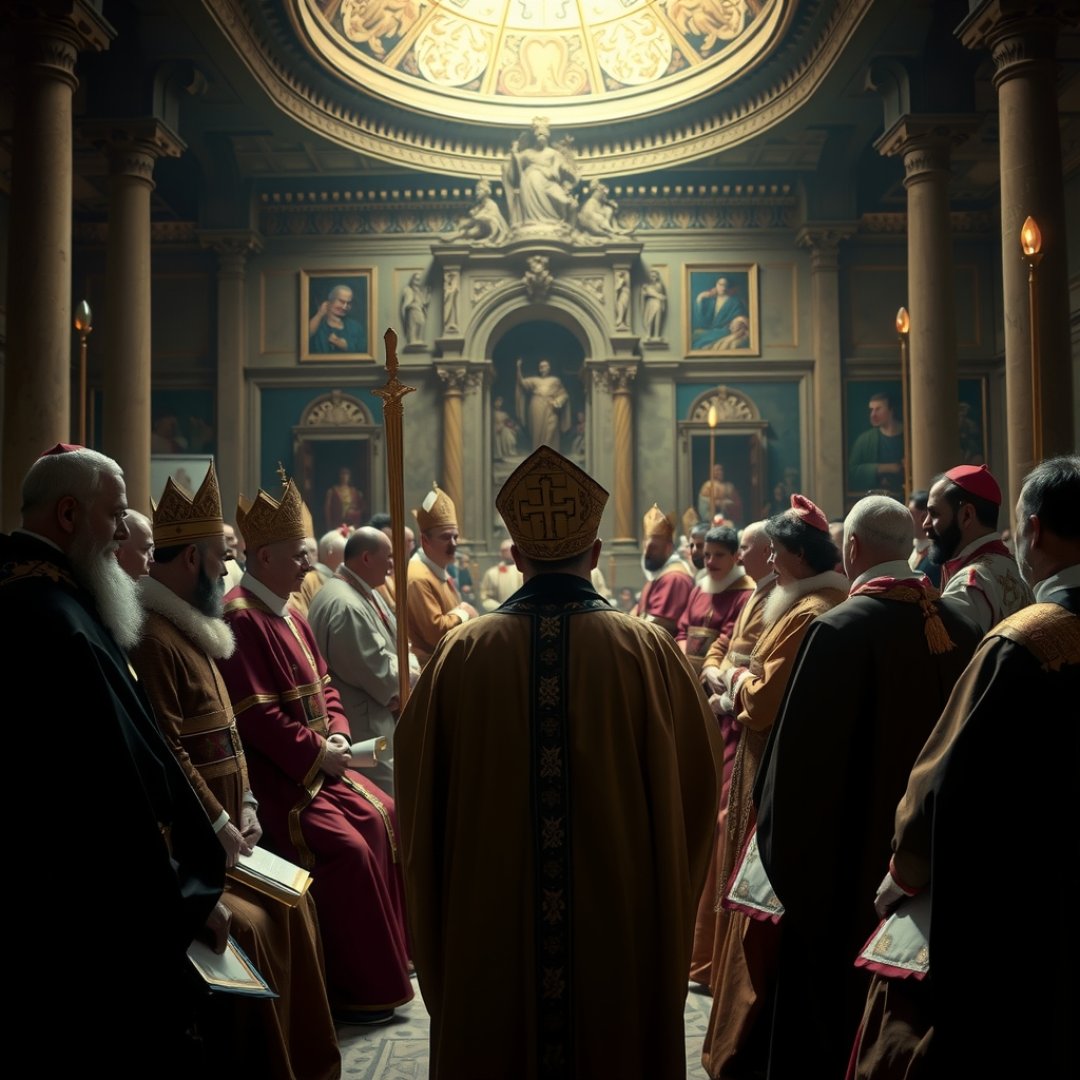
The spring of 1378 marked a critical juncture in the history of the Roman Catholic Church, a moment when hopes for unity following decades of papal absence were shattered, giving way to an unprecedented schism. After nearly seventy years in Avignon, Pope Gregory XI had finally returned the papacy to Rome in 1377, only to die a year later. His death plunged the Eternal City into a state of anxious anticipation, as the upcoming election would determine the future direction of the Church and, crucially, the location of its head. The pressure on the cardinals, a majority of whom were French, was immense, as the Roman populace vehemently demanded an Italian, or even better, a Roman pope, fearing another return to Avignon. This volatile atmosphere culminated in the highly contentious and ultimately epoch-defining event known as the Papal Conclave of 1378, the immediate catalyst for the catastrophic Western Schism.
The Return from Avignon and a Vacant See
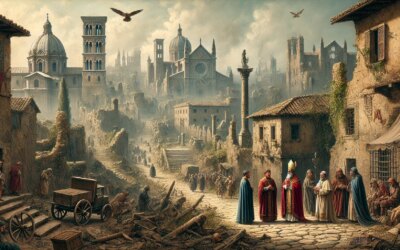
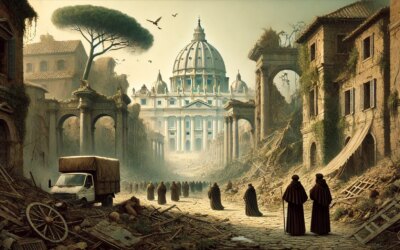
For almost seven decades, from 1309 to 1377, the papacy resided in Avignon, a period often referred to as the Avignon Papacy. Though technically part of the Holy Roman Empire, Avignon was heavily influenced by the French monarchy. This absence profoundly impacted Rome, transforming the vibrant spiritual and political center into a dilapidated city. When Pope Gregory XI, persuaded by figures like Catherine of Siena, finally brought the Holy See back to Rome in January 1377, there was a sense of fragile optimism. However, Gregory’s death in March 1378, just over a year after his return, created a dangerous power vacuum. The Roman people, wary of another French pontiff who might relocate the papacy, surrounded the Vatican, clamoring for a Roman or at least an Italian pope to ensure the See would remain in its ancient home.
Pressure in the Conclave Chamber
The Fear of the Roman Mob
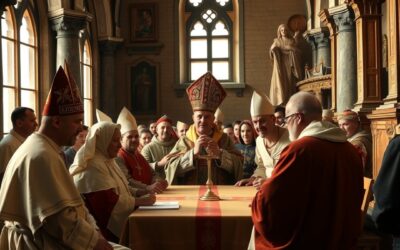
The cardinals gathered for the Papal Conclave of 1378 on April 7, 1378, under unprecedented duress. Of the sixteen cardinals present, eleven were French, four were Italian, and one was Spanish. The Roman populace was in an uproar, shouting threats and demanding an Italian pope, even reportedly breaking into the Vatican’s inner courtyards. The cardinals, genuinely fearing for their lives, felt their freedom to elect severely compromised.
The “Election” of Bartolomeo Prignano
Driven by panic, the cardinals quickly settled on Bartolomeo Prignano, Archbishop of Bari, a non-cardinal, but an Italian. He was known for his administrative skills and stern demeanor, having served as vice-chancellor to Gregory XI. The choice of a non-cardinal was highly unusual but strategically aimed to satisfy the Roman demand without selecting one of their own number, thus preserving some semblance of their authority. Critically, he was not a Roman, but an Italian. However, the exact circumstances of his initial ‘election’ were mired in confusion and fear. Some cardinals later claimed they voted for him under duress, while others argued the election was valid despite the external pressure.
The Election of Urban VI and Its Aftermath
On April 8, 1378, Bartolomeo Prignano was formally elected and quickly accepted the papacy, taking the name Urban VI. His acceptance under duress was later a key point of contention. His initial actions as pope did little to soothe the anxieties of the cardinals who had elected him. Urban VI immediately launched into a campaign of severe reforms, publicly denouncing the cardinals’ luxurious lifestyles, intellectual arrogance, and moral failings. He criticized their wealth, their penchant for pluralism, and their long absence from Rome. His sharp tongue and authoritarian manner alienated many, including those who had supported his election. He even threatened to create enough new Italian cardinals to outnumber the French, further fueling their alarm.
Growing Discontent Among the Cardinals
The cardinals, particularly the French, soon began to regret their hasty choice. They felt personally attacked and threatened by Urban’s unyielding character. Their initial fear of the Roman mob was now replaced by a fear of the very pontiff they had just elected. This rapidly escalating animosity would prove to be the undoing of papal unity and set the stage for one of the most damaging periods in Church history.
Seeds of Schism: The Cardinals’ Retreat and New Conclave
As Urban VI’s behavior became increasingly erratic and confrontational, the discontent among the cardinals solidified into outright opposition. In the summer of 1378, many cardinals, especially the French, began to leave Rome, ostensibly for their health, but truly to plot their next move. They converged at Anagni and then Fondi, where, in September 1378, they issued a blistering declaration. They asserted that the election of Urban VI had been invalid, forced by the terrifying threats of the Roman populace, and that Urban was therefore not the legitimate pope. They declared the See vacant and proceeded to elect a new pope, Robert of Geneva, who took the name Clement VII.
This act formally initiated the Western Schism, a period lasting nearly forty years during which multiple claimants to the papacy divided Christendom. The legitimacy of the Papal Conclave of 1378 and Urban VI’s election became the central theological and political battleground, with Europe splitting its allegiances between Rome and Avignon, and later a third papal line.
Frequently Asked Questions
What was the Papal Conclave of 1378?
The Papal Conclave of 1378 was the papal election held in Rome in April 1378, following the death of Pope Gregory XI. It was notable for the intense pressure from the Roman populace demanding an Italian pope, which led to the tumultuous election of Bartolomeo Prignano as Urban VI.
Why was the election of Urban VI considered tumultuous?
The election was tumultuous primarily due to the overwhelming external pressure and threats from the Roman mob, who demanded an Italian pope. Cardinals later claimed they voted for Prignano (Urban VI) under duress, fearing for their lives, thus compromising the legitimacy of the election in their eyes.
How did the Papal Conclave of 1378 lead to the Western Schism?
Following the conclave, Pope Urban VI’s harsh and authoritarian demeanor alienated the cardinals, many of whom were French. Claiming that Urban’s election was invalid due to duress, they retreated from Rome and elected a rival pope, Clement VII, in September 1378, thus initiating the Western Schism where multiple popes claimed legitimacy.
Who was Bartolomeo Prignano before becoming Pope Urban VI?
Before his election as Pope Urban VI, Bartolomeo Prignano was the Archbishop of Bari. He was known for his administrative competence and stern character, having served in the papal curia as vice-chancellor under Pope Gregory XI.
What was the immediate impact of Urban VI’s election on the Church?
Immediately after his election, Urban VI alienated many cardinals with his zealous and confrontational approach to reform. His actions directly led to the cardinals’ withdrawal and their subsequent election of an antipope, which shattered the unity of the Catholic Church and began the Western Schism, dividing Christendom for decades.