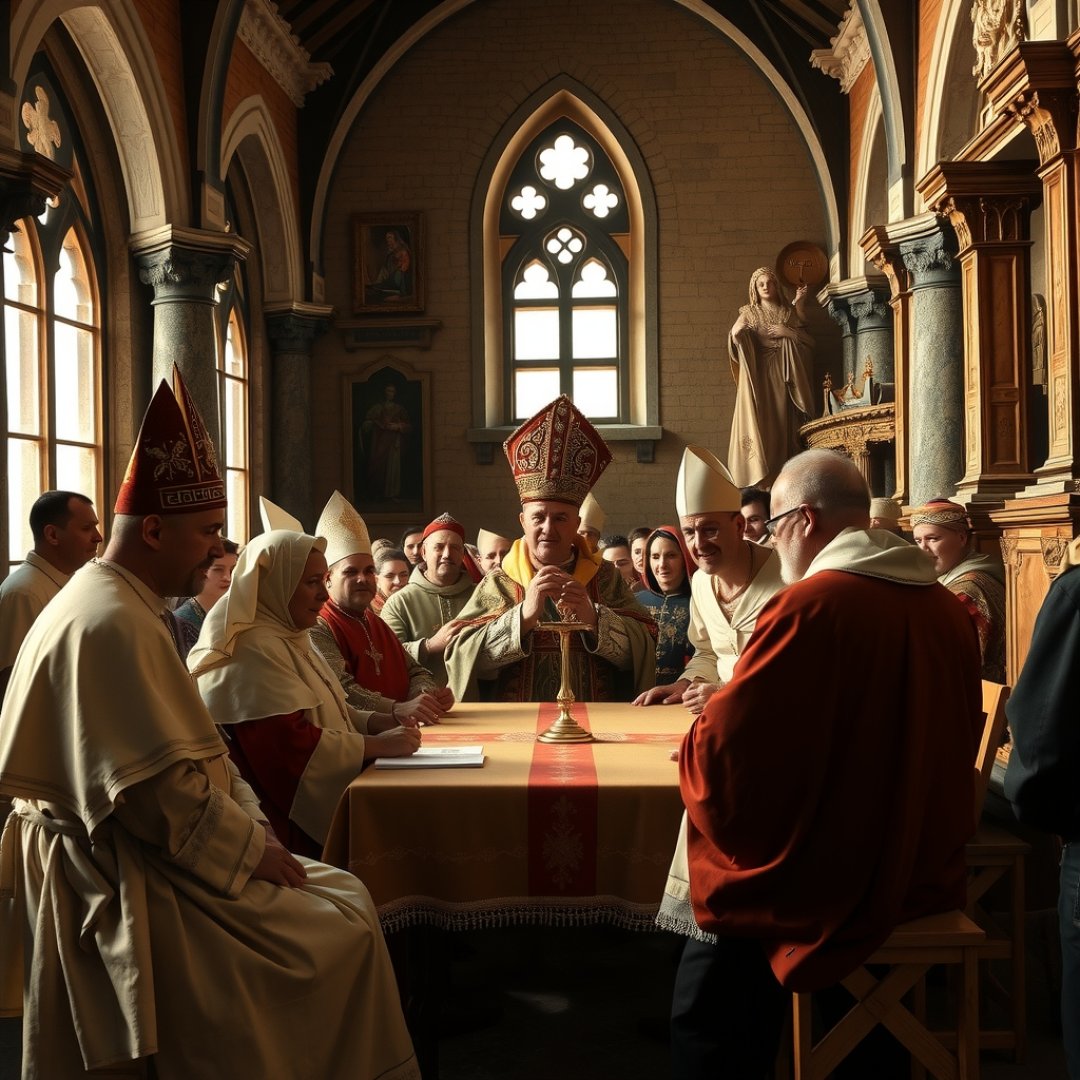
The early 15th century plunged the spiritual landscape of Western Europe into unprecedented turmoil, characterized by the Great Western Schism, where multiple claimants to the papacy fractured the Church’s authority and undermined its moral standing. Amidst this profound crisis, the Holy Roman Emperor Sigismund spearheaded efforts to restore unity, culminating in the convocation of the monumental Council of Constance, held from 1414 to 1418. This ecumenical council, one of the largest and most influential assemblies of the Middle Ages, was tasked not only with healing the schism by uniting the Church under a single legitimate pope but also with addressing burgeoning heresies and undertaking significant reforms within the ecclesiastical structure. The four-year deliberation at Constance represents a crucial juncture in Roman history, as it fundamentally reshaped the trajectory of papal power and laid groundwork for future religious and political dynamics across Europe, seeking to re-establish the spiritual bedrock of a continent grappling with its identity.
The Precipice of Schism: A Divided Papacy
Three Popes, One Church
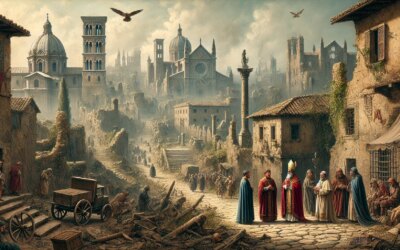
By the time the Council of Constance was convened, the Western Church had endured nearly four decades of the Great Western Schism. This crisis began in 1378 following the death of Pope Gregory XI, who had returned the papacy to Rome from Avignon. The subsequent election of Urban VI, a Roman cardinal, was quickly disputed by a faction of cardinals who then elected Clement VII, establishing an antipope in Avignon. For decades, Europe was divided along political and national lines, with allegiances to either the Roman or Avignonese pontiff. Adding to the chaos, a third pope, Alexander V (later succeeded by John XXIII), was elected at the Council of Pisa in 1409 in an attempt to resolve the schism, only to create an even more intractable situation with three rival claimants.
The existence of three simultaneous popes—Gregory XII in Rome, Benedict XIII in Avignon, and John XXIII of the Pisan line—created profound theological and political challenges. Each claimant asserted exclusive legitimacy, excommunicating their rivals and their supporters. This fractured leadership led to widespread confusion, disillusionment, and a significant erosion of the papacy’s moral and spiritual authority. Calls for a general council to address these deep-seated issues grew louder, driven by secular rulers and influential theologians alike, recognizing that only an unprecedented collective effort could restore order to Christendom.
Convening the Council and Its Objectives
Emperor Sigismund’s Pivotal Role
The impetus for the Council of Constance largely came from the determined efforts of King Sigismund of Hungary, who would soon become Holy Roman Emperor. Recognizing the existential threat the schism posed to European stability and Christian unity, Sigismund traveled extensively to persuade the various papal obediences and secular princes to support a new ecumenical council. His diplomatic skill and unwavering commitment were instrumental in overcoming resistance and securing the participation of diverse factions.
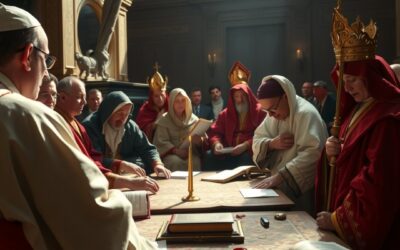
The council formally opened on November 1, 1414, in the city of Constance, a free imperial city on the shores of Lake Constance. It was an assembly of unparalleled scale, drawing not only cardinals and bishops but also abbots, theologians, canon lawyers, secular rulers, and representatives from universities across Europe. The objectives were clear and ambitious:
- Causa unionis: To end the Great Western Schism and establish a single, legitimate pope.
- Causa fidei: To address and condemn heresies, particularly those promulgated by John Wycliffe and Jan Hus.
- Causa reformationis: To reform the Church “in head and members” to prevent future abuses and strengthen its spiritual integrity.
The complexity of these tasks required immense political maneuvering and theological debate, setting the stage for one of the most significant ecclesiastical gatherings in history.
Resolving the Papal Schism and Electing Martin V
Deposing Three Popes for Unity
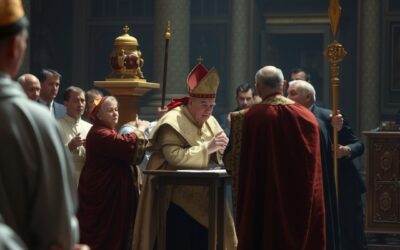
The primary and most challenging task for the Council of Constance was to heal the schism. The council famously asserted its authority over even the Pope through the decree Haec Sancta (1415), which declared that the council derived its power directly from Christ and that everyone, including the Pope, was bound to obey it in matters of faith, the ending of the schism, and reform. This conciliarist declaration was a revolutionary moment, fundamentally challenging the traditional understanding of papal supremacy.
The council systematically addressed the three rival popes:
- John XXIII (Pisan line): Fled Constance, but was arrested, put on trial, and deposed in May 1415 due to widespread accusations of simony, immorality, and abuse of power.
- Gregory XII (Roman line): In a diplomatic victory, Gregory voluntarily abdicated in July 1415, ensuring his legitimacy was acknowledged before stepping down, thus paving a path for unity.
- Benedict XIII (Avignon line): Refused to abdicate despite immense pressure. He was eventually formally deposed by the council in July 1417 after prolonged negotiations failed.
With all three claimants removed, the path was clear for a new election. On November 11, 1417, the council elected Cardinal Otto Colonna as the new Pope, who took the name Martin V. His election brought an end to the nearly 40-year schism, restoring a single, universally recognized head to the Western Church. This momentous achievement was a testament to the perseverance and political acumen displayed by the Council fathers.
The Condemnation of Heresy: Jan Hus
Trial and Execution of a Reformer
While healing the schism, the Council of Constance also confronted the escalating challenge of heresy. Among the most prominent figures targeted was Jan Hus, a Bohemian religious reformer and rector of the University of Prague, heavily influenced by the writings of John Wycliffe. Hus advocated for significant reforms within the Church, including communion in both kinds (bread and wine for the laity) and a greater emphasis on biblical authority over ecclesiastical hierarchy.
Despite being granted a safe-conduct by Emperor Sigismund, Hus was arrested shortly after arriving in Constance. He was subjected to a lengthy trial, during which his theological views were scrutinised and condemned as heretical. The council demanded that Hus recant his doctrines, but he steadfastly refused, maintaining that he could not betray his conscience. Consequently, Jan Hus was condemned by the council and burned at the stake as a heretic on July 6, 1415. The execution of Hus, followed by the condemnation and burning of his follower Jerome of Prague a year later, inflamed religious passions in Bohemia, leading to the Hussite Wars, a series of conflicts that ravaged Central Europe for decades and underscored the council’s complex legacy.
Lasting Impact and Conciliar Theory
Reshaping Papal and Conciliar Power
The Council of Constance represents a watershed moment in the history of the Western Church, achieving its primary objective of ending the Western Schism and restoring unity. Its impact on the concept of papal authority was profound, albeit temporary. The assertion of conciliar supremacy through Haec Sancta laid the groundwork for conciliar theory, which argued that a general council held higher authority than the Pope, especially in times of crisis. While Pope Martin V and subsequent popes worked to reassert papal supremacy, the conciliar movement continued to influence church thought and politics for decades, notably at the Council of Basel.
Furthermore, the Council of Constance set precedents for future church governance and highlighted the necessity for regular councils to address ecclesiastical issues. Though its attempts at comprehensive internal reform (causa reformationis) were less successful in the immediate term, many of the issues raised at Constance would resurface with even greater urgency during the Reformation a century later. The council’s actions and debates reflect a pivotal period where the Roman Church grappled with its own internal divisions and external challenges, leaving an indelible mark on its institutional development and the broader European religious landscape.
Frequently Asked Questions
What was the primary goal of the Council of Constance?
The primary goal of the Council of Constance was to end the Great Western Schism, a period when three rival claimants simultaneously held the title of Pope, causing immense division within the Catholic Church.
How many popes were there during the Great Western Schism that the council needed to address?
At the time of the Council of Constance’s convocation, there were three active claimants to the papacy: Gregory XII (Roman line), Benedict XIII (Avignon line), and John XXIII (Pisan line).
Who was ultimately elected Pope at the Council of Constance to restore unity?
Cardinal Otto Colonna was elected Pope on November 11, 1417, taking the name Martin V. His election marked the official end of the Great Western Schism.
What was the significance of the decree Haec Sancta issued by the Council?
The Haec Sancta decree asserted the council’s authority over the Pope, declaring that the council derived its power directly from Christ and that all, including the pontiff, were bound to obey it in matters pertaining to faith, schism, and reform. This was a radical departure from traditional papal supremacy.
Why was Jan Hus condemned by the Council of Constance despite having a safe-conduct?
Jan Hus was condemned for heresy because he refused to recant his theological doctrines, which the council deemed contrary to Church teachings. Despite the safe-conduct, the council argued that no faith should be kept with a heretic, leading to his execution.