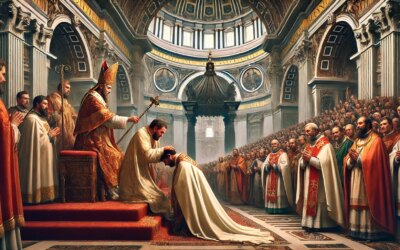
The year 1859 marked a profound shift in the political landscape of the Italian peninsula, setting in motion events that would irrevocably alter the ancient dominion of the Papal States. Central to this transformation was the Annexation of Romagne, a region historically under papal temporal rule that, through popular uprisings and subsequent plebiscites, chose to align itself with the burgeoning Kingdom of Sardinia. This pivotal moment, unfolding between 1859 and 1860, represented a critical blow to the Pope’s secular sovereignty and injected new urgency into the ‘Roman Question,’ which debated the future of Rome and the remaining Papal Territories. The loss of Romagne was not merely a territorial concession; it was a symbolic fracturing of a centuries-old institution, demonstrating the irresistible force of Italian nationalism against the backdrop of European power politics. This period of intense geopolitical maneuvering and popular will ultimately paved the way for the eventual unification of Italy, highlighting the diminishing role of traditional ecclesiastical power in a rapidly modernizing world. The events surrounding the Annexation of Romagne thus serve as a powerful testament to the complex interplay of national aspirations, diplomatic pressures, and religious authority during one of Europe’s most transformative eras.
The Papal States on the Eve of Unification
Before the dramatic events of 1859, the Papal States stretched across a significant portion of central Italy, encompassing regions like Lazio, Umbria, Marche, and Romagne. For centuries, these territories had been governed directly by the Pope, forming the temporal power base of the Roman Catholic Church. However, by the mid-19th century, the Papal States were seen by many Italian nationalists as an obstacle to the Risorgimento, the movement for Italian unification. The administration was often criticized for being conservative and resistant to modern reforms, contrasting sharply with the liberalizing trends sweeping through other Italian states, particularly the Kingdom of Sardinia under King Victor Emmanuel II and his astute Prime Minister, Camillo Benso di Cavour.
Economic and Political Dissatisfaction
Within the Papal territories, especially in the northern regions like Romagne, there was a growing undercurrent of dissatisfaction. Local populations often chafed under papal rule, yearning for greater autonomy, economic modernization, and integration into a unified Italian state. The French garrison in Rome, protecting the Pope after the 1849 Roman Republic, symbolized the Papacy’s reliance on foreign powers to maintain its temporal authority, further fueling nationalist resentment. This internal discontent, combined with external pressures from Piedmont-Sardinia and its French ally, created a volatile situation ripe for change.
The Second Italian War of Independence and Romagne’s Revolt
The catalyst for the Annexation of Romagne was the outbreak of the Second Italian War of Independence in April 1859. This conflict pitted the allied forces of France (under Napoleon III) and the Kingdom of Sardinia against the Austrian Empire, which controlled much of northern Italy. Though the primary battles, such as Magenta and Solferino, took place in Lombardy, their repercussions quickly rippled through the entire peninsula.
Austrian Withdrawal and Local Uprisings
As Austria suffered defeats and focused its military efforts elsewhere, its troops, which had been stationed in the Romagne region (the legations of Bologna, Ferrara, Ravenna, and Forlì) to support papal authority, were withdrawn. This sudden vacuum of power immediately sparked popular uprisings across Romagne in June 1859. Local nationalist leaders, often organized by the National Society (Società Nazionale), quickly seized control from papal legates. Provisional governments were established, openly advocating for annexation by the Kingdom of Sardinia.
The sentiment for unification was overwhelming. Unlike previous revolts, these movements were well-coordinated and had popular backing, emboldened by the prospect of a larger, unified Italian state free from foreign dominance and conservative papal administration.
The Plebiscites and Formal Annexation (1860)
Following the armistice of Villafranca in July 1859, which ended the war between France and Austria but left the issue of central Italian states unresolved, the provisional governments in Romagne refused to reinstate papal rule. Instead, they continued to push for annexation to Sardinia. Cavour, though initially constrained by French diplomatic maneuvering, shrewdly supported these movements indirectly.
The Role of Cavour and Diplomatic Maneuvers
Cavour recognized that the popular will in Romagne provided a legitimate basis for annexation. To secure French approval, he ultimately negotiated the Treaty of Turin in March 1860, ceding Nice and Savoy to France in exchange for French recognition of the annexations in central Italy. This cleared the way for formal plebiscites in Romagne, as well as in Tuscany, Modena, and Parma.
The plebiscites held in March 1860 saw an overwhelming vote in favor of annexation to the Kingdom of Sardinia. The results, though managed, genuinely reflected the strong desire for unification. On March 18, 1860, King Victor Emmanuel II formally proclaimed the Annexation of Romagne (and the other central Italian duchies) to the Kingdom of Sardinia, forming the nucleus of what would soon become the Kingdom of Italy. This act reduced the Papal States to Lazio, including Rome, and signaled a dramatic diminishment of the Pope’s temporal power, setting the stage for future conflicts over the city of Rome itself.
Frequently Asked Questions
What was the significance of the Romagne region within the Papal States?
Romagne, located in the northern part of the Papal States, was economically important and culturally vibrant. Its urban centers, like Bologna and Ferrara, were historically more liberal and prone to nationalist sentiments than the more conservative southern regions, making it a hotbed for calls for unification with other Italian states.
Who was Pope Pius IX during the time of the Annexation of Romagne?
Pope Pius IX reigned from 1846 to 1878, making him the longest-reigning Pope in history. He was a staunch defender of papal temporal power and vehemently opposed the Italian unification movement, issuing encyclicals condemning liberalism and modernism, and excommunicating those involved in the annexation of papal territories.
How did the Annexation of Romagne impact the future of the Papal States?
The annexation significantly reduced the territory of the Papal States, leaving only Lazio (including Rome) under papal control. It intensified the “Roman Question,” raising the crucial issue of whether Rome itself should become the capital of a unified Italy, ultimately leading to the capture of Rome in 1870 and the end of the Pope’s temporal rule.
What role did Camillo Benso di Cavour play in the annexation?
Cavour, the Prime Minister of the Kingdom of Sardinia, was a master diplomat and strategist of Italian unification. While he couldn’t openly support the Romagne uprisings due to international sensitivities, he skillfully maneuvered diplomatically, using the popular will as leverage and negotiating with France to ensure the annexations were recognized, albeit at the cost of Nice and Savoy.
Was the annexation of Romagne a peaceful process?
The actual process of annexation through plebiscites in 1860 was largely peaceful, reflecting widespread public support for unification. However, the period preceding it involved uprisings and the collapse of papal administration, often with nationalist forces taking control. The broader context of the Second Italian War of Independence, which created the conditions for the revolts, was certainly not peaceful.