In the tumultuous twilight of the Western Roman Empire, few figures loomed as large or were as critical to its fleeting survival as Flavius Aetius. Hailed by many as the “Last of the Romans,” this formidable general masterminded the empire’s final significant victory against Attila and the Huns at the Catalaunian Plains in 451 AD, momentarily stemming the tide of barbarian incursions. Yet, barely three years later, the man who stood as the West’s primary bulwark against utter collapse would fall, not on the battlefield, but in the imperial palace, struck down by the very emperor he served. The year AD 454 witnessed the tragic and short-sighted assassination of Aetius, an event that profoundly destabilized the already tottering empire and directly accelerated its ultimate demise. This brutal act by Emperor Valentinian III was a self-inflicted wound from which the Western Roman state would never truly recover, cementing Aetius’s legacy as a pivotal, yet tragically undone, defender of a fading world.
Flavius Aetius: The Unrivaled Strategist
Flavius Aetius rose through the ranks of a crumbling empire, demonstrating a military genius rarely seen in Late Antiquity. His early life included time as a hostage among both the Goths and the Huns, experiences that provided him with invaluable insights into the tactics and cultures of Rome’s most dangerous adversaries. By the 430s AD, Aetius had become the dominant military and political force in the Western Roman Empire, effectively controlling much of its policy as magister militum per Gallias and later patricius. His strategic brilliance was repeatedly proven against a myriad of barbarian groups, including the Visigoths, Franks, and Burgundians, securing fragile peace and preserving Roman territory.
The Triumph at the Catalaunian Plains
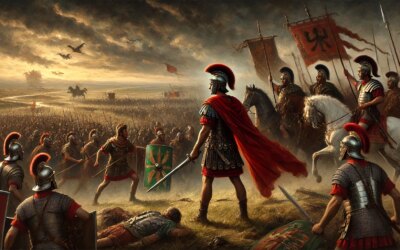
Aetius’s defining moment came in 451 AD, when he forged an unlikely alliance with the Visigoths and other Germanic tribes to confront Attila the Hun at the Battle of the Catalaunian Plains. This titanic clash saw Rome and its former enemies unite against a common, existential threat, resulting in a bloody stalemate that nevertheless forced Attila to withdraw from Gaul. Aetius’s achievement was immense, saving Gaul from complete devastation and cementing his reputation as the West’s indispensable military leader. He was, to many, the last true Roman general capable of orchestrating such a grand strategic defense.
A Climate of Imperial Paranoia
Despite his unparalleled service, Aetius’s immense power and influence bred deep resentment and fear within the imperial court, particularly from Emperor Valentinian III. Valentinian, a weak and insecure ruler, felt overshadowed by his general’s military prowess and popular acclaim. The emperor harbored suspicions that Aetius might eventually usurp the throne, especially given the general’s desire to marry his son Gaudentius to Valentinian’s daughter, Placidia. This proposed marital alliance, though potentially strengthening the imperial line and Aetius’s loyalty, instead fueled Valentinian’s paranoia.
The Role of Palace Eunuchs and Advisors
Valentinian’s fears were actively stoked by ambitious court officials, most notably the eunuch Heraclius. These figures, jealous of Aetius’s power and eager to remove a rival, whispered incessantly into the emperor’s ear, exaggerating Aetius’s ambitions and portraying him as a direct threat to the imperial family. The emperor’s mother, Galla Placidia, who had previously been a political ally of Aetius, was no longer alive to temper her son’s rash impulses, leaving Valentinian vulnerable to the influence of those who sought Aetius’s downfall.
The Fateful Blow: Valentinian’s Reckless Act
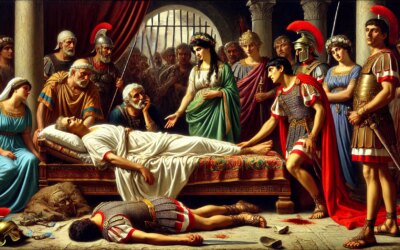
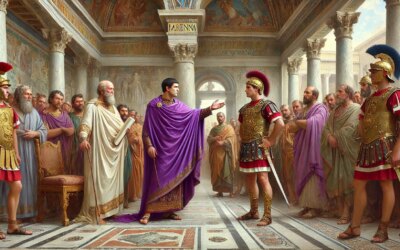
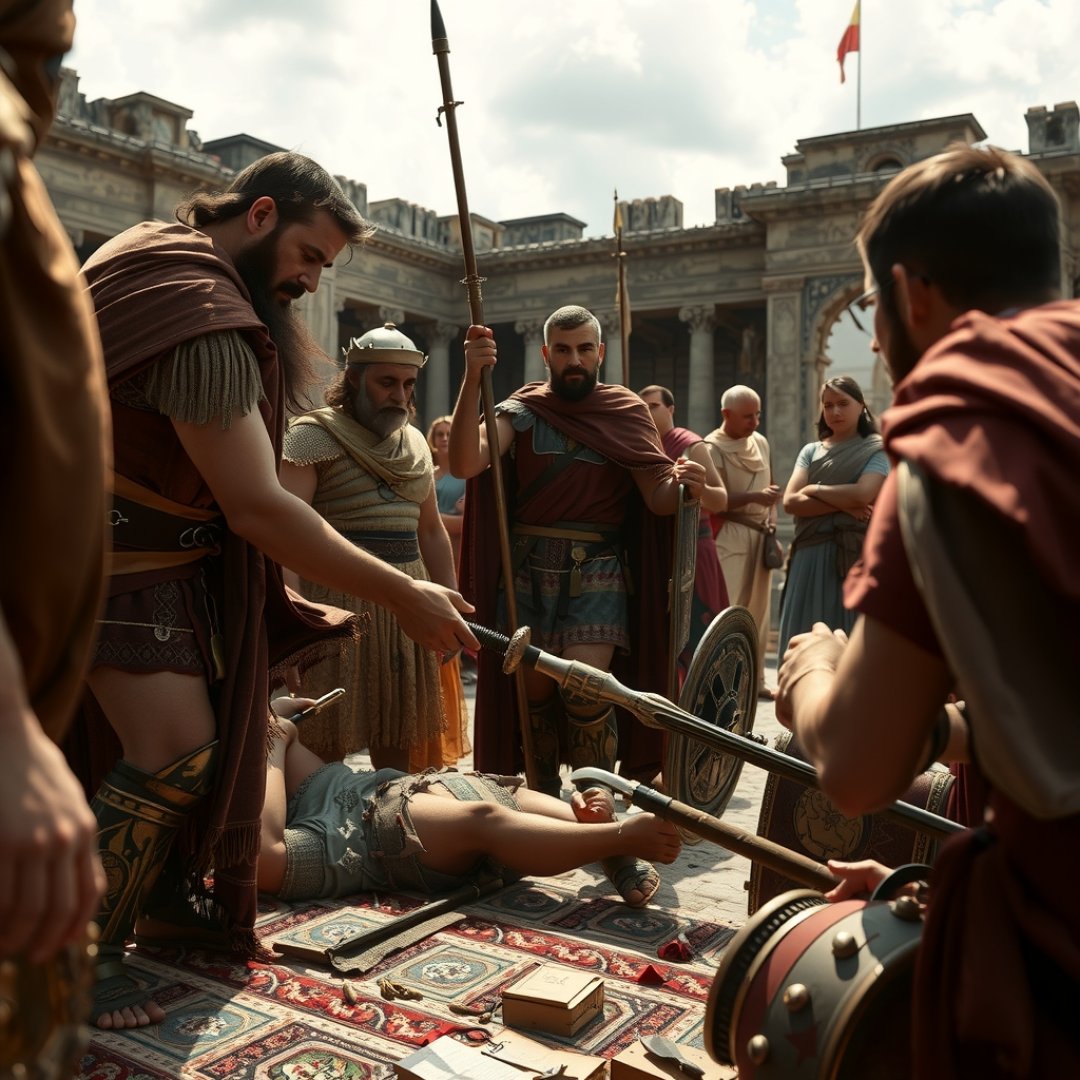
In September of 454 AD, Aetius appeared before Valentinian III at the imperial palace in Ravenna to deliver a financial account. It was a seemingly routine meeting, yet one fraught with underlying tension. As Aetius presented his scrolls, Valentinian, suddenly overcome by his carefully cultivated paranoia, drew his sword. In a moment of impulsive, unprecedented violence, the emperor personally attacked and killed his greatest general. The act was swift and brutal, with Valentinian reputedly aided by Heraclius, the very eunuch who had fostered the emperor’s distrust.
An Empire Without its Shield
The assassination of Aetius sent shockwaves through the empire. The man who had held the fragments of the West together, who had stared down Attila the Hun, was gone. One contemporary famously remarked to Valentinian: “You have cut off your right hand with your left.” This stark assessment proved tragically prescient. Aetius’s death left an irreparable void in the Western Roman military and political landscape, eliminating the one figure capable of orchestrating a coherent defense against the ever-present barbarian threats. The act epitomized the self-destructive tendencies that plagued the late Western Roman Empire, where internal strife and short-sighted decisions often undermined any chance of recovery.
The Aftermath: A Swift Decline
The immediate consequence of the assassination of Aetius was a complete destabilization of the Western Roman Empire. With its most capable military commander gone, the empire’s ability to defend its frontiers and maintain internal order evaporated. The barbarian federates, previously held in check by Aetius’s authority and strategic brilliance, became emboldened. The vacuum left by his death was immense and could not be filled by Valentinian III or any subsequent general.
Valentinian III’s Own Demise
Valentinian III’s act of regicide against Aetius ultimately proved to be his own undoing. Just six months after the general’s death, in March 455 AD, Valentinian III was himself assassinated by two of Aetius’s former bodyguards. These men, Optila and Thraustila, acted on the instigation of Petronius Maximus, a wealthy senator and former prefect who held a grudge against Valentinian. Maximus quickly seized the throne, but his reign was brief and disastrous, leading directly to the infamous Vandal Sack of Rome in the summer of 455 AD. The sequential assassinations of Aetius and Valentinian III effectively decapitated the Western Roman Empire, setting it on an irreversible path towards its formal dissolution just two decades later.
Frequently Asked Questions
Why was Flavius Aetius considered the ‘Last of the Romans’?
Aetius earned this moniker due to his extraordinary military and political capabilities, often seen as embodying the virtues of classical Roman generalship. He consistently defended the Western Roman Empire against numerous barbarian threats, most notably orchestrating the alliance that defeated Attila the Hun at the Battle of the Catalaunian Plains in 451 AD, making him the last truly effective defender of the West.
Who was responsible for the assassination of Aetius?
Aetius was personally assassinated by Emperor Valentinian III in September of 454 AD at the imperial palace in Ravenna. Valentinian’s act was driven by paranoia and jealousy over Aetius’s immense power and influence, fueled by manipulative court officials.
What were the immediate consequences of Aetius’s death?
The assassination of Aetius created an immediate power vacuum and severely crippled the Western Roman Empire’s military capabilities. It removed the empire’s most skilled general and strategist, leading to a rapid decline in its ability to defend against barbarian incursions. This instability directly contributed to the murder of Valentinian III himself a few months later and, subsequently, the Vandal Sack of Rome in 455 AD.
How did Aetius’s assassination contribute to the fall of the Western Roman Empire?
Aetius’s death eliminated the last great military leader capable of maintaining the Western Roman Empire’s integrity. Without his strategic mind and leadership, the empire lost its central military command and coordination, leaving it vulnerable to internal strife and external barbarian pressures. This event is widely seen as a critical turning point that accelerated the empire’s disintegration and ultimate fall in 476 AD.
Did Valentinian III face any repercussions for killing Aetius?
Yes, Valentinian III’s act of regicide ultimately led to his own downfall. In March 455 AD, just six months after Aetius’s assassination, Valentinian was murdered by two of Aetius’s former bodyguards. This revenge plot was orchestrated by Petronius Maximus, a senator who then briefly seized the imperial throne.