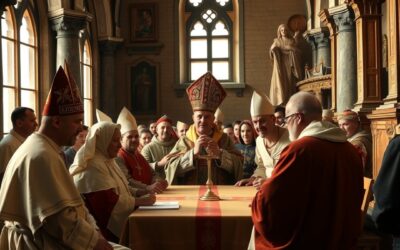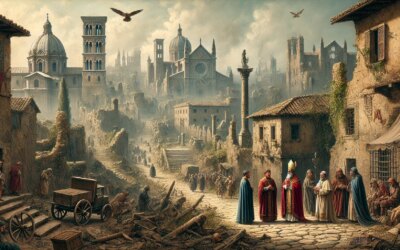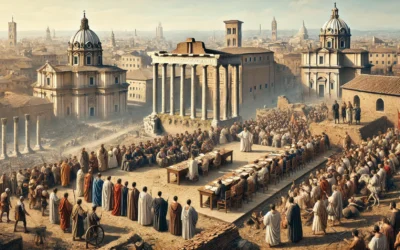
In the tumultuous landscape of early sixth-century Rome, a critical ecclesiastical assembly known as the Synodus Palmaris convened in 501 AD, marking a significant moment in the assertion of papal authority amidst political upheaval and religious schism. This council, held under the patronage of the Ostrogothic King Theodoric the Great, sought to resolve the Laurentian Schism, a bitter dispute over the legitimate claimant to the See of Peter. Far from a mere theological debate, the Synodus Palmaris represented a complex interplay of secular power, ecclesiastical jurisdiction, and the enduring legacy of Roman legal thought, ultimately declaring Pope Symmachus free from accusations and establishing a precedent for the inviolability of the papal office. Its outcomes had profound implications for the future development of the papacy and its standing in the nascent medieval order, solidifying Rome’s spiritual primacy even as its imperial power waned.
The Context of Conflict: The Laurentian Schism
A Divided Church in a Changing Empire
The dawn of the sixth century found Rome, though no longer the seat of a Western Emperor, still a vibrant center of ecclesiastical power, albeit under the dominion of the Ostrogothic King Theodoric the Great. It was into this complex political landscape that the Laurentian Schism erupted. Following the death of Pope Anastasius II in 498 AD, a contentious double election took place: one faction of the Roman clergy and Senate elected Symmachus, while another, backed by influential senatorial families, chose Laurentius. This division was not merely theological but deeply intertwined with Roman aristocratic politics and differing approaches to relations with the Byzantine East.
Symmachus, initially enthroned, faced immediate challenges to his legitimacy. Accusations of various improprieties, including financial mismanagement and moral failings, were leveled against him by the supporters of Laurentius. These charges, whether founded or fabricated, created an intractable deadlock within the Roman Church. King Theodoric, who resided in Ravenna, initially attempted to mediate, recognizing Symmachus as the rightful Pope after an initial investigation. However, the persistent unrest and the severity of the allegations eventually compelled him to intervene more directly, setting the stage for an extraordinary assembly.
Convening the Synodus Palmaris
A King’s Intervention and an Ecclesiastical Dilemma
Faced with ongoing strife and appeals from both sides, Theodoric decided that a formal synod was necessary to settle the matter definitively. He summoned bishops from across Italy to Rome, initiating a series of councils from 500 to 502 AD. The most famous and decisive of these was the Synodus Palmaris, named perhaps for the Palmarium portico where it may have been held, or simply referring to it as a “triumphant” synod. The king’s authority was crucial in bringing together the disparate parties, yet he faced a unique challenge: how to judge a successor to St. Peter, a figure increasingly viewed as beyond secular or even episcopal judgment?
The bishops gathered wrestled with an unprecedented dilemma. Could a council of bishops sit in judgment over their superior, the Pope, particularly when the accusations against Symmachus were not matters of heresy but of personal conduct? This question struck at the heart of the developing doctrine of papal supremacy. Laurentius’s supporters insisted on a full trial, but many bishops argued that such a proceeding would undermine the unique status of the Roman See. The complexities of Roman law and canon law clashed, creating a highly charged atmosphere.
The Unprecedented Verdict and its Implications
“Prima Sedes a Nemine Iudicatur”: A Landmark Decision
The resolution reached by the Synodus Palmaris in 501 AD was revolutionary. Rather than conducting a detailed investigation into the specific charges against Symmachus, the assembled bishops, guided by a sense of theological and legal propriety, declared that the Pope, as the successor of St. Peter, could not be judged by any human court. This principle, articulated as “prima sedes a nemine iudicatur” (the first see is judged by no one), became a cornerstone of papal jurisprudence. The council effectively stated that Symmachus was cleared, not necessarily because the charges were disproven, but because no earthly tribunal had the authority to try him.
This decision had profound implications. It significantly bolstered the perceived inviolability and independence of the papal office, positioning the Bishop of Rome as an authority distinct from and superior to other bishops and even secular rulers in matters of faith and internal church governance. While Theodoric had convened the synod, its outcome ultimately limited the extent of secular interference in papal affairs. The Synodus Palmaris helped solidify the moral and legal foundations for the papacy’s future growth, asserting its unique spiritual primacy at a time when political power in the West was fragmented and shifting.
Frequently Asked Questions
What was the Synodus Palmaris?
The Synodus Palmaris was an ecclesiastical council convened in Rome in 501 AD by Ostrogothic King Theodoric the Great to resolve the Laurentian Schism, a dispute over the legitimacy of Pope Symmachus.
Who were the main figures involved in the Laurentian Schism?
The primary figures were Pope Symmachus and the antipope Laurentius, both elected in 498 AD. King Theodoric the Great played a crucial role in mediating and ultimately facilitating the council.
What was the significance of the “prima sedes a nemine iudicatur” principle?
This Latin phrase, meaning “the first see is judged by no one,” established the principle that the Pope, as the successor of St. Peter, could not be judged by any human court or council. It significantly enhanced papal authority and independence.
How did King Theodoric influence the Synodus Palmaris?
Theodoric, as the secular ruler of Italy, convened the synod and appointed an initial visitor bishop, but he ultimately deferred to the council’s decision on Symmachus’s inviolability, showcasing a complex balance of secular and ecclesiastical power.
What was the long-term impact of this council on the papacy?
The Synodus Palmaris strengthened the doctrine of papal supremacy and helped consolidate the authority of the Bishop of Rome, laying important groundwork for the papacy’s future role as a powerful spiritual and political institution in the Middle Ages.