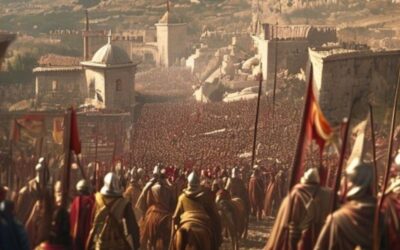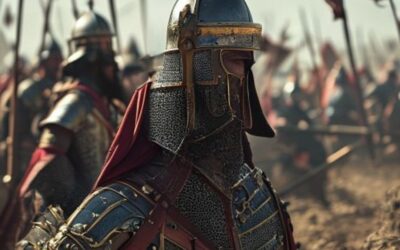
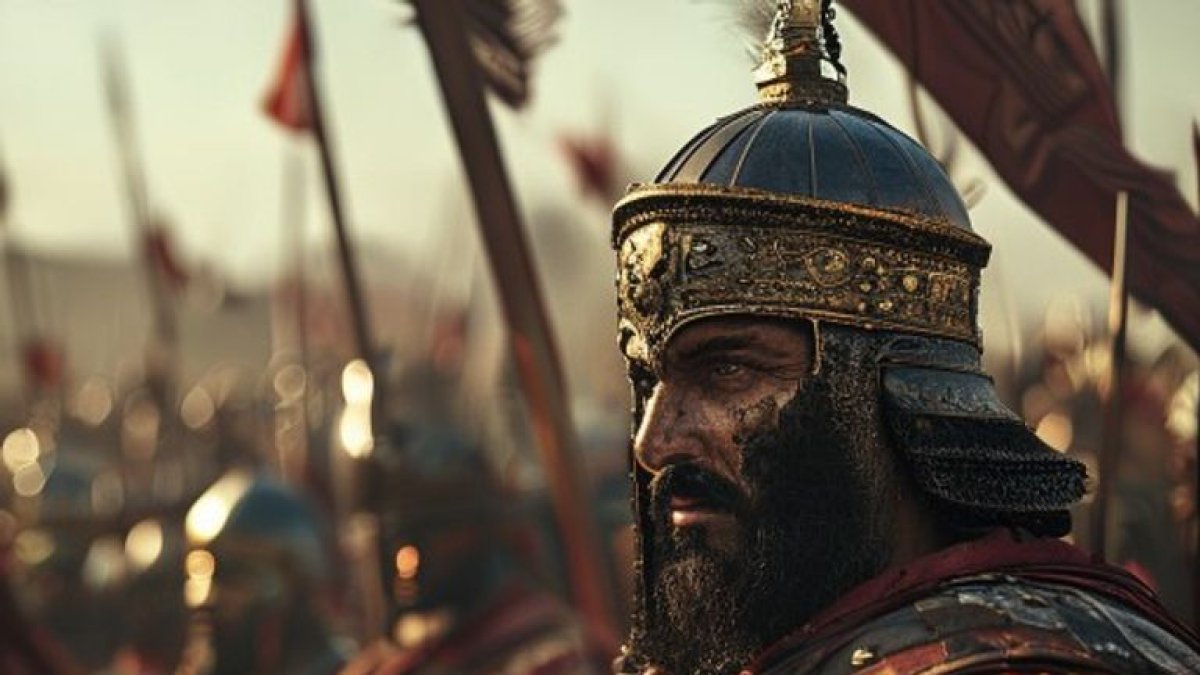
The early 7th century witnessed the dramatic emergence of a new power from the Arabian Peninsula, fundamentally reshaping the geopolitical landscape of the Near East. For centuries, the Byzantine Empire and the Sasanian Persian Empire had been locked in a seemingly endless struggle for supremacy, exhausting their resources and leaving both vulnerable. Following the Prophet Muhammad’s death in 632 AD, the nascent Rashidun Caliphate, under Caliph Abu Bakr, began its astonishing expansion, setting its sights on the rich Byzantine provinces of Syria. It was against this backdrop that one of the most decisive engagements of the early Arab-Byzantine Wars unfolded. The Battle of Ajnadayn in 634 AD, a clash of armies in the scorching plains of Palestine, proved to be a devastating blow to Byzantine authority and morale, cementing the early Muslim forces’ military prowess and signaling the beginning of the end for Roman control over much of the Levant. This single battle, often overshadowed by later conflicts, was instrumental in paving the way for further Arab victories and permanently altered the course of history for the Eastern Roman Empire.
The Exhausted Empires and the Rise of a New Power
A Weary Byzantium Faces a New Threat
By the early 7th century, the Byzantine Empire, fresh from its arduous and ultimately victorious war against the Sasanian Persian Empire, found itself severely depleted. Emperor Heraclius had led his forces to triumph, recapturing lost territories and even bringing the True Cross back to Jerusalem. However, this victory came at an immense cost, both in terms of manpower and treasury. Provinces like Syria, Palestine, and Egypt, vital breadbaskets and strategic buffers, were still recovering from decades of invasion and counter-invasion. The populace was often disaffected, and the imperial administration was stretched thin, struggling to rebuild and maintain defenses.
Simultaneously, a revolutionary new force was coalescing on Byzantium’s southern frontier. The unification of the Arabian tribes under the banner of Islam, initiated by the Prophet Muhammad and continued under Caliph Abu Bakr, imbued these desert warriors with a potent blend of religious fervor and military discipline. What began as sporadic raids across the Syrian frontier soon escalated into full-scale invasion, as the Caliphate sought to expand its influence and secure resources. Byzantine frontier garrisons, accustomed to skirmishes with Bedouin tribes, were ill-prepared for the organized and relentless advance of the Muslim armies, who saw the wealthy Byzantine lands as ripe for conquest.
Imperial Divisions and United Fronts
Byzantine Disunity vs. Arab Momentum
As news of the escalating Arab incursions reached Constantinople, Emperor Heraclius, then in Syria, began to organize a substantial response. However, the Byzantine command was plagued by internal tensions and a lack of unified strategy. Sources suggest that several prominent generals, including Heraclius’s own brother Theodore (the sacellarius), and possibly Artabanius and Sergius, were tasked with leading the imperial forces. Their combined army, consisting of both regular Byzantine troops and local Arab Christian allies (Ghassanids), aimed to decisively crush the Muslim advance. Estimates of their strength vary widely, but they likely constituted a formidable host, perhaps numbering in the tens of thousands.
Facing them was a consolidated Muslim force, initially operating in separate columns under commanders such as Amr ibn al-As, Shurahbil ibn Hasana, and Yazid ibn Abi Sufyan. Crucially, the brilliant strategist Khalid ibn al-Walid, fresh from his conquests in Iraq, was dispatched by Caliph Abu Bakr to take overall command in Syria. Khalid’s arrival unified the disparate Arab contingents, bringing tactical genius and unparalleled combat experience. He understood the importance of concentration against the larger Byzantine forces, and skillfully maneuvered his troops to converge on the plains near Ajnadayn, located in what is now central Israel, setting the stage for the epoch-making confrontation.
A Crushing Defeat and the Shifting Balance of Power
The Aftermath of Ajnadayn
The Battle of Ajnadayn itself was a fierce and protracted affair, likely fought over several days. The Byzantine army, despite its superior numbers and heavy cavalry, struggled against the disciplined and highly mobile Muslim infantry and cavalry. Arab tactics, which often included feigned retreats and rapid flanking maneuvers, proved highly effective. The Muslim forces, driven by their faith and the promise of plunder, fought with extraordinary zeal. The Byzantine command structure faltered, and morale likely crumbled under the sustained assault. Theodore, Heraclius’s brother, reportedly fled the field, contributing to the rout.
The result was a catastrophic defeat for the Byzantines. Casualties were immense, and a significant portion of their professional army in Syria was annihilated or scattered. This victory was more than just a territorial gain for the Caliphate; it was a profound psychological blow to the Byzantine Empire. It demonstrated that the new Arab power was not merely a raiding force but a formidable military machine capable of defeating the world’s leading superpower in open battle. Ajnadayn opened the door for the subsequent Arab conquests of Damascus, Jerusalem, and ultimately the entire Levant, forever changing the map of the Middle East and marking a critical turning point in the early history of Islam and the Byzantine Empire.
Frequently Asked Questions
Where exactly was the Battle of Ajnadayn fought?
The precise location of Ajnadayn is debated by historians, but it is generally placed in the region between Ramla and Bayt Jibrin in central Palestine, near what is now modern Israel.
Who were the main commanders during the Battle of Ajnadayn?
The Muslim forces were unified and led by the celebrated general Khalid ibn al-Walid. The Byzantine forces were commanded by various generals, including Heraclius’s brother Theodore and possibly Artabanius.
Why was the Battle of Ajnadayn so significant?
It was one of the first major pitched battles where the nascent Muslim armies decisively defeated a large, professional Byzantine force. This victory severely weakened Byzantine control over Syria and Palestine and paved the way for subsequent Arab conquests in the region.
How did the Byzantine Empire react to the defeat at Ajnadayn?
The defeat sent shockwaves through the Byzantine leadership. Emperor Heraclius, who was in Syria at the time, was forced to reassess his strategy, ultimately leading to the even more catastrophic Battle of Yarmouk two years later and the eventual loss of Syria.