
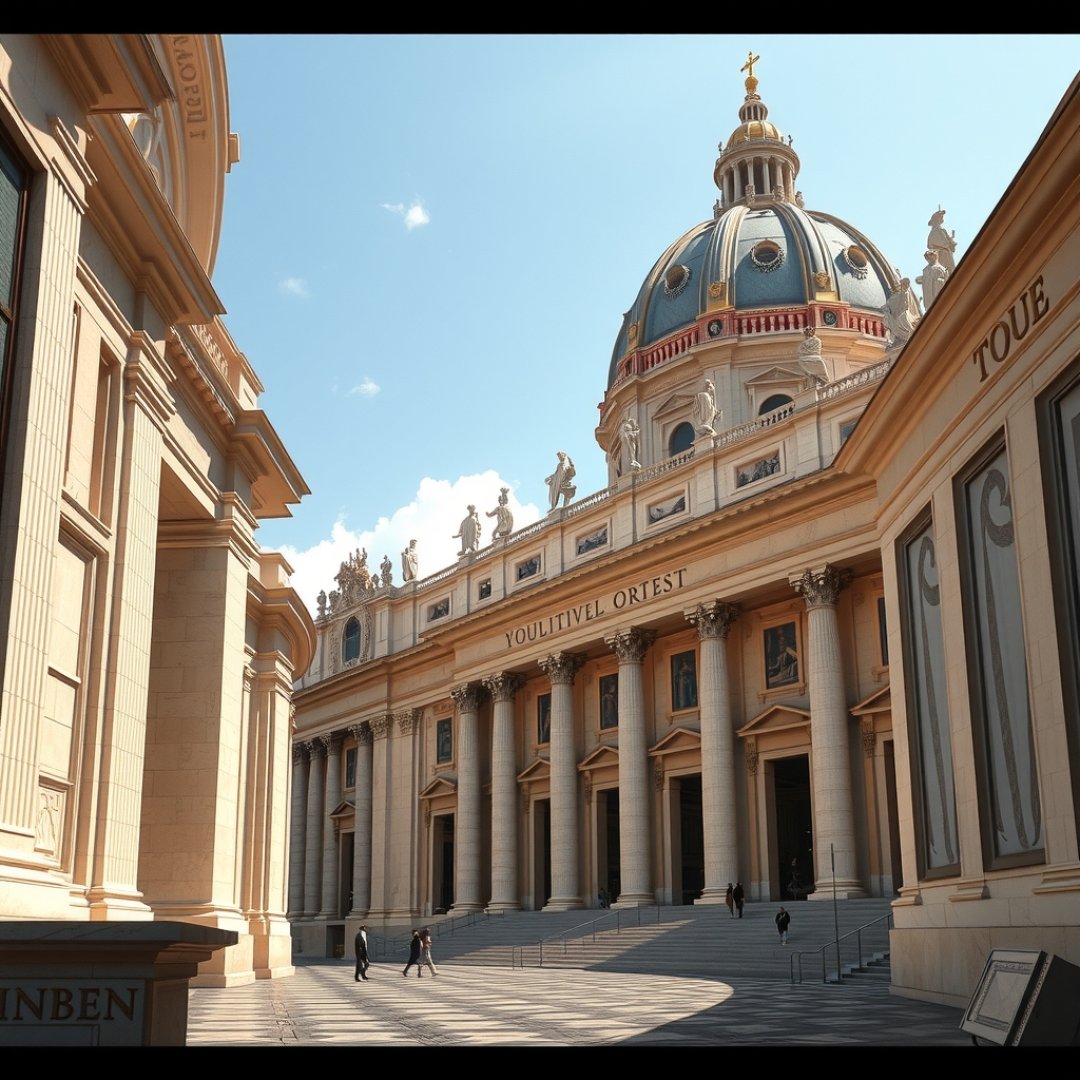
In the mid-16th century, the ambitious construction of St. Peter’s Basilica in Rome faced persistent challenges, plagued by shifting designs, escalating costs, and a revolving door of prominent architects, each leaving their mark and often complicating the overall vision. It was into this complex and often chaotic environment that the venerable master Michelangelo Buonarroti, already renowned for his Sistine Chapel frescoes and David sculpture, was reluctantly appointed chief architect in 1546 by Pope Paul III. At nearly 70 years old, Michelangelo brought an unparalleled artistic and engineering genius to the monumental undertaking, fundamentally reshaping the trajectory of Michelangelo St. Peter’s Basilica and ensuring its enduring legacy as a pinnacle of Renaissance architecture. His approach was not merely about construction; it was a profound reinterpretation, simplifying intricate plans into a powerful, unified statement that would dominate the Roman skyline for centuries to come, embodying the renewed spiritual and temporal authority of the Papacy.
The Architectural Labyrinth Before Michelangelo
Before Michelangelo’s appointment, the grand project of St. Peter’s Basilica had endured decades of false starts, competing visions, and the deaths of several key architects. Begun in 1506 under Pope Julius II with Donato Bramante as the first chief architect, the initial design envisioned a massive Greek-cross plan. However, after Bramante’s death in 1514, architects like Raphael and Antonio da Sangallo the Younger altered the plans, often leaning towards a Latin-cross layout, introducing a longer nave and more complex ambulatory structures. These changes led to:
- Increased Structural Complexity: Designs grew more elaborate, posing significant engineering challenges.
- Escalating Costs: Frequent redesigns and scope creep drained papal coffers.
- Lack of Cohesion: The basilica threatened to become a patchwork of different styles and intentions.
By 1546, with Sangallo deceased, the massive building site was a tangle of half-finished sections and conflicting ideas, demanding a leader with both artistic vision and an iron will to bring order to the chaos.
Michelangelo’s Bold Vision and Simplification
Michelangelo accepted the role with the condition that he would not be paid, seeking only to serve God and the Church. His first priority was to simplify the existing designs, which he famously criticized as a ‘heap of boxes.’ He reverted to Bramante’s original Greek-cross concept, but infused it with his own colossal scale and dramatic sculptural power. His core design principles included:
- Emphasis on Unity: Eliminating extraneous elements and streamlining the plan to create a powerful, unified volume.
- Massive Scale: Designing features like the pilasters and cornices on an unprecedented scale, suitable for the immense structure.
- The Dome’s Preeminence: Envisioning a dome that would surpass all predecessors, inspired by Brunelleschi’s Florence Cathedral but on a grander, more Roman scale, emphasizing strength and verticality.
Execution and Challenges
Despite his age, Michelangelo worked tirelessly, personally supervising every aspect of the construction. He reinforced the main piers, which had been deemed too weak by Sangallo, and began work on the massive apse and transept arms, establishing the fundamental architectural language that would define the basilica’s exterior. His focus was on the eastern end of the building, setting the stage for the dramatic culmination of his work: the dome.
The Enduring Legacy of the Master Architect
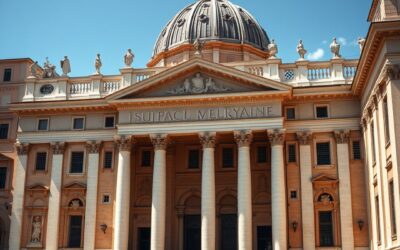
Though Michelangelo died in 1564, long before the dome was completed, his vision for Michelangelo St. Peter’s Basilica was largely adhered to. Giacomo della Porta and Domenico Fontana were responsible for finishing the dome between 1588 and 1590, closely following Michelangelo’s detailed wooden model. While the final facade by Carlo Maderno later extended the nave, slightly obscuring the full view of the dome from St. Peter’s Square, Michelangelo’s powerful, unified design for the central core and the dome’s majestic presence remain the defining features of the basilica. His work solidified the basilica as a symbol of papal authority and artistic excellence, embodying the spirit of the High Renaissance and inspiring countless architects for centuries. The imposing presence of the dome, visible from across Rome, serves as a testament to Michelangelo’s genius and his profound impact on the Eternal City’s architectural identity.
Frequently Asked Questions
Why was Michelangelo appointed chief architect of St. Peter’s Basilica in 1546?
Michelangelo was appointed by Pope Paul III after the death of Antonio da Sangallo the Younger. The project was in disarray, and Michelangelo, despite his reluctance due to his age, was considered the only artist-engineer capable of tackling the immense challenges and bringing a unified vision to the basilica.
What was Michelangelo’s primary goal for St. Peter’s Basilica’s design?
His primary goal was to simplify and unify the design, restoring a purer Greek-cross plan with a dominant central dome, similar to Bramante’s original concept, but executed with his characteristic monumentality and sculptural grandeur. He aimed to eliminate superfluous elements and create a cohesive, powerful architectural statement.
How did Michelangelo’s design differ from previous plans by other architects?
Michelangelo rejected many of the complexities introduced by his predecessors, particularly Sangallo the Younger’s elaborate Latin-cross plan with its numerous towers and ambulatories. He streamlined the layout, focused on powerful, massive forms, and significantly strengthened the central piers to support a much grander dome, returning to a centralized scheme.
Was Michelangelo’s vision for the dome of St. Peter’s Basilica fully realized?
Yes, largely. While Michelangelo died before the dome was completed, he left behind detailed wooden models and drawings. Giacomo della Porta and Domenico Fontana completed the dome between 1588 and 1590, adhering closely to Michelangelo’s design, particularly the double-shelled structure and the powerful sense of upward thrust.
What challenges did Michelangelo face during his time as chief architect?
Michelangelo faced numerous challenges, including the enormous scale of the project, structural issues inherited from previous designs, financial constraints, and political intrigue within the papal court. His advanced age also meant a constant race against time to impose his vision before his death, which he largely accomplished.
Related posts:
 The Completion of St. Peter’s Basilica Dome (1590): A Renaissance Architectural Triumph
 The Construction of St. Peter’s Basilica: A Renaissance Masterpiece
 Raising the Vatican Obelisk: Sixtus V’s Monumental Vision in 1586
 The Completion of St. Peter’s Basilica Facade (1614): Carlo Maderno’s Grand Design