
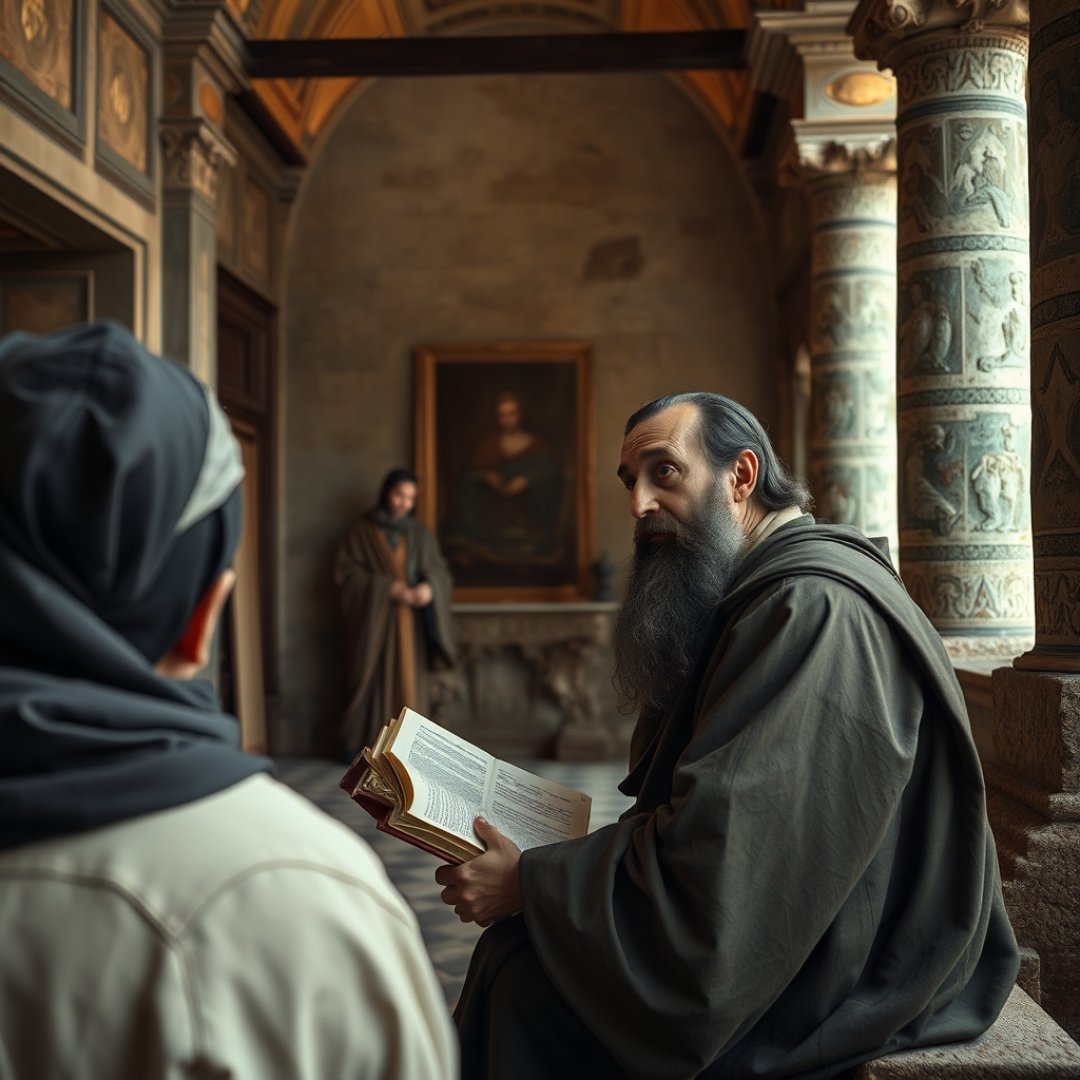
The early 10th century marked a tumultuous and often scandalous period in the history of Rome and the Papacy, famously dubbed the “Saeculum Obscurum” or “Dark Age” of the Papacy. At the heart of this dramatic era stood a powerful Roman aristocratic family, the Theophylacti, whose patriarch, Theophylact I Rome, skillfully navigated the chaotic political landscape to establish an unprecedented level of control over the Eternal City. Around AD 913, his strategic accumulation of titles, wealth, and military might allowed him and his formidable wife, Theodora the Elder, to virtually dictate the succession of popes and manage the city’s affairs as if it were their personal dominion. This article delves into how Theophylact I consolidated his formidable power, laying the groundwork for an age where Roman noble families held the ultimate sway over the spiritual leaders of Western Christianity, profoundly impacting the institution’s integrity and future trajectory. His actions fundamentally reshaped the balance of power within the city, setting a precedent for generations of secular interference in papal elections.
The Fragmented Italian Landscape of the Early 10th Century
Following the decline of the Carolingian Empire in the late 9th century, the Italian peninsula entered a period of intense political fragmentation and instability. Local aristocratic families, vying for control, filled the power vacuum left by weakened imperial authority. Rome, in particular, became a prize, no longer merely the seat of the Pope but a significant strategic and economic center. The city was frequently embroiled in conflicts between rival factions, Lombard princes, and the lingering influence of the Byzantine Empire in the south. This environment was ripe for a strong, opportunistic leader to assert dominance.
The Papacy itself was at a low ebb, having lost much of its moral authority and independence. Popes were often installed and removed by powerful Roman nobles, leading to rapid successions and politically motivated appointments. This made the papal throne less a spiritual office and more a political pawn in the hands of the dominant Roman families. Into this chaotic scene stepped Theophylact I, an individual whose shrewdness and ambition would redefine the relationship between secular power and the Holy See for decades.
Theophylact I: Senator, Consul, and Master of Rome
A Strategic Accumulation of Power
Theophylact I, a member of the powerful Theophylacti family, rose to prominence in Rome by carefully accumulating a vast array of titles and offices. By the early 10th century, he held positions such as senator, consul, and magister militum (master of soldiers), effectively making him the chief civilian and military authority in the city. His wealth was immense, derived from vast landholdings and strategic alliances. His base of power was further cemented by his control over the Castel Sant’Angelo, a formidable fortress that guarded access to St. Peter’s Basilica and served as a strategic point in the city’s defenses.
Theodora the Elder: A Force Behind the Throne
Crucially, Theophylact was supported by his equally ambitious and politically astute wife, Theodora the Elder. Contemporary sources, though often biased, depict her as a woman of immense influence and cunning, effectively co-ruling Rome with her husband. Together, they formed a formidable political duo, using their combined authority and network to exert unparalleled control over the city’s institutions. Their power extended not only to secular governance but, most notoriously, to the very selection and control of the Roman Pontiffs.
Architect of Papal Subservience: The Saeculum Obscurum Begins
The control exerted by Theophylact I Rome and his family ushered in what historians later termed the “Saeculum Obscurum,” a period of approximately 60 years (c. 904-964 AD) characterized by the direct manipulation of the papacy by powerful Roman aristocratic factions. The Theophylacti saw the papacy not as an independent spiritual authority but as a tool to further their own dynastic and political ambitions. Popes during this period were often relatives, allies, or puppets of the ruling family.
- Pope Sergius III (904-911): Often considered the first pope of the Saeculum Obscurum, Sergius III’s election was heavily influenced by Theophylact. He was alleged to have been the lover of Marozia, Theophylact’s daughter, and the father of the future Pope John XI.
- Rapid Papal Successions: The frequent change of popes reflected the intense political struggles and the ease with which the Theophylacti could install or depose pontiffs who did not serve their interests.
- Marozia’s Influence: Theophylact’s daughter, Marozia, inherited and even expanded upon her parents’ influence, directly controlling several popes and becoming a key figure in Roman politics throughout her life. Her actions further solidified the family’s grip on the Holy See.
This period significantly damaged the prestige of the Papacy, reducing it to a local Roman institution under the thumb of a powerful family. However, it also highlights the resilience of Roman aristocratic families in maintaining a form of local governance in a fragmented post-imperial world, even if it came at the expense of ecclesiastical independence.
The Lasting Impact of Theophylact’s Era
The era dominated by Theophylact I and his descendants had profound and lasting consequences for both Rome and the wider Church. While often viewed negatively due to the scandals and abuses of power, it demonstrated the persistent vitality of Roman families in controlling the city’s destiny even centuries after the Western Empire’s formal collapse. The foundation laid by Theophylact I directly led to the ascendancy of his grandson, Alberic II, who would rule Rome as a quasi-prince for over two decades.
The abuses of the Saeculum Obscurum eventually fueled calls for reform within the Church, notably leading to the Ottonian intervention in the mid-10th century and later the Gregorian Reforms of the 11th century, which sought to restore the independence and moral authority of the Papacy. Thus, Theophylact I, inadvertently, played a role in shaping the very reforms that would ultimately dismantle the system he helped create, solidifying his complex legacy in the annals of medieval Roman history.
Frequently Asked Questions
Who was Theophylact I?
Theophylact I was a powerful Roman nobleman in the early 10th century, holding key secular and military titles like senator, consul, and magister militum, which allowed him to dominate Rome’s political landscape.
What was the “Saeculum Obscurum”?
The “Saeculum Obscurum,” or “Dark Age of the Papacy,” was a period from approximately 904 to 964 AD when powerful Roman aristocratic families, primarily the Theophylacti, exerted extensive and often scandalous control over the Papacy, influencing papal elections and policies.
How did Theophylact I gain such control over Rome?
Theophylact I accumulated significant power through a combination of inherited wealth, strategic acquisition of key secular and military offices, control of strategic fortifications like Castel Sant’Angelo, and powerful alliances, including with his influential wife, Theodora the Elder.
What role did Theodora the Elder and Marozia play in Theophylact’s power?
Theodora the Elder, Theophylact’s wife, was a highly influential and politically astute woman who co-governed Rome with him. Their daughter, Marozia, continued and even expanded the family’s control over the city and the Papacy, becoming one of the most powerful women in medieval Rome.
What was the long-term impact of Theophylact I’s actions?
Theophylact I’s actions initiated a period of significant secular control over the Papacy, damaging its prestige. However, this eventually provoked strong reform movements within the Church, aiming to restore papal independence and moral authority, ultimately shaping the future of the medieval Papacy.
Related posts:
 Charles of Anjou’s Senatorial Rule in Rome (1267): Consolidating Power in Medieval Italy
 The Rise of Cola di Rienzo: A Dream of Roman Renewal in 1347
 The Cadaver Synod of 897 AD: Rome’s Posthumous Trial of Pope Formosus
 The Coronation of Otto III and Election of Pope Gregory V (996 AD): Reshaping Roman and Imperial Power