
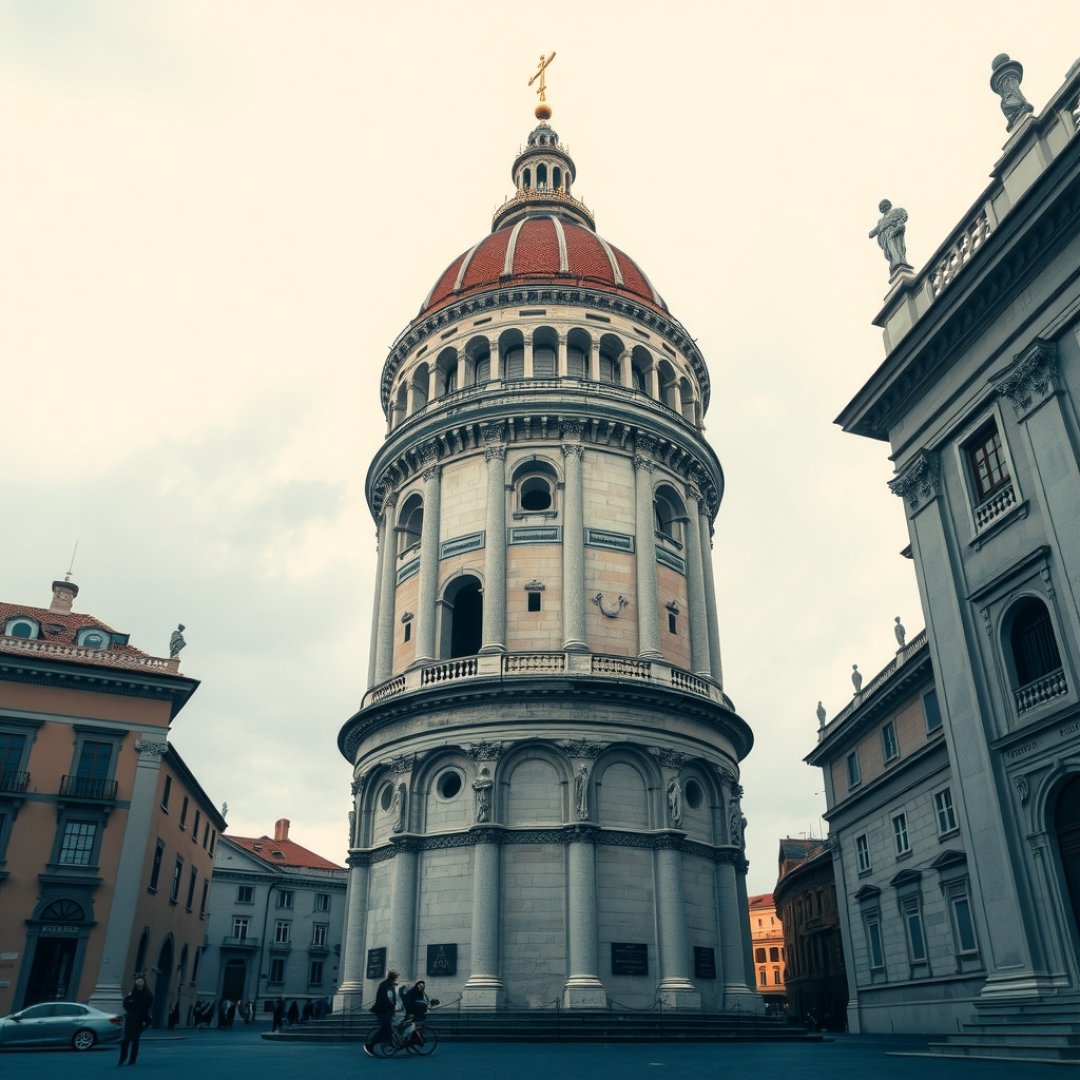
Nestled within the serene gardens of the Vatican City, the remarkable Tower of the Winds stands as a fascinating testament to the intellectual curiosity and artistic ambition of Pope Gregory XIII. Constructed between approximately 1580 and 1582, this unique edifice was far more than a mere architectural fancy; it served as a sophisticated observatory and a crucial research hub for the astronomers and mathematicians tasked with refining the calendar, a monumental undertaking that culminated in the Gregorian Calendar reform. Its intricate frescoes, scientific instruments, and commanding views over Rome reflect a pivotal moment in the Renaissance, where sacred patronage seamlessly merged with a burgeoning scientific inquiry. The tower’s very existence underscores the papacy’s deep engagement with the cosmos and its profound influence on both celestial and terrestrial timekeeping, making it a masterpiece of both art and science from an era of profound transformation.
Origins of a Celestial Observation Post
Pope Gregory XIII’s Vision
The impetus for constructing the Tower of the Winds stemmed directly from Pope Gregory XIII’s ardent desire to reform the Julian Calendar. By the late 16th century, the Julian system, established by Julius Caesar, had accumulated a significant error, causing a ten-day discrepancy between the calendar date and the true astronomical equinox. This misalignment posed theological concerns, particularly regarding the correct calculation of Easter. Gregory XIII, an intellectual and patron of learning, convened a commission of eminent astronomers, mathematicians, and theologians to address this complex issue. He envisioned a dedicated space where these scholars could conduct precise observations and calculations, free from the distractions of the bustling Roman Curia. The Tower was therefore conceived as a functional observatory, integral to this ambitious scientific endeavor.
Architectural Grandeur and Scientific Function
Designed for Precision
The design and construction of the Tower of the Winds were entrusted to the architect Ottaviano Mascherino, who ingeniously blended artistic elegance with practical scientific requirements. The tower’s prominent position atop the Vatican Hill offered unobstructed views of the horizon, essential for astronomical observations. Inside, the Tower of the Winds features several key rooms, most notably the Meridian Hall. This chamber was equipped with a meridian line, a precisely engraved brass line on the floor, used to track the sun’s passage and accurately determine the equinoxes and solstices. The frescoes adorning the walls and ceilings, executed by a team of artists including Niccolò Circignani and Matthijs Bril, depict celestial maps, allegories of winds, and significant moments in the calendar reform process, serving both aesthetic and didactic purposes.
The Gregorian Calendar’s Crucible
Calculating the New Time
The primary scientific work conducted within the Tower of the Winds involved meticulous solar observations and complex mathematical calculations. Jesuit astronomers such as Christopher Clavius played a leading role in this effort. Using instruments like armillary spheres and sundials, they gathered data that confirmed the need for calendar reform. The observations made in the Meridian Hall were critical in determining the precise length of the tropical year and identifying the accumulated error of the Julian Calendar. It was within these very walls that the final adjustments and proposals for what would become the Gregorian Calendar were solidified. The new calendar, promulgated by papal bull “Inter gravissimas” in 1582, skipped ten days, moving directly from October 4 to October 15, instantly correcting the drift and establishing the leap year rule we follow today.
Enduring Legacy in Art and Science
A Synthesis of Renaissance Ideals
Beyond its immediate function for calendar reform, the Tower of the Winds remains a significant landmark, embodying the Renaissance ideal of integrating art, science, and faith. Its detailed frescoes depicting meteorological phenomena and astronomical concepts make it a unique blend of scientific documentation and artistic expression. The tower not only served as a practical observatory but also as a symbol of papal authority in shaping universal timekeeping. Today, visitors to the Vatican Museums can still marvel at this architectural and intellectual achievement, a powerful reminder of how Rome, even in the early modern period, continued to be a center of innovation and cultural influence, bridging ancient knowledge with nascent scientific methodology.
Frequently Asked Questions
What was the main purpose of the Tower of the Winds?
The main purpose of the Tower of the Winds was to serve as an astronomical observatory for the scientific commission tasked with reforming the Julian Calendar, under the patronage of Pope Gregory XIII.
Who commissioned the construction of the Tower of the Winds?
Pope Gregory XIII commissioned the construction of the Tower of the Winds in the Vatican.
When was the Tower of the Winds built?
The Tower of the Winds was constructed between approximately 1580 and 1582.
What significant scientific achievement is associated with the Tower of the Winds?
The Tower of the Winds was instrumental in the observations and calculations that led to the promulgation of the Gregorian Calendar in 1582, which is still the most widely used civil calendar today.
Can visitors access the Tower of the Winds in the Vatican today?
While the Tower of the Winds is part of the Vatican Museums complex, public access is generally restricted. It is sometimes included in special guided tours or accessible to researchers by appointment.
Related posts:
 Michelangelo’s Vision for St. Peter’s Basilica (c. 1546): Redefining Rome’s Sacred Heart
 The Gregorian Chapel Construction in St. Peter’s Basilica (c. 1578-1585)
 The Completion of St. Peter’s Basilica Dome (1590): A Renaissance Architectural Triumph
 Raising the Vatican Obelisk: Sixtus V’s Monumental Vision in 1586